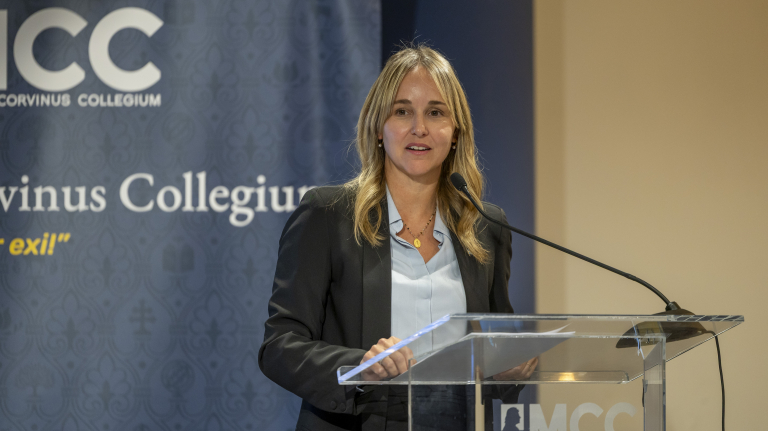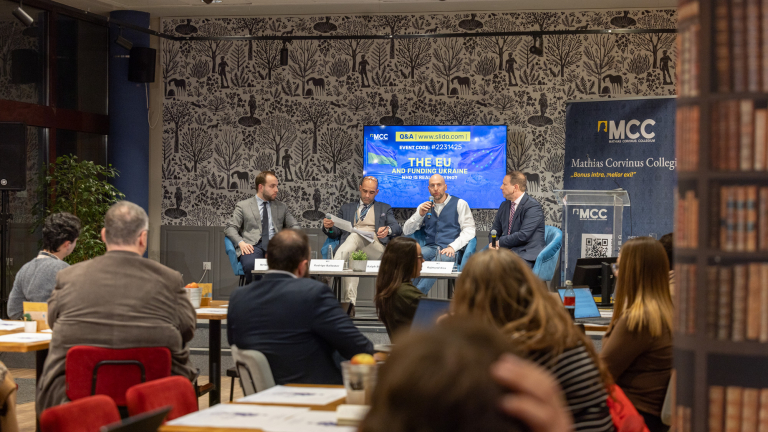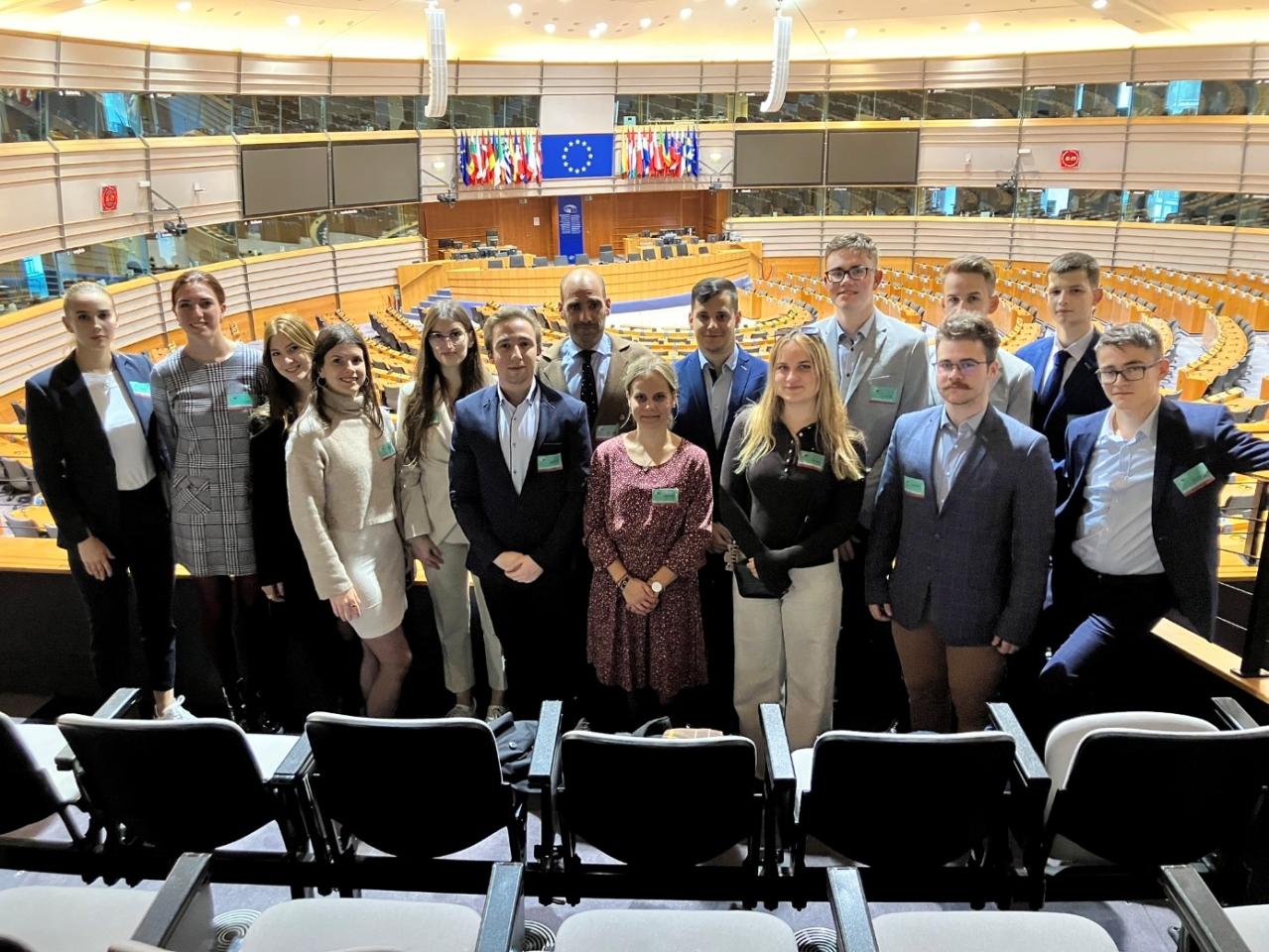
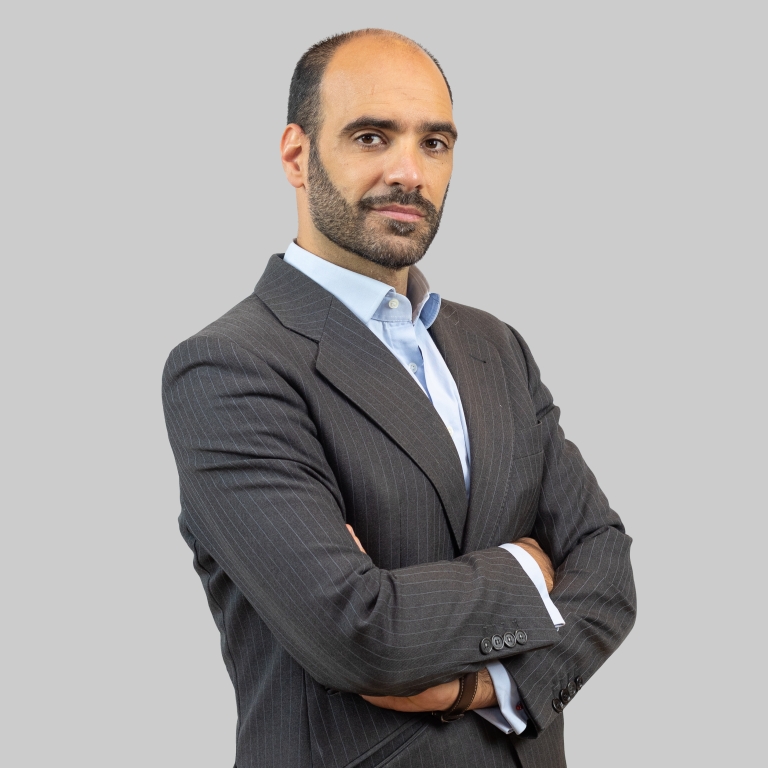

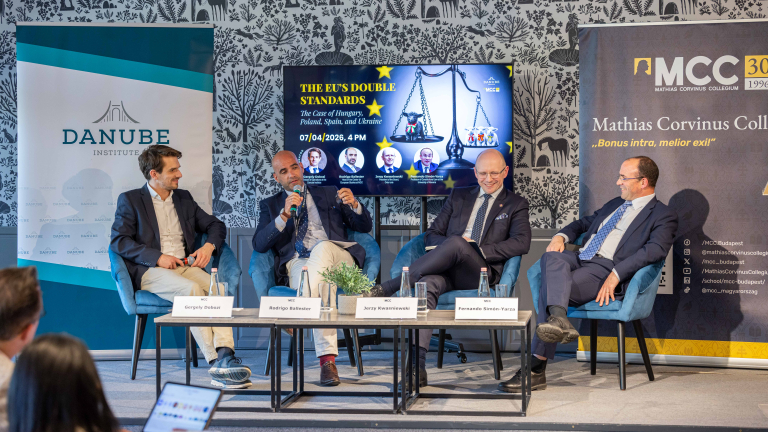
The Center for European Studies, as part of the MCC School of International Relations, is MCC's window to the European Union. Its operation is based on three pillars: education, public events, and research (think-tank activities and publication). The Center follows and analyses the functioning of the EU from a Central European point of view and promotes the perspective of a European integration process that takes more into account the political and cultural diversity of its Member States.
Click here for the Hungarian version of this site:
Who is the boss of the European Union?
Sessions of 90 minutes for 10 weeks, in English. The aim of the course is to give students of different backgrounds an accurate understanding of the of the European Union while also elaborating their own point of view, train them to work under pressure with short deadlines, improve their oral expression in English and their negotiating skills.)EU Migration policy: To move or not to move, that is not the only question
This course will enable students to understand all the steps of the migration process, from the situation in countries of origin and demographics to the integration (or lack of it) of the third and fourth generation of migrants, including border management and asylum. The course will also cover the free movement of European citizens within the EU. Students will debunk several myths surrounding migration. We will welcome one or two external speakers.The EU in the world: irrelevant or indispensable, interests vs values, vector or shield of globalisation?
Students will learn about the competences and importance of every EU institutions that is active in the decision making process, hence: the Commission, the European Parliament, the European Council and the Council of Ministers. In a second stage, they will learn how those institutions interact to produce European legislation. As a result, t hey will identify by themselves what are the most influential EU institutions. Finally, they will put their knowledge into practice through a practical case (a simulation of vote in the Council of Ministers).Applying for an international job: Do's and Dont's
Through mock interviews and a focused course on improvement strategies—including CV preparation—students gain valuable insights into interview etiquette, key points to highlight, and topics best avoided. They then have the opportunity to apply their newly acquired knowledge in a follow-up interview.Related news
January 23, 2026
Center for European Studies, Migration Research Institute
Taking Back Control from Brussels: Rethinking Migration, Law, and Sovereignty in Europe
September 23, 2025
Center for European Studies
Panel Discussion Highlights Threat of Wokeism in France’s Academic and Cultural Life
November 19, 2024
Budapest Lectures, Center for European Studies
MCC Hosts an Event Addressing the Challenges of the Muslim Brotherhood
October 23, 2024
Center for European Studies, Conferences
MCC’s Center for European Studies Hosts Conference on EU Merit-Based Enlargement
July 25, 2024
Center for European Studies, Visiting Fellowship Program
"Right-wing Parties Need a Concrete Vision of the Future if they Want to Succeed"-MCC Participates in the 33rd Tusványos Summer University
Related events
Center for European Studies, Migration Research Institute
Taking Back Control From Brussels: The Renationalization of EU Migration and Asylum Policies
Jan
22,
2026
Brussels, Center for European Studies
A New Academic Model: Curbing Ideological Overreach on Scientific Neutrality
Dec
8,
2025
Center for European Studies
Western Balkans - First Series: EU Enlargement: Balkans, Ukraine – Who Shall Be Next and Why?
Oct
16,
2025
Center for European Studies, Center for International Law
Globalization, Integration, Identity: How to Regain Europe's Strength?
Oct
1,
2025
Center for European Studies, School of International Relations
Western Balkans First: Rethinking EU Enlargement Priorities
Jun
19,
2025
Center for European Studies
The Future of the European Union: National Sovereignty or Centralization?
Mar
18,
2025