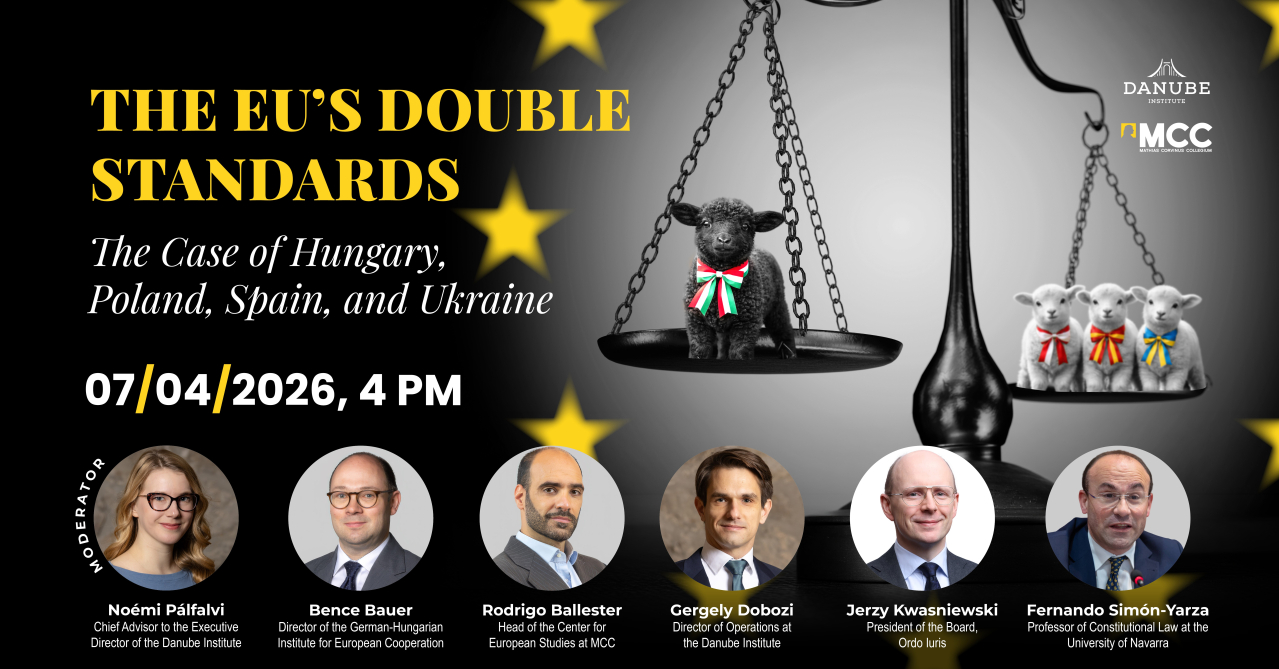
On the one hand, because of alleged rule of law violations and alleged systemic corruption around 20 billion EUR of EU funds for Hungary remain frozen. On the other hand, the left-leaning Spanish government’s controversial judicial reforms - aimed at altering judicial appointments and restructuring courts- have not triggered comparable proceedings, raising questions about consistency in EU responses. Moreover, Article 7 procedures against Poland stemming from comparable judicial reforms were discontinued following the ouster of the conservative government by pro-EU forces at the polls in late 2023. At the same time, the EU is also pushing for Ukraine’s accelerated membership, despite ongoing challenges related to judicial independence, wartime centralization of power, and high-profile corruption scandals. By comparing these cases, the panel highlights the double standards in the EU’s approach, where enforcement and incentives are highly politicized based on an overall political alignment with the EU’s agenda. By spotlighting the EU’s politicization of its rule of law standards, the panel will raise questions about the EU’s credibility, the integrity of the enlargement process, and question its legitimacy as the “champion of democratic values.”
PARTICIPANTS:
- Bence Bauer, Director of the German-Hungarian Institute for European Cooperation
- Rodrigo Ballester, Head of the Center for European Studies at MCC
- Gergely Dobozi, Director of Operations at the Danube Institute
- Jerzy Kwasniewski, President of the Board, Ordo Iuris
- Fernando Simón-Yarza, professor of constitutional law at the University of Navarra
- Moderator: Noémi Pálfalvi, chief advisor to the executive director of the Danube Institute
 2026. április 7. 16:00 - 17:00