A megfelelő zene, azáltal, hogy ápolja bennünk a finom és nemes hajlamok iránti ízlést, felkészít minket az erények elsajátítására; a rossz fajta ezzel ellentétes hatást vált ki. Ezért a zene központi szerepet játszik az erkölcsi és állampolgári nevelésben. Az így felfogott zene nem az "esztétika", hanem a politikai filozófia témája. De vajon védhető-e ez a zenei nézet ma? Releváns-e a kortárs demokráciák számára? Ezeket a kérdéseket fogjuk megvitatni.
--------------------------------------------------------------------------------
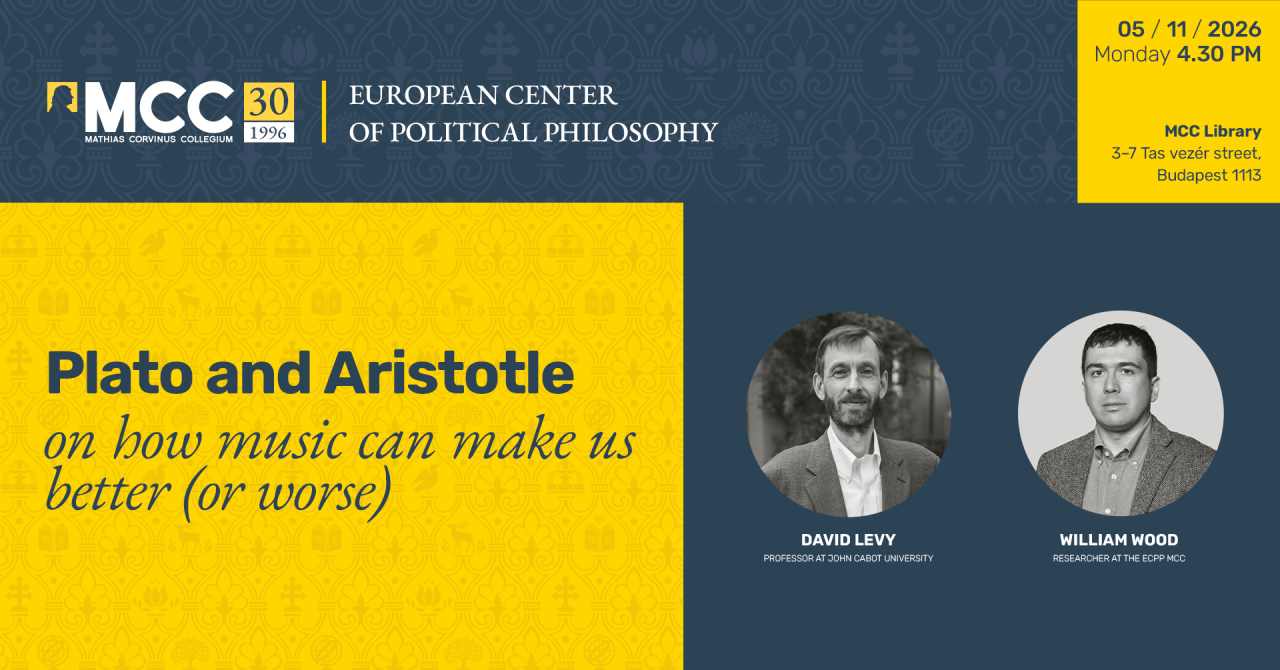
Contrary to the common conception of music as entertainment, Plato and Aristotle regard it as (at least in part) an instrument of character education. According to them, music represents or imitates the dispositions of the soul. By evoking our sympathetic enjoyment of these dispositions, music invites us to make them our own, and thus to become, in effect, a certain kind of person. The right sort of music, by cultivating our taste for the fine and noble dispositions, prepares us to acquire the virtues; the wrong sort has the opposite effect. Hence the central importance of music in moral and civic education. Music so understood is a theme, not of "aesthetics," but of political philosophy. But is this view of music defensible today? Is it relevant for contemporary democracies? We will discuss these questions.
 2026. május 11. 16:30 - 18:00