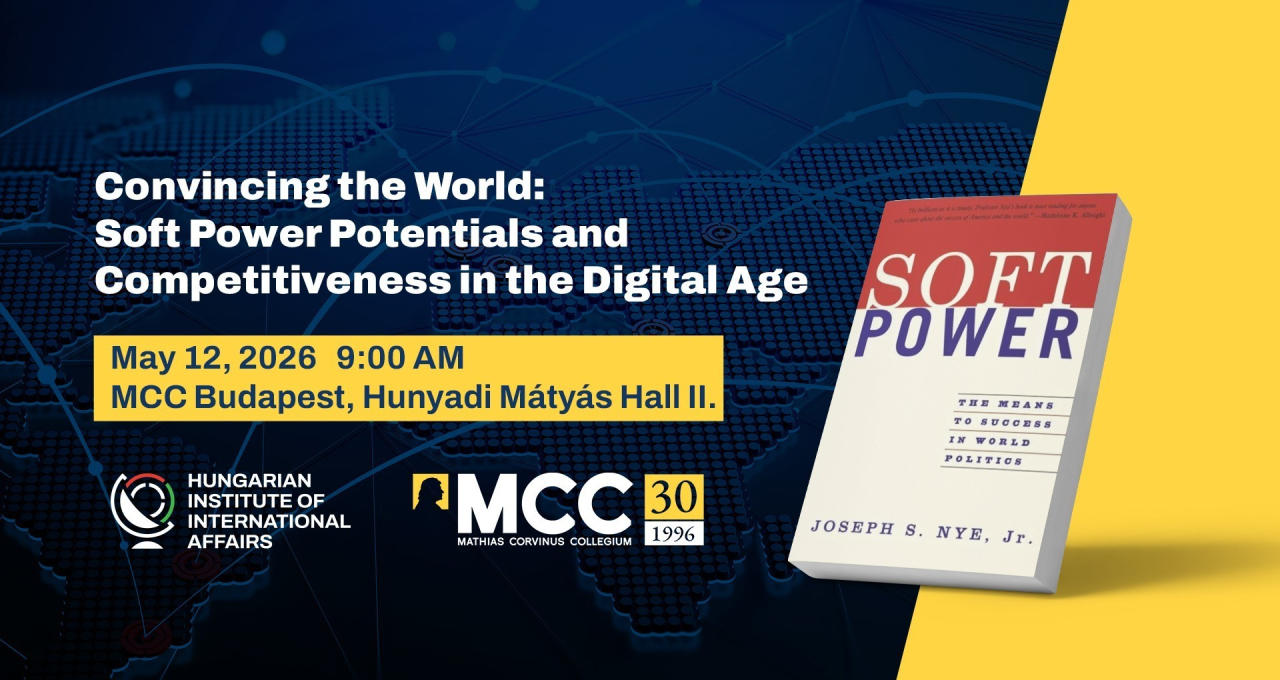
The times we live in are in many ways reminiscent of the times in which that book appeared. Namely, his main motive was to remind us, at the time of the explosion of the so-called war on terrorism and the ideologically motivated interventionism of the Bush administration, that in the modern world one cannot rely only on weapons and force, but that it is necessary not to neglect the fight for hearts and minds.
Our current moment closely resembles that period. Great powers are increasingly willing to wage wars, interventions, bombings, and changes in leadership in other countries, and it seems that few people care how the rest of the world will view them. Such an approach is very dangerous, not only because it undermines the foundations of any kind of order and predictability in international relations, but also because it ignores the possibility of arguing, persuading, and resolving problems through other mechanisms, including soft power mechanisms.
Therefore, we have undertaken to organize a conference on Soft Power, emphasizing its meaning and the ways it enhances competitiveness of a state in international arena. The conference is taking place on May 12, at MCC in Budapest.
An additional part of the conference program will include a roundtable with representatives of cultural centers located in Budapest, as well as a small exhibition of Hungarian platforms and institutions dealing with soft power, which will allow students and participants to learn about practical instruments for implementing soft power.
PROGRAM:
Opening - 9:00-9:10
Section I. - 9:10-10:30
Ralph Schoellhammer, Head of the Center for Applied History and International Relations Theory, Mathias Corvinus Collegium
- Topic: Digitalization, Artificial Intelligence and Soft Power
Miša Ðurković, Head of the Center for Geopolitics, Mathias Corvinus Collegium
- Topic: Television Series and Soft Power
Csaba Moldicz, Head of the Foreign Trade Center, Mathias Corvinus Collegium
- Topic: Student Exchange and Soft Power
Elif Kahraman Gökalp (Pre-Recorded), Lecturer, Istanbul University
- Topic: Measuring Soft Power
Coffee Break - 10:30-10:50
Section II. - 10:50-11:50
Patrik Szeghő, Lecturer at the Center for Geopolitics, Mathias Corvinus Collegium
- Topic: UK
Gábor Csizmazia, Assistant Lecturer and Research Fellow, Mathias Corvinus Collegium
- Topic: USA
Viktor Eszterhai, Research Fellow at the John Lukacs Institute, University of Public Service
- Topic: China
Coffee Break - 11:50-12:10
Section III. - 12:10-13:10
Gabriele La Posta, Director, Italian Cultural Institute in Budapest
Stefan Verdin, Centre Culturel Francaise
Baris Yilmaz, Cultural Coordinator, Turkish Yunus Emre Insitute
Moderator: Jázmin Komjáti, Mathias Corvinus Collegium
Technical Break - 13:10-14:10
Section IV. - 14:10-15:30
Anatol Lieven (Zoom), Director of the Eurasia Program and the Andrew Bacevich chair in American Diplomatic History, Quincy Institute for Responsible Statecraft
- Topic: Russia
Gabriel Noah Brahm (Zoom), Director, Center for Academic and Intellectual Freedom
- Topic: Israel
Thibaud Gibelin, Former Visiting Fellow, Mathias Corvinus Collegium
- Topic: France
Kim Suwan, Assistant Professor, Kyung Hee University
- Topic: South Korea
Coffee Break - 15:30-15:50
Section V. - 15:50-16:50
José Ángel Ruiz Jiménez (Pre-Recorded), Professor at the Department of Contemporary History, University of Granada
- Topic: Spain
Rajko Petrović, Scientific Associate, Institute of European Studies, Belgrade
- Topic: Latin America
Tamás Baranyi, Strategic Director, Hungarian Institute of International Affairs
- Topic: Hungary
Zoltán Egeresi, Research Fellow at John Lukacs Institute, University of Public Service
- Topic: Türkiye
Closing Remarks - 16:50-17:00
We are looking forward to welcoming all interested guests to a meaningful and thought-provoking conference!
The conference will be conducted in English.
Participation is free of charge, but registration is required.
 May 12, 2026 at 9:00 AM - 5:00 PM