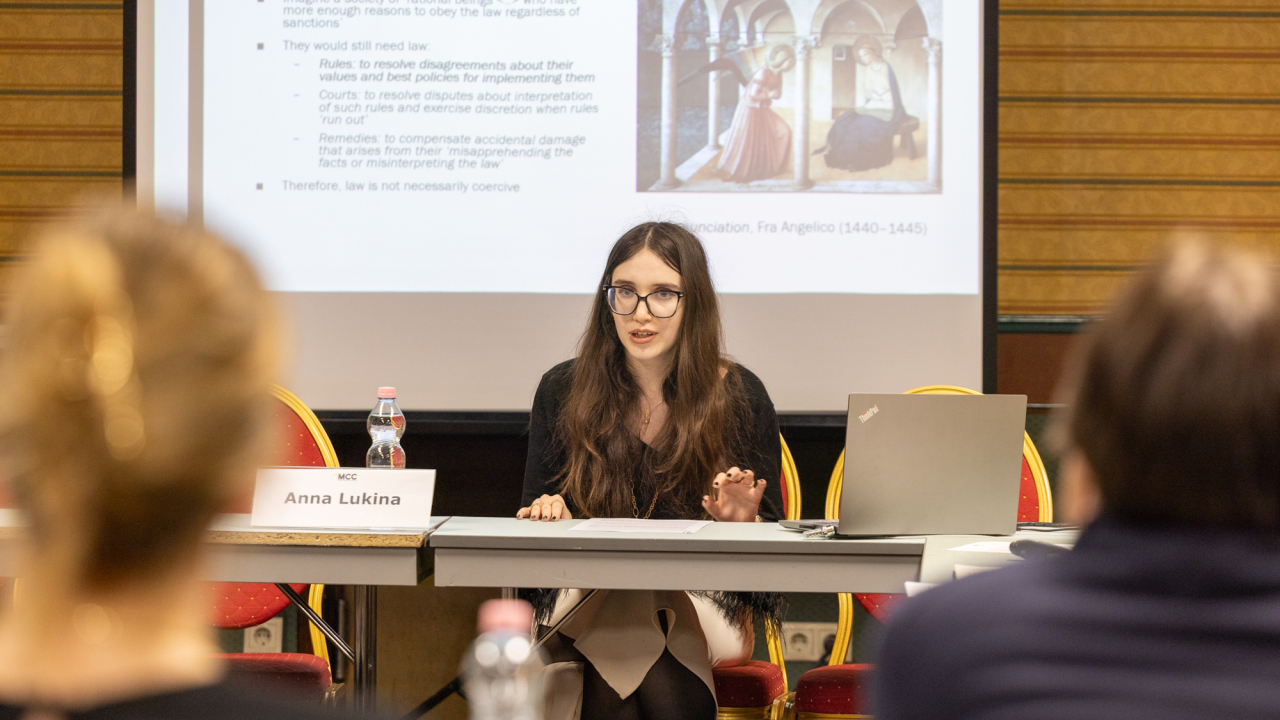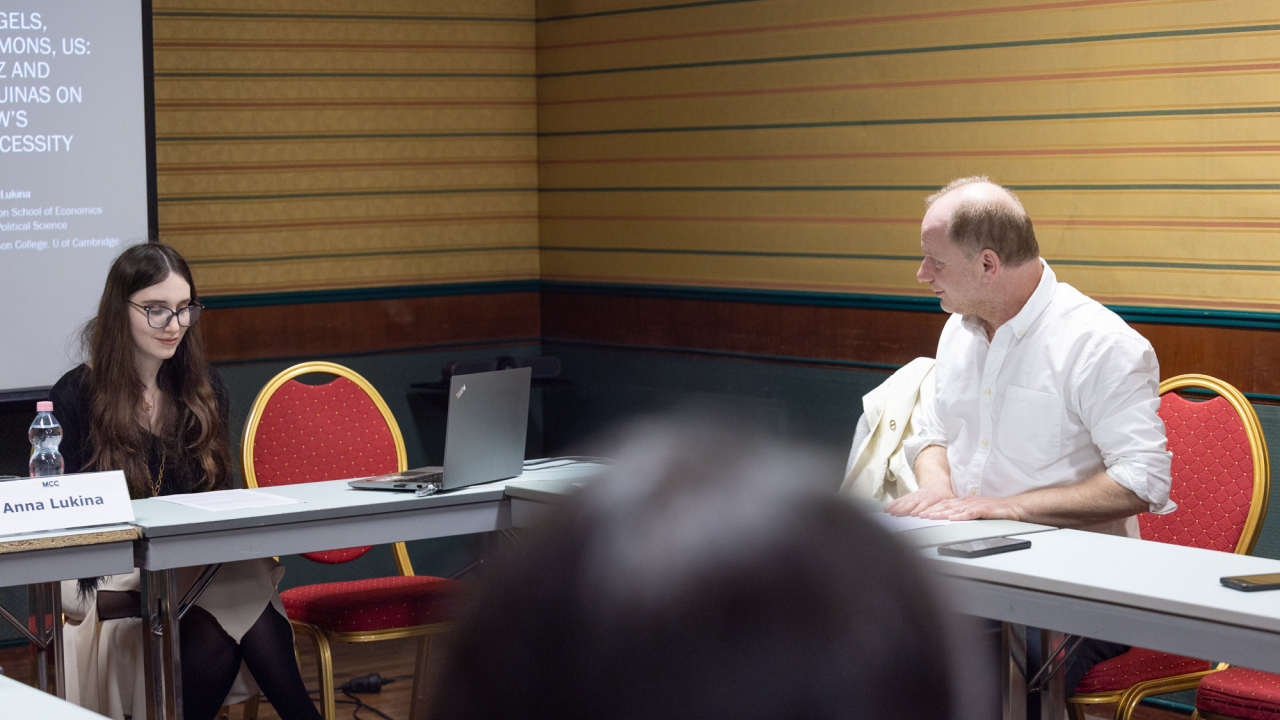
On 3 March 2026, the MCC Center for Constitutional Politics hosted Anna Lukina, Fellow at the LSE and Wolfson College, Cambridge. Her lecture explored the "society of angels" thought experiment to identify a surprising convergence between Joseph Raz’s legal positivism and St. Thomas Aquinas’s natural law theory. Lukina argued that law is not merely a remedy for human imperfection but an essential coordinative framework that remains necessary even in a society of morally perfect beings.
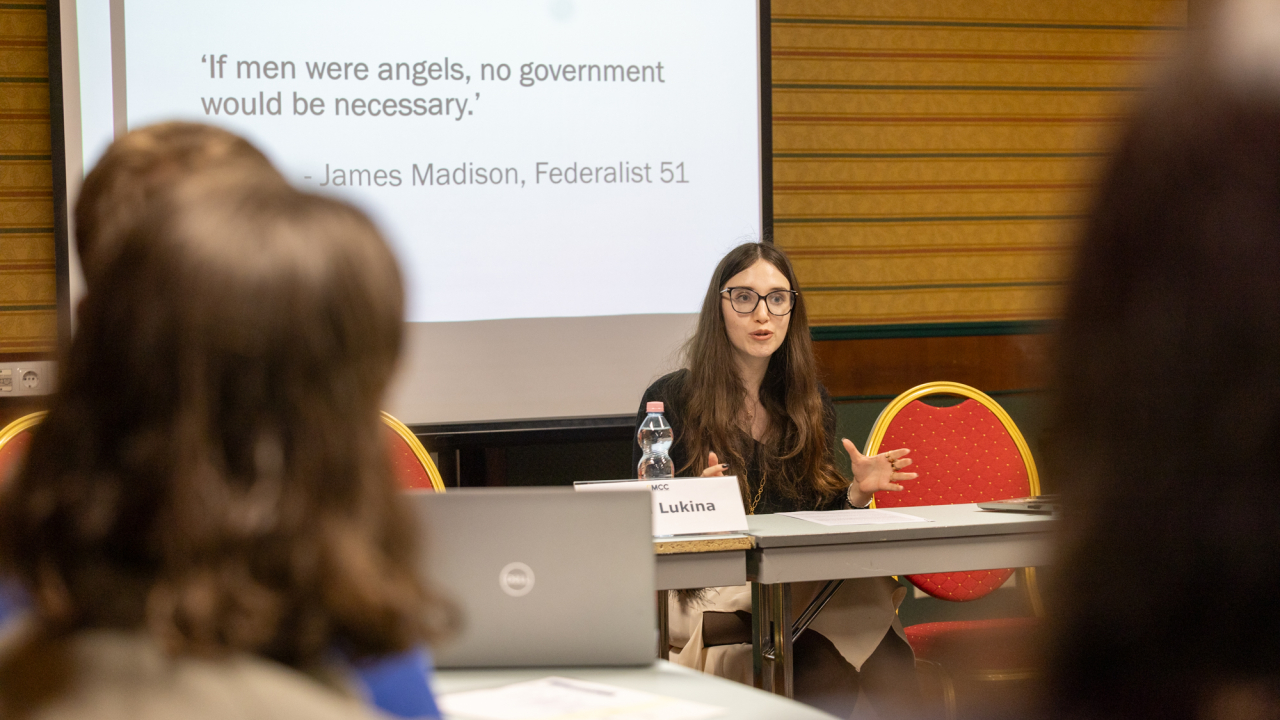
The discussion following the lecture focused on the tension between the coercive and coordinative functions of law. A key point of debate was whether the authoritative nature of a legal "order"—which aggregates values into binding rules—is inherently coercive even in the absence of punishment. Additionally, the discussion addressed James Madison’s famous dictum, “If men were angels, no government would be necessary,” contrasting it with the Razian-Thomist view that coordination remains a functional requirement even in the absence of vice.
Further conversation touched upon the relationship between government and legal systems, the intersection of the common good with social utility, and the methodological value of thought experiments in jurisprudence. By bridging the gap between competing legal traditions, the event offered a fresh perspective on law as a permanent infrastructure for social cooperation rather than a mere constraint on wrongdoing.