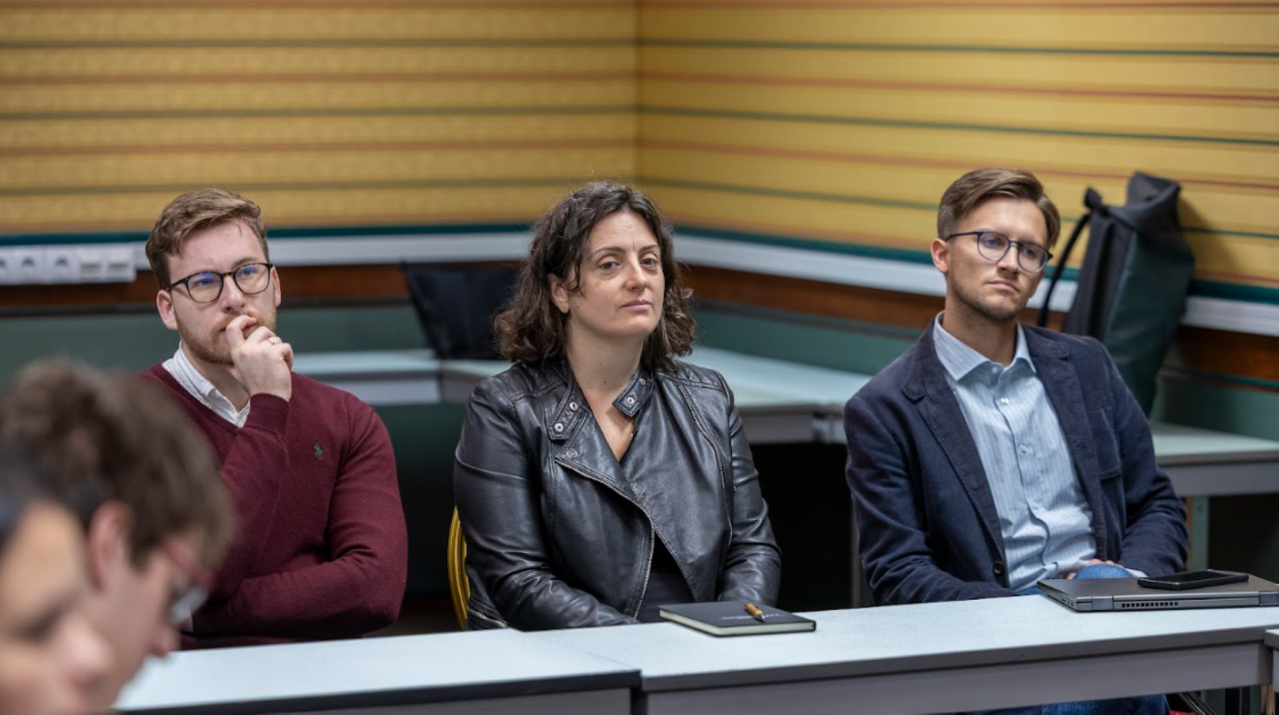
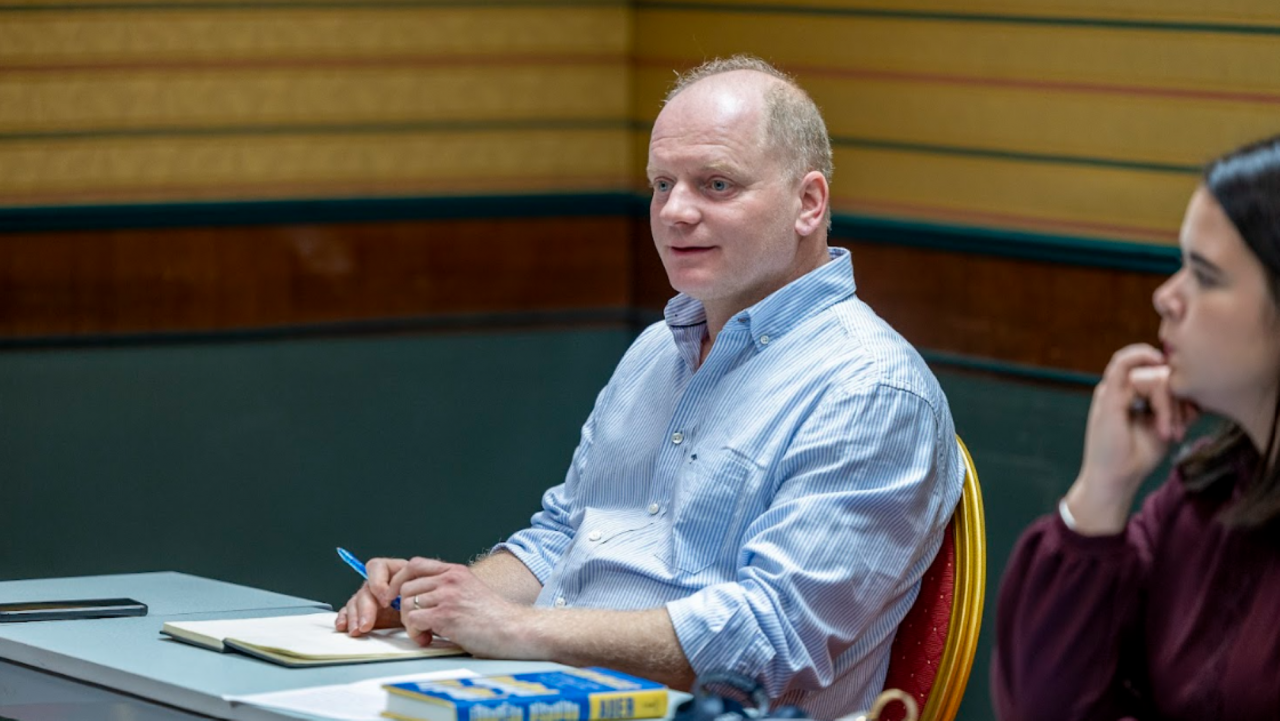
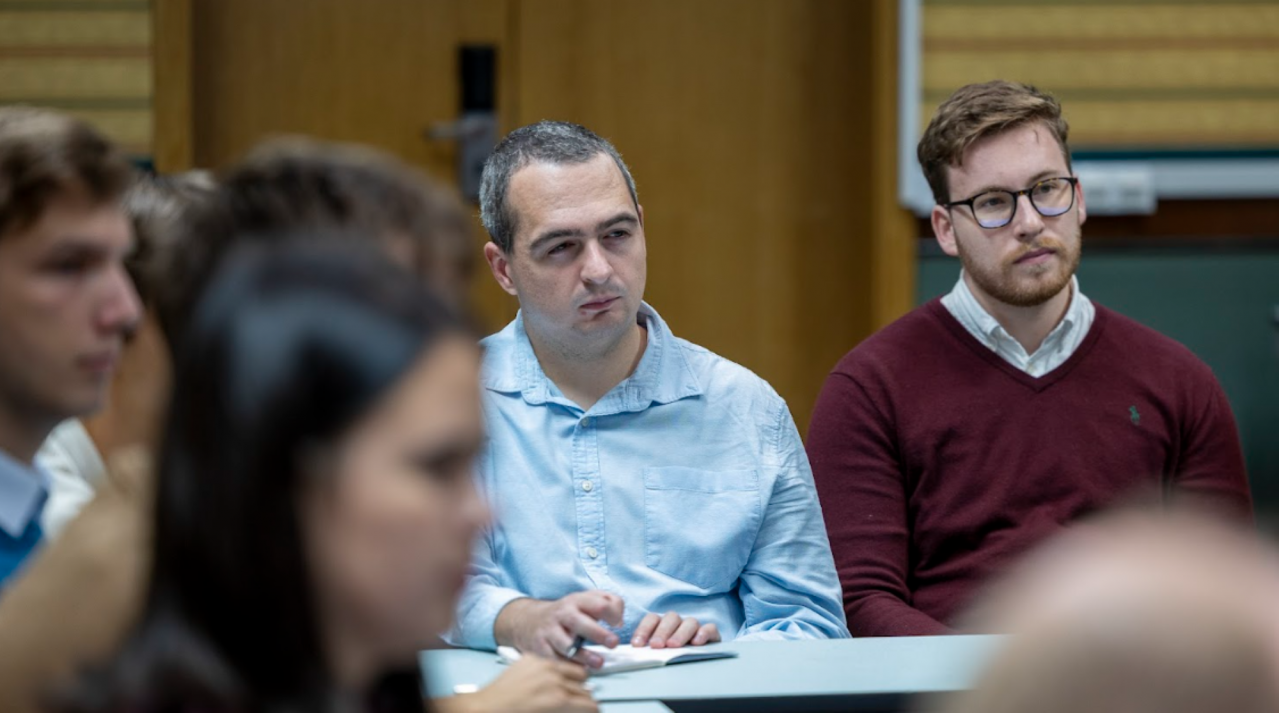
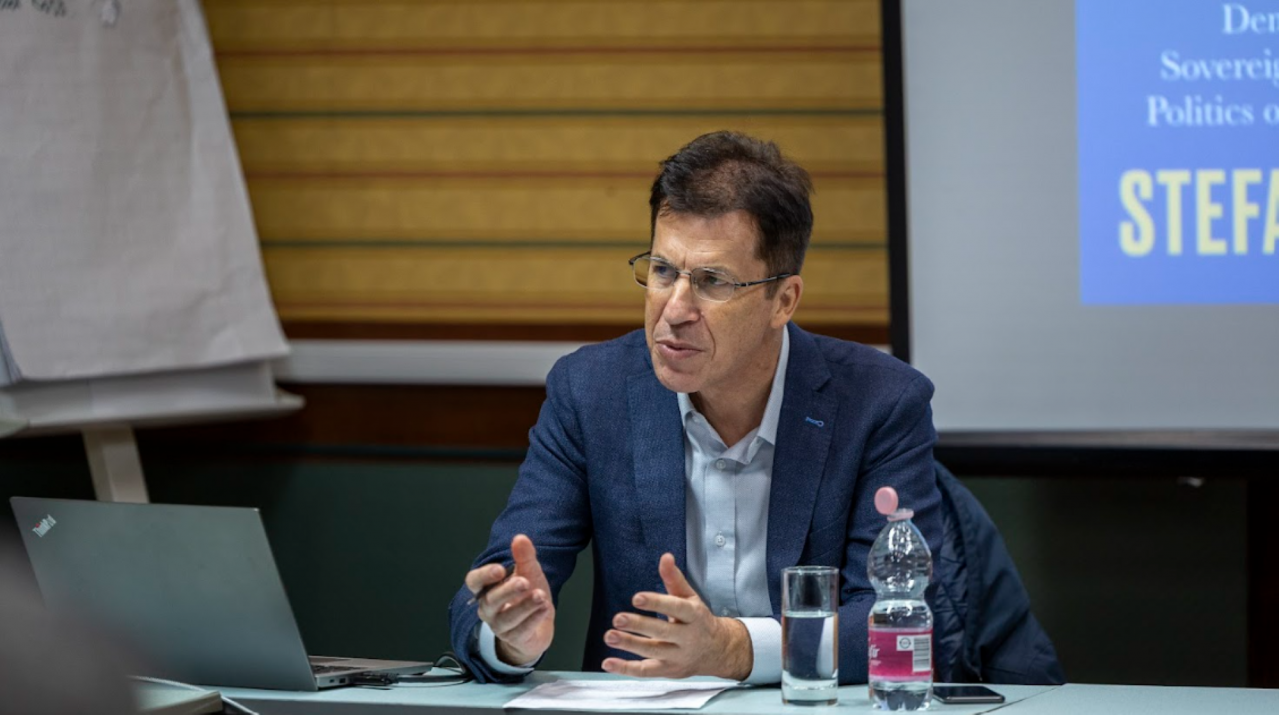
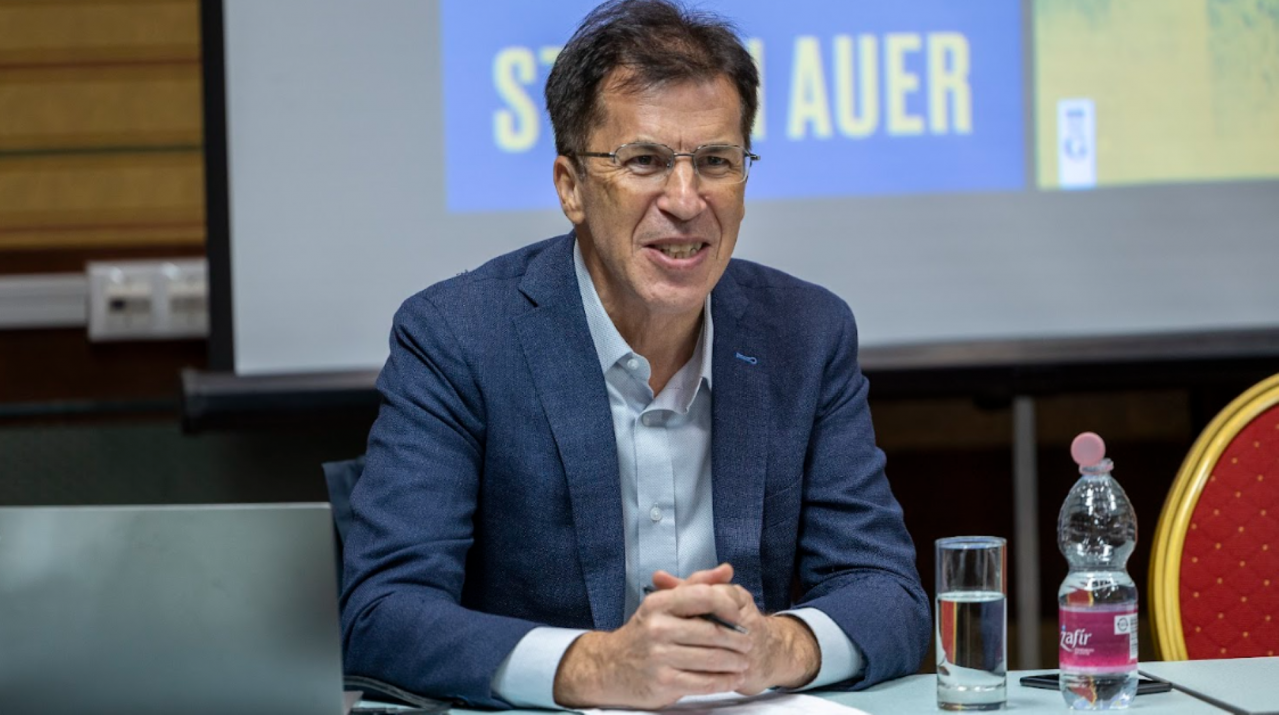
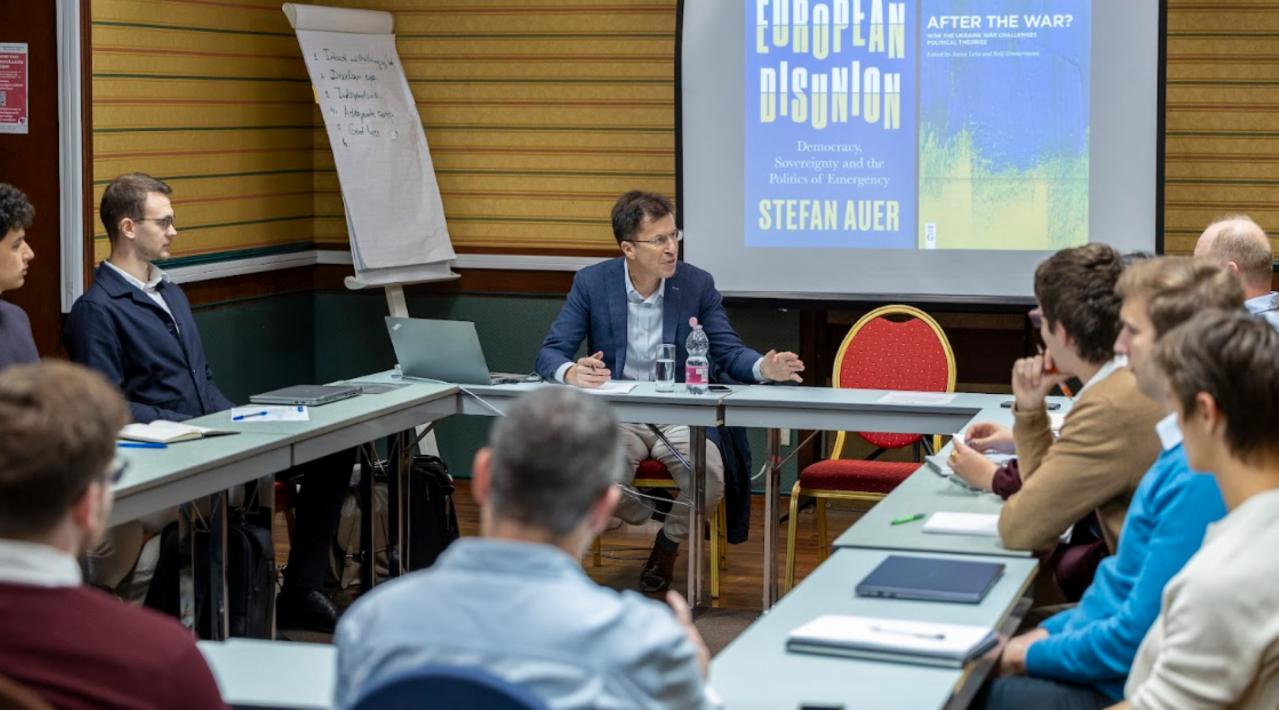
On October 16, the MCC Center for Constitutional Politics hosted Professor Štefan Auer from the University of Hong Kong, who delivered a lecture entitled “European Disunion” based on his recent book. Professor Auer, a distinguished scholar of political theory and European international relations, and a two-time recipient of the Jean Monnet Chair in EU Studies, explored the fundamental political and constitutional challenges facing the European Union today. His analysis centered on the troubled relationship between sovereignty, democracy, and the EU's integration model in the twenty-first century.
Professor Auer revisited the intellectual foundations supporting European unity, particularly the influence of thinkers like Hans Kelsen, whose vision of "peace through law" aimed to transcend national sovereignty via a normative, law-based integration. Auer argued that while this Kelsenian model of integration through law shaped the EU for decades, its attempt to depoliticize conflict through technocratic governance and legal procedures has proven increasingly fragile and counterproductive, especially during crises. He contended that this approach, often relying on "integration through stealth", has paradoxically fueled tensions and led to a governance model oscillating between unaccountable technocracy and disruptive politics of emergency.
Challenging the prevailing narrative of the EU as a successful post-sovereign polity, Professor Auer presented the core argument of his book: that the EU's fundamental crises stem from its ambitious attempt to overcome the nation-state and create a borderless, "post-national" political community. He argued this project has weakened democracy at the national level without creating a viable democratic alternative at the supranational level , due in part to the lack of a cohesive European demos (people). Consequently, Auer highlighted the return and enduring importance of national sovereignty as a necessary foundation for democratic legitimacy and accountability , questioning the effectiveness and coherence of concepts like "pooled sovereignty". Far from achieving an "ever closer Union," he suggested the EU's trajectory has often resulted in greater disunion and fragmentation, lending legitimacy to sovereignist movements advocating for a Europe of nation-states. His analysis points towards the inherent dysfunction of the current model and implies a need to reconsider its premises, perhaps concluding that less Europe could actually be more.
Furthermore, Auer critiqued the EU's self-perception and external strategy, particularly its long-held belief in its efficacy as a "soft power". He argued that the EU operated under the assumption that traditional geopolitics and "hard power" were largely relics of the past, believing its normative influence and economic interdependence were sufficient guarantees of peace and stability. However, as demonstrated starkly by Russia's invasion of Ukraine and the ongoing war, this assumption has proven dangerously flawed. The conflict underscores the continued, and perhaps primary, relevance of hard power in international relations, revealing the limitations of the EU's post-political, post-sovereign model when confronting actors willing to use force.
The lecture was followed by a lively discussion. Participants debated the democratic legitimacy of supranational institutions, the limits of national self-determination, the role of Central European states like Hungary within the EU, and the challenges confronting the EU as a geopolitical actor – particularly its capacity to act decisively in a world still defined by sovereign states and power politics.