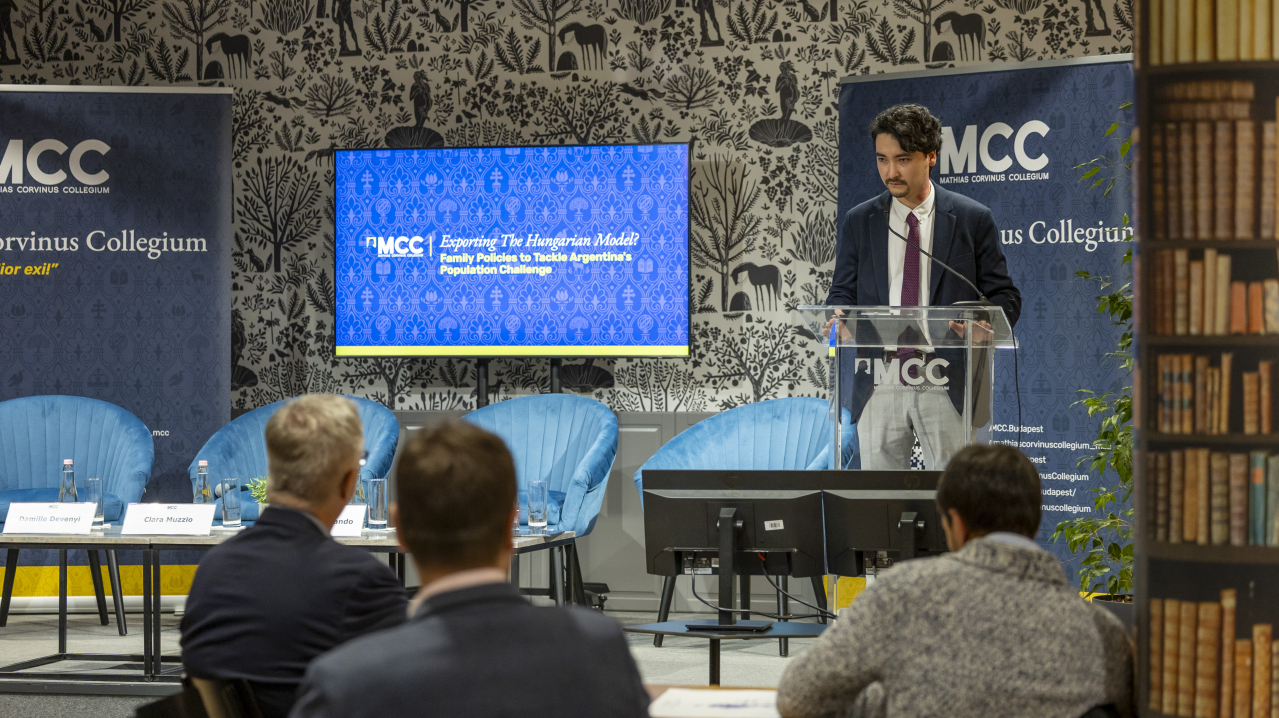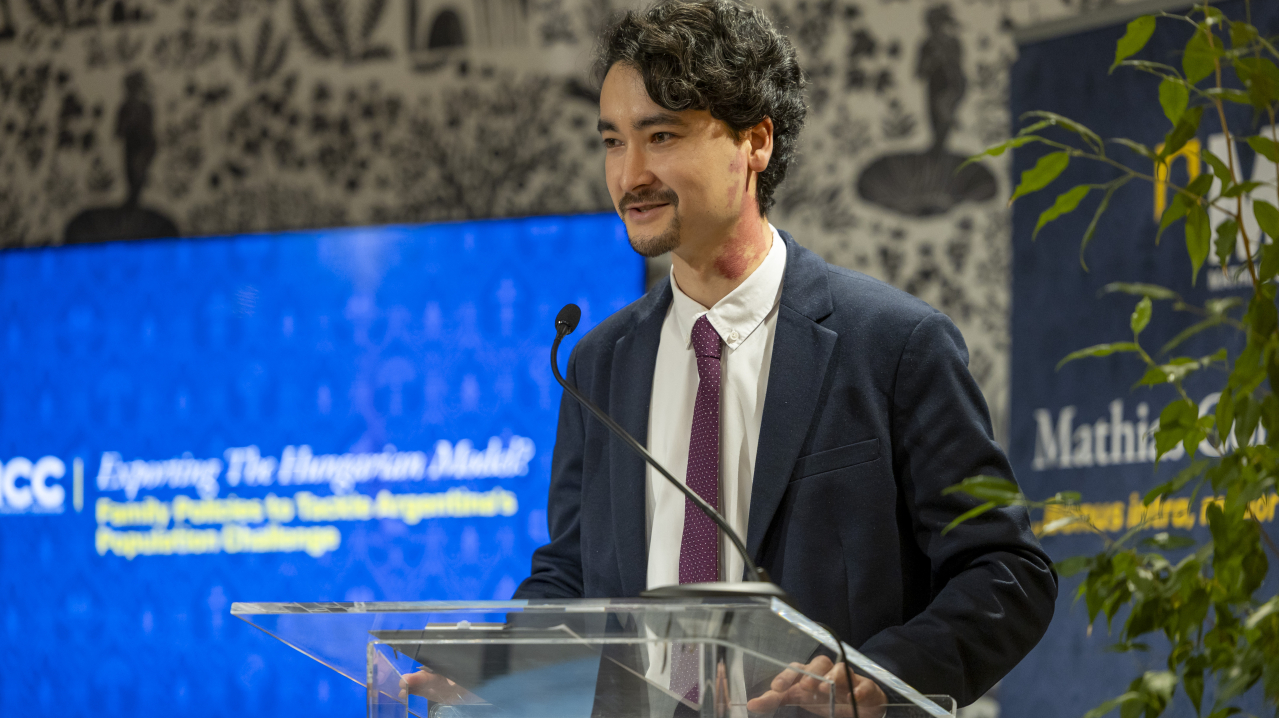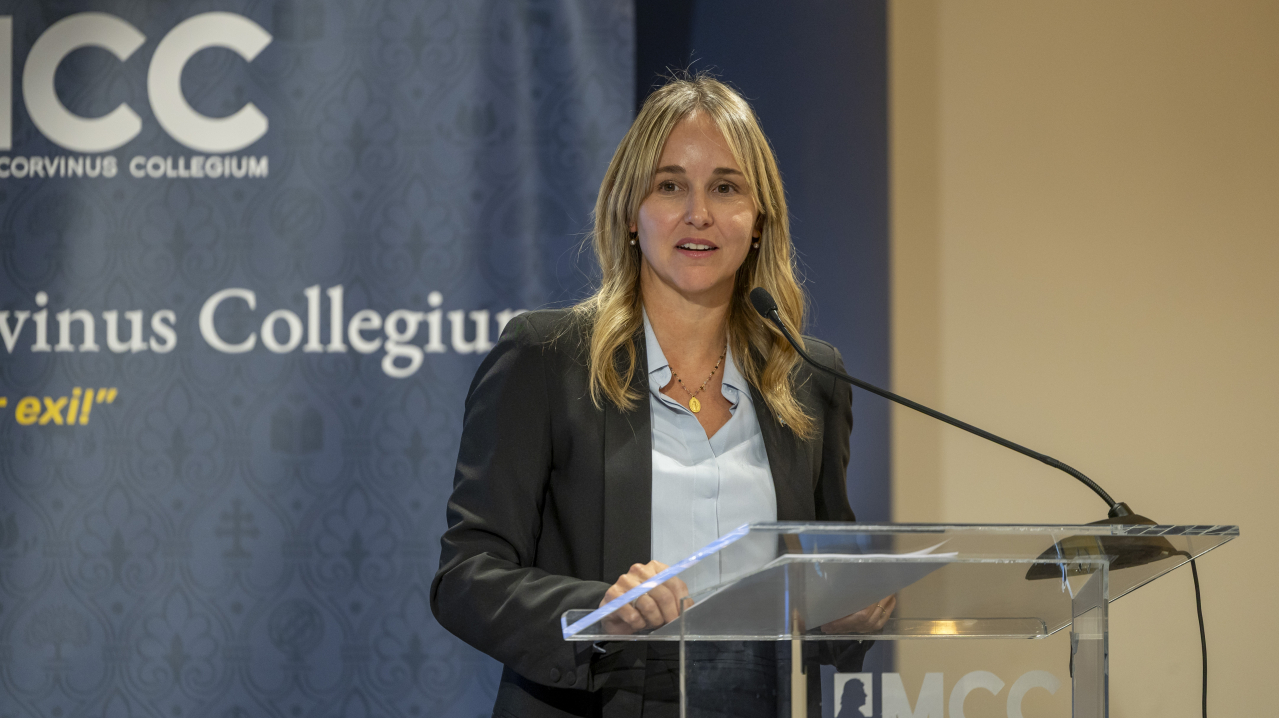
A timely discussion brought together Clara Muzzio, Deputy Chief of Government of the City of Buenos Aires, Árpád József Mészáros, Vice President for Strategy and Coordination at Hungary’s Mária Kopp Institute for Demography and Families, and Leonardo Orlando, Senior Researcher at MCC, to examine Argentina’s deepening demographic crisis and to consider whether elements of Hungary’s family policy framework could offer relevant lessons. The conversation focused on declining fertility, delayed family formation, and the long-term implications of population trends for social and economic sustainability, both nationally and in the city of Buenos Aires.
Clara Muzzio outlined the scale of demographic change in Buenos Aires, a city of three million residents and a similar number of daily commuters, where the total fertility rate has fallen to 0.9, far below replacement level. Since 2019, deaths have exceeded births, signaling a structural shift rather than a temporary fluctuation. She noted that pets now outnumber children by roughly two to one, a symbolic marker of changing social priorities, and highlighted that women account for seven out of ten university graduates at the University of Buenos Aires. The average age of first-time motherhood continues to rise, particularly among middle-class women, pointing to deeper cultural and structural transformations. While economic explanations are often emphasized, Muzzio stressed that many of the countries with the lowest fertility rates are also among the wealthiest, suggesting that prosperity alone does not reverse demographic decline.
Leonardo Orlando placed Argentina’s experience within a broader structural context, arguing that the country’s fertility rate, now close to Western European levels, should be understood as part of a long-term transition rather than a short-term crisis. He emphasized that delayed family formation often reflects rational responses to uncertainty shaped by a culture of safetyism, where economic instability, housing costs, and labor market volatility influence long-term life planning and encourage the postponement of irreversible commitments such as parenthood. Orlando also underlined that fertility decisions are shaped not only by material conditions but by cultural narratives transmitted through education, media, and public discourse, which often amplify fear and risk rather than supporting long-term human flourishing. He further introduced an evolutionary perspective on what he described as a mating crisis, driven by social narratives, technology such as dating applications, and educational imbalances that weaken pair formation and long-term commitment.
Árpád József Mészáros presented Hungary’s family policy approach as an example of treating demography as a long-term strategic investment rather than short-term social spending. Hungary’s model combines tax incentives for families with children, housing subsidies linked to family formation, expanded childcare infrastructure, and measures supporting work and family reconciliation. A central element, he explained, is policy stability and predictability, as families are more likely to make long-term decisions when they trust that support measures will remain consistent over time. In his assessment, housing support and tax benefits have been particularly influential, especially when paired with a clear political message that family life and childrearing are socially valued.
The discussion also addressed education, human capital, and the broader societal consequences of demographic decline. Sustained population contraction can lead to school closures, reduced access to maternity care, and shrinking institutional ecosystems, requiring education systems to adapt proactively with a focus on quality rather than passive downsizing. Concerns were raised about ideological shifts within education that blur biological, social, and historical realities, potentially contributing to uncertainty among younger generations about identity, family, and long-term life choices. Across the conversation, a shared conclusion emerged: demographic decline is not an abstract statistical issue but a structural transformation with far-reaching consequences for social cohesion, economic sustainability, and national continuity. While its causes are complex, participants emphasized that demographic trends are shaped by human decisions and can therefore be influenced by deliberate and sustained policy choices.