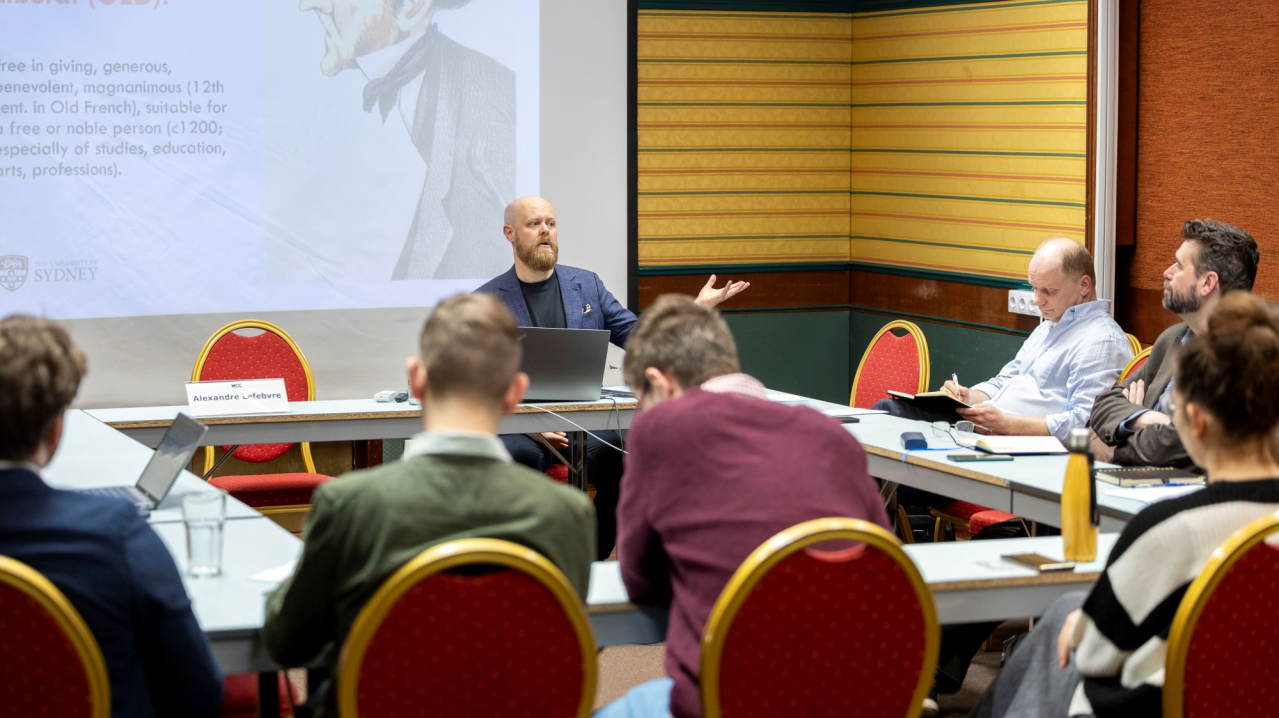
On 12 February, the MCC Center for Constitutional Politics hosted Alexandre Lefebvre, Professor of Political Philosophy at the University of Sydney. His lecture drew primarily on his book Liberalism as a Way of Life and revolved around the transition from “statecraft” to “soulcraft.” Lefebvre suggested that contemporary politics is no longer concerned only with institutions and administrative governance, but increasingly with the formation of personal character, values, and moral identity. While liberalism is often described as a neutral political framework, he argued that it in fact operates as a comprehensive moral outlook and a lived way of life that quietly shapes everyday habits, expectations, and ideals in Western societies. In his view, the current fragility of liberalism does not come from a lack of moral content, but rather from liberals’ hesitation to openly acknowledge and consciously live by their own principles. He captured this attitude with the term “liberaldom,” referring to a shallow, label-like identification with liberalism that is not supported by genuine self-reflection, discipline, or the consistent practice of liberal virtues.
The discussion after the lecture turned to the historical development and changing meanings of liberalism, as well as the image of the human person that liberal thought presupposes. Participants also reflected on how useful the concept of “liberaldom” might be in practice, and on the evolving relationship between democracy and liberalism, which today are increasingly treated as distinct rather than inseparable ideas. Overall, the conversation focused on how liberalism understands its own moral foundations and what role it can realistically play in contemporary political life.