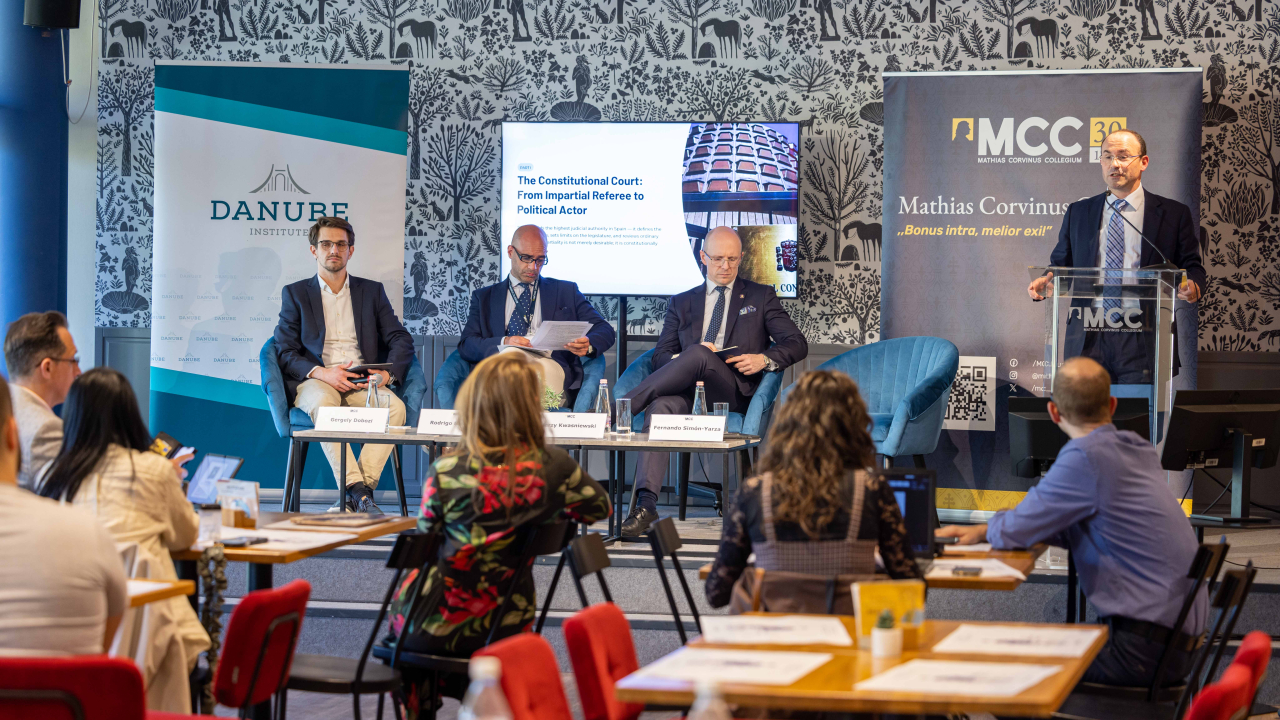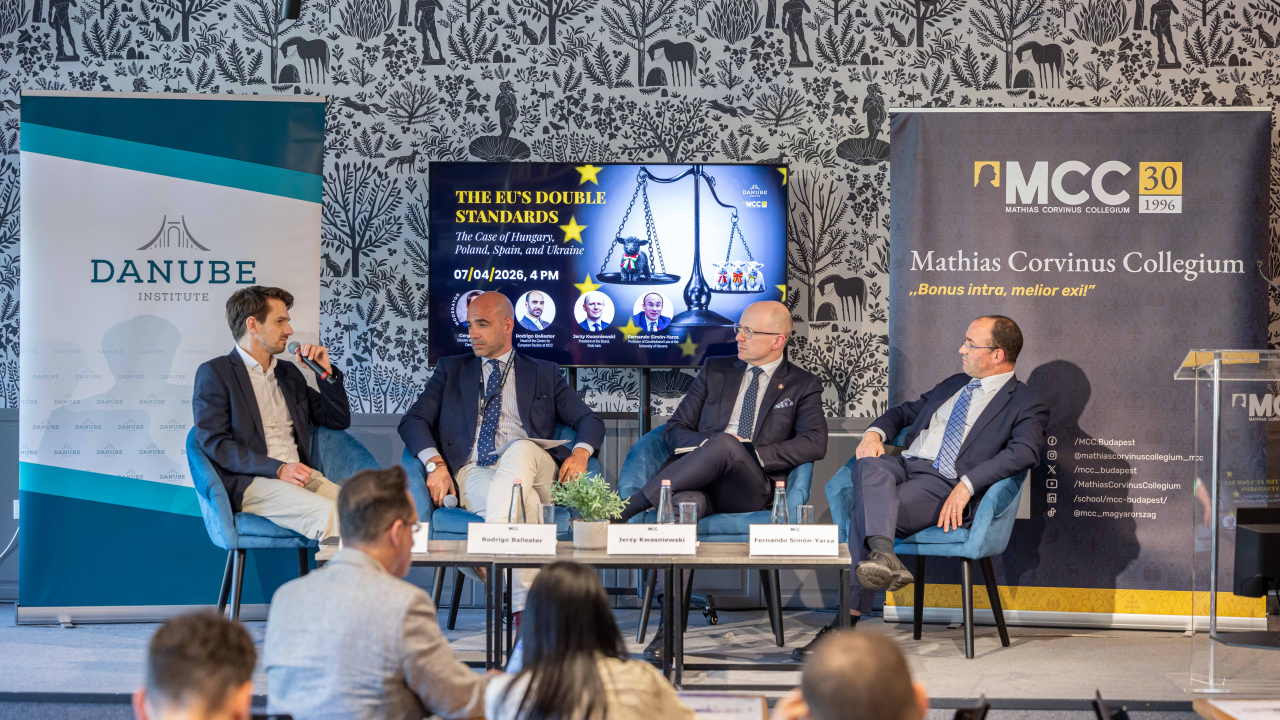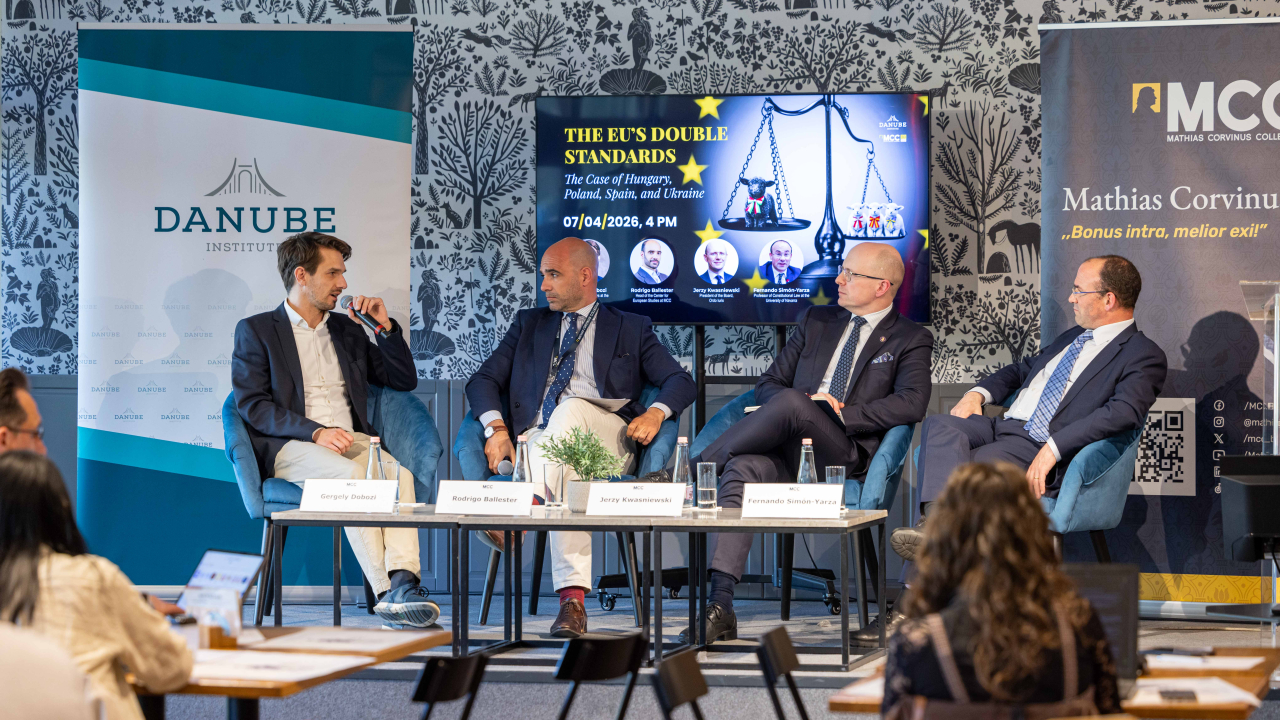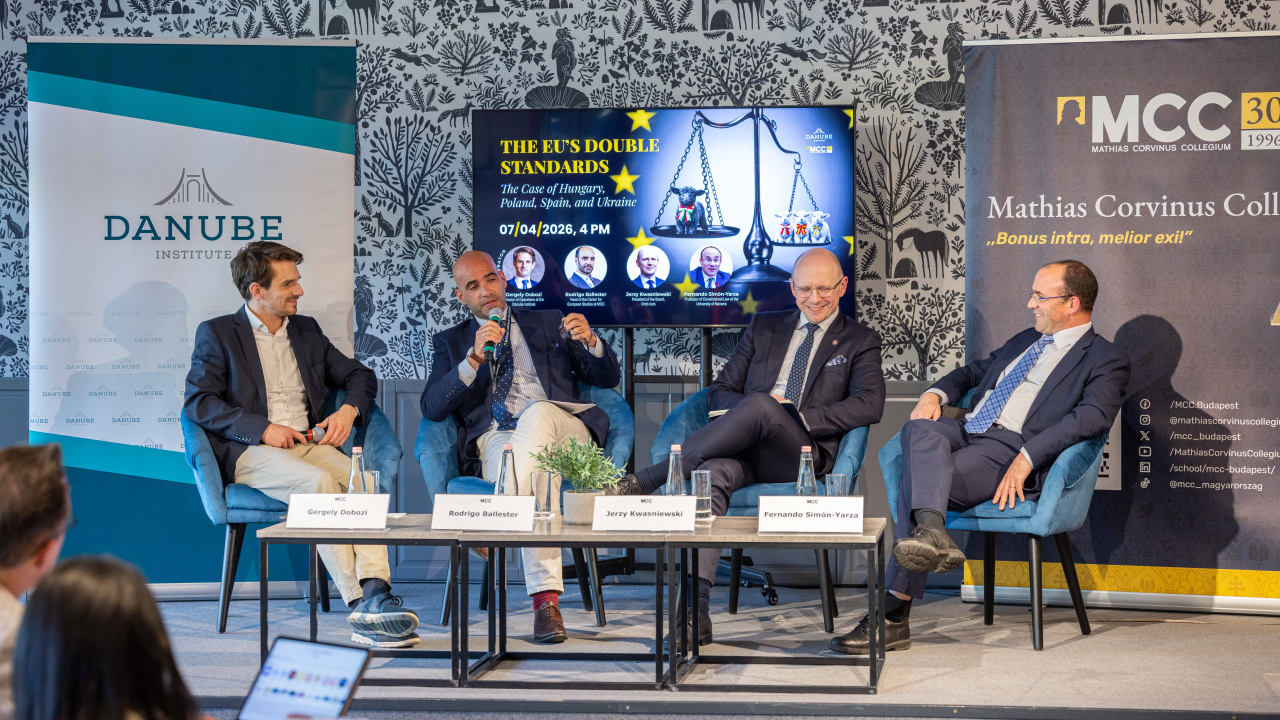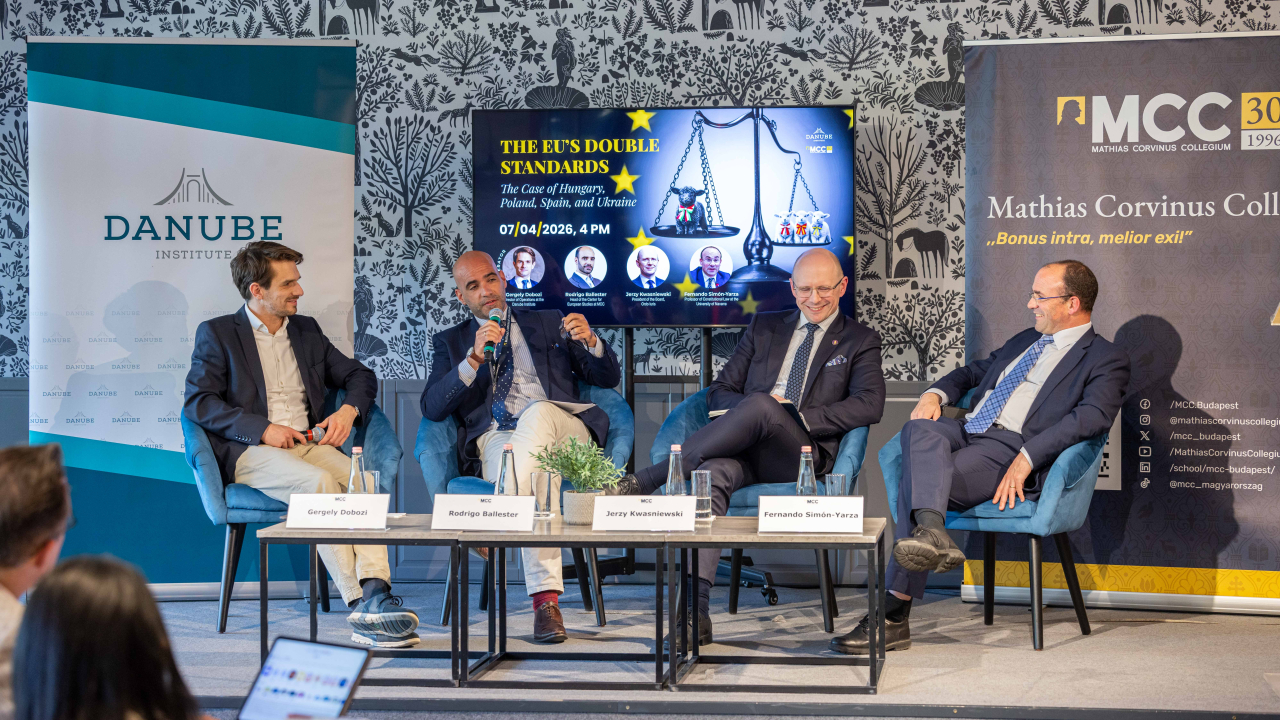
The Danube Institute, in cooperation with Mathias Corvinus Collegium, hosted a panel discussion titled The EU’s Double Standards – The Case of Hungary, Poland, Spain, and Ukraine. The event brought together leading experts to examine how the European Union applies its rule of law mechanisms across member states and candidate countries. The discussion featured Jerzy Kwasniewski, President of Ordo Iuris Institute, Rodrigo Ballester, Head of the Center for European Studies at MCC, and Fernando Simón-Yarza, Professor of Constitutional Law at the University of Navarra. The panel was moderated by Gergely Dobozi, Director of Operations at the Danube Institute.
The central focus of the discussion was whether the European Union applies its rule of law standards consistently. Fernando Simón-Yarza opened the panel by addressing developments in Spain, highlighting that certain pardon laws may conflict with EU regulations, yet have not triggered formal proceedings at the European level. His remarks set the stage for a broader debate on perceived inconsistencies in the Union’s approach.
Jerzy Kwasniewski drew attention to what he described as a double standard in the EU’s assessment of Poland. He argued that the country’s rule of law evaluation shifted significantly following the rise to power of Donald Tusk, with previously contested issues becoming more readily accepted by EU institutions. Rodrigo Ballester added that this case offers important lessons for Hungary, demonstrating how political changes within a country can rapidly influence the EU’s judgments and actions.
The issue of EU funding also played a prominent role in the discussion. Speakers noted that approximately 20 billion euros in funds remain frozen in Hungary due to concerns related to rule of law and corruption, while comparable controversies surrounding judicial reforms in Spain have not resulted in similar financial measures. This contrast was presented as a key example of differing treatment among member states.
Participants also addressed the use of Article 7 procedures, noting that proceedings against Poland were lifted following the formation of a pro-EU government. According to the panelists, this development further reinforced perceptions of inconsistency in the application of EU mechanisms.
The conversation extended to the European Union’s enlargement policy, with particular attention to Ukraine. While the EU supports the country’s accelerated accession, speakers pointed out that concerns regarding judicial independence and corruption remain unresolved, raising questions about the criteria applied in the accession process.
In conclusion, the panel highlighted concerns that the European Union’s rule of law mechanisms may not always be applied in a consistent manner. Through the examples discussed, the speakers argued that this perceived inconsistency risks undermining the credibility, predictability, and fairness of EU decision making, prompting a broader reflection on the principles guiding the Union’s actions.