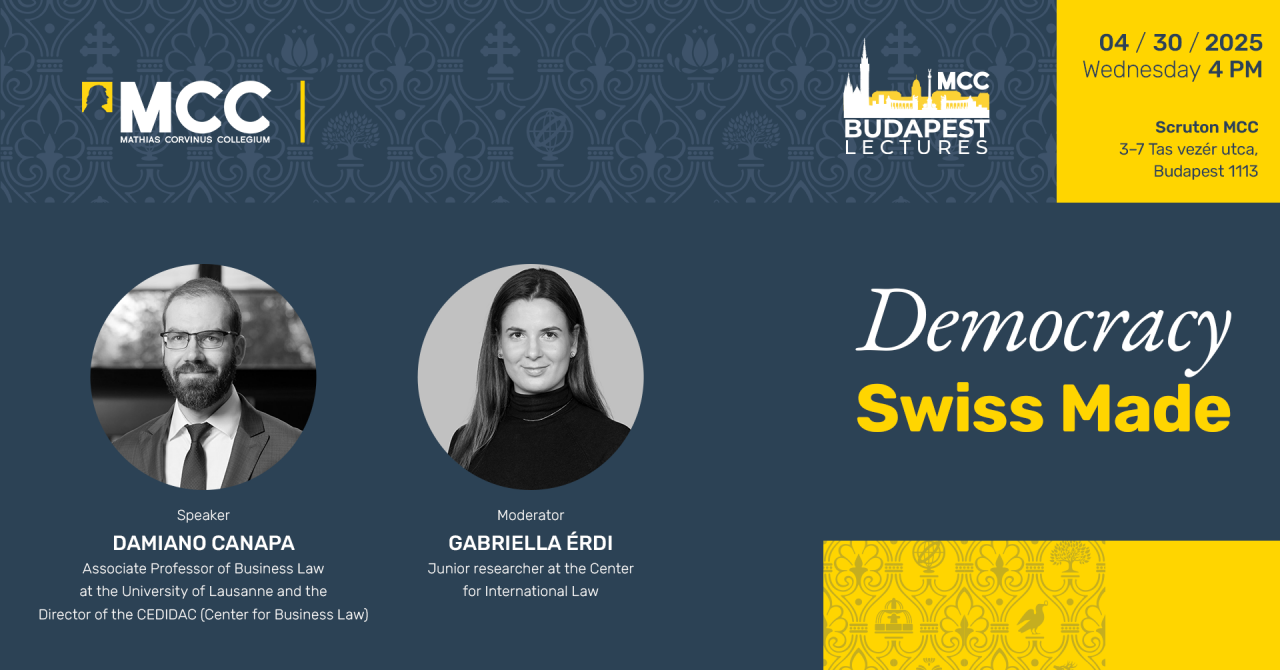
The Swiss constitutional and political architecture favors direct democracy as one of its unique characteristics. It allows the electorate to express their opinion on decisions taken by the Swiss Parliament and to propose amendments to the Federal Constitution. It is underpinned by two instruments: the initiative and the referendum. While it remains a complementary or corrective form of democracy in much of the European democracies, Swiss people exercise the direct form of democracies both on national and cantonal level.
What can democracies learn from the Swiss experience? What are the advantages and drawbacks of direct democracies and how could these tools reinforce democracy within the European Union, in particular within the already existing European Citizens’ Initiative? What are the limits of the tools of direct democracy? These and similar questions will be addressed through many examples by Damiano Canapa, associate professor of law at the University of Lausanne in a conversation with Gabirella Érdi, junior researcher at the Center for International Law.
Damiano Canapa is an Associate Professor of Business Law at the University of Lausanne and the Director of the CEDIDAC (Center for Business Law). His research interests include Swiss and European Corporate Law and Competition Law.
Gabriella Érdi is a junior researcher at the Center for International Law, her field of interest encompass sports law and sports arbitration.
 April 30, 2025
 4:00 PM
 MCC Scruton