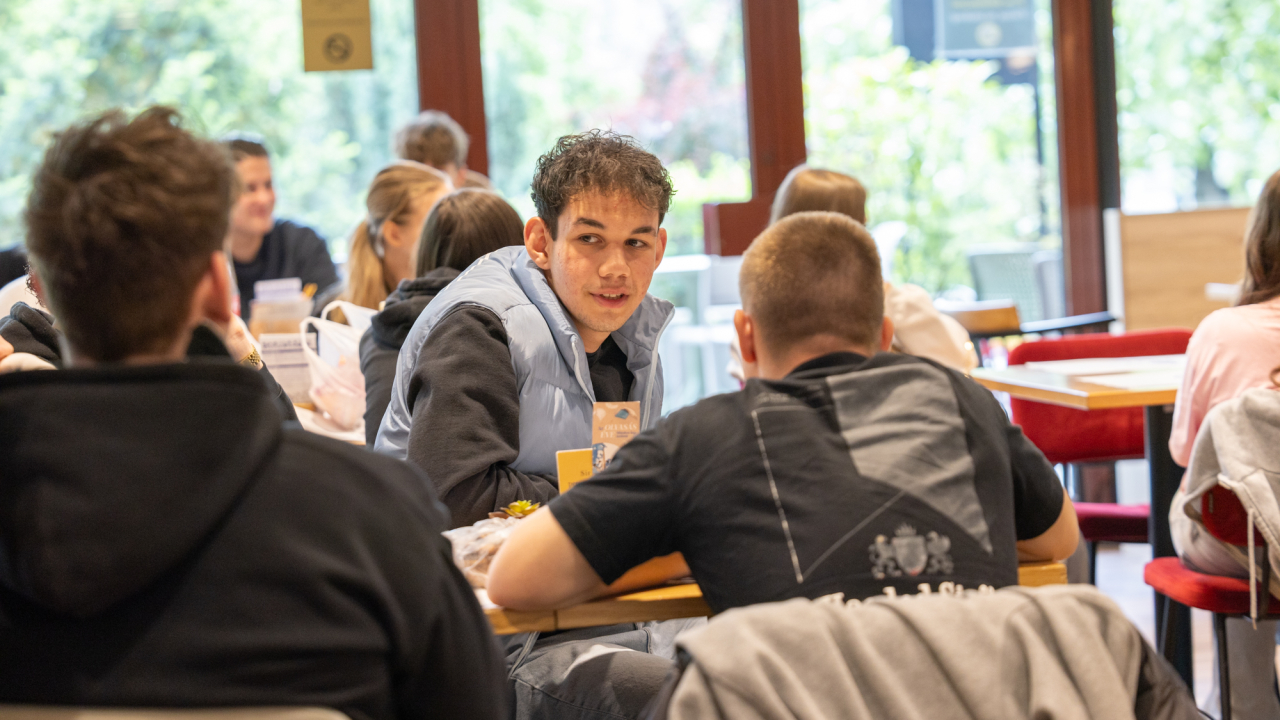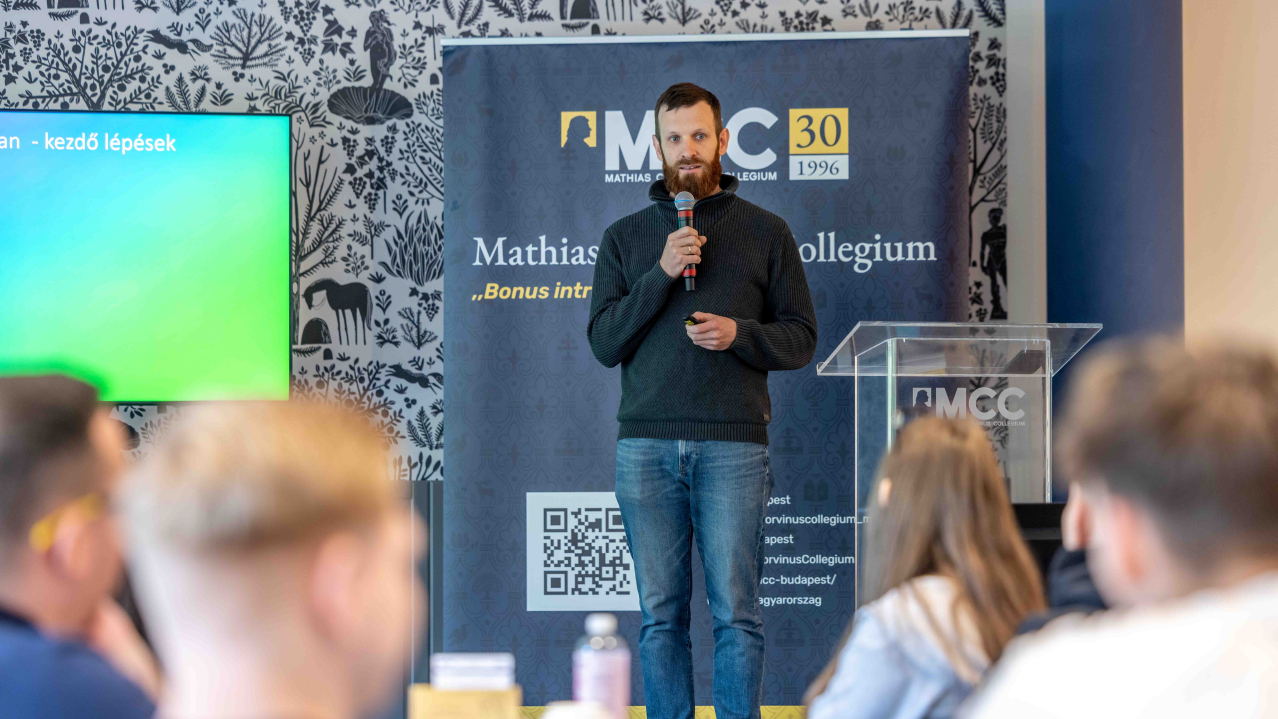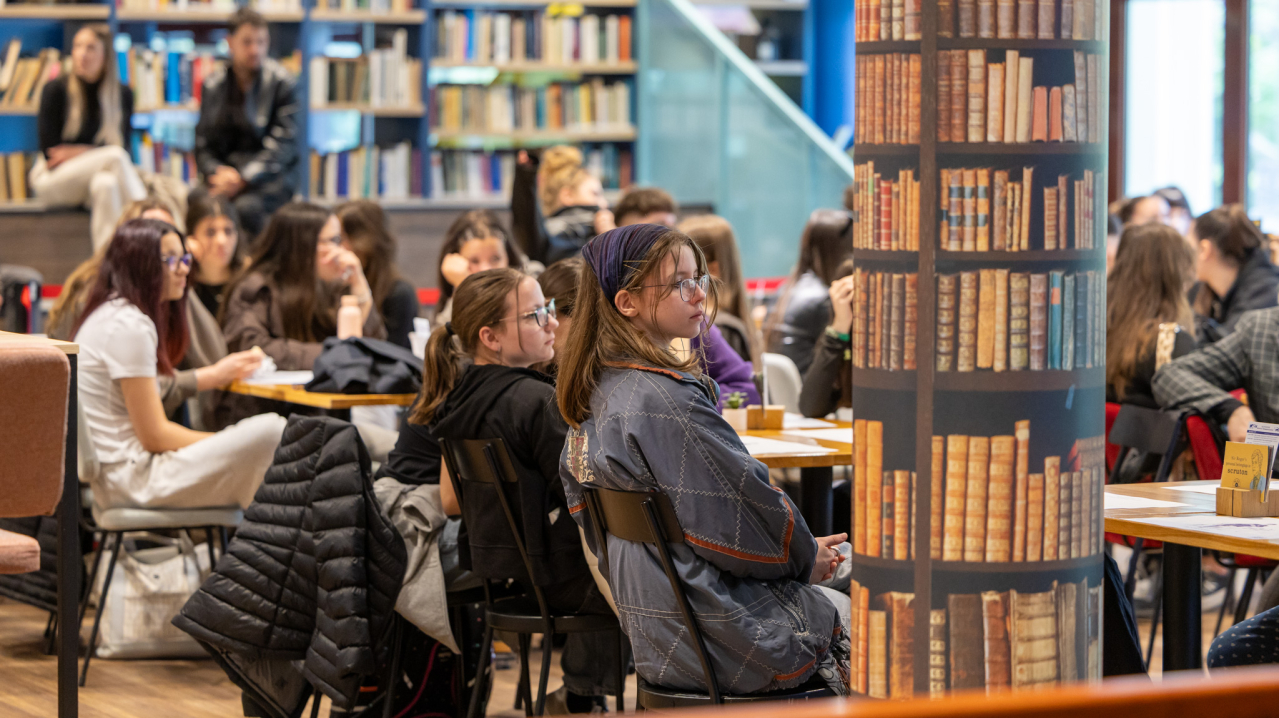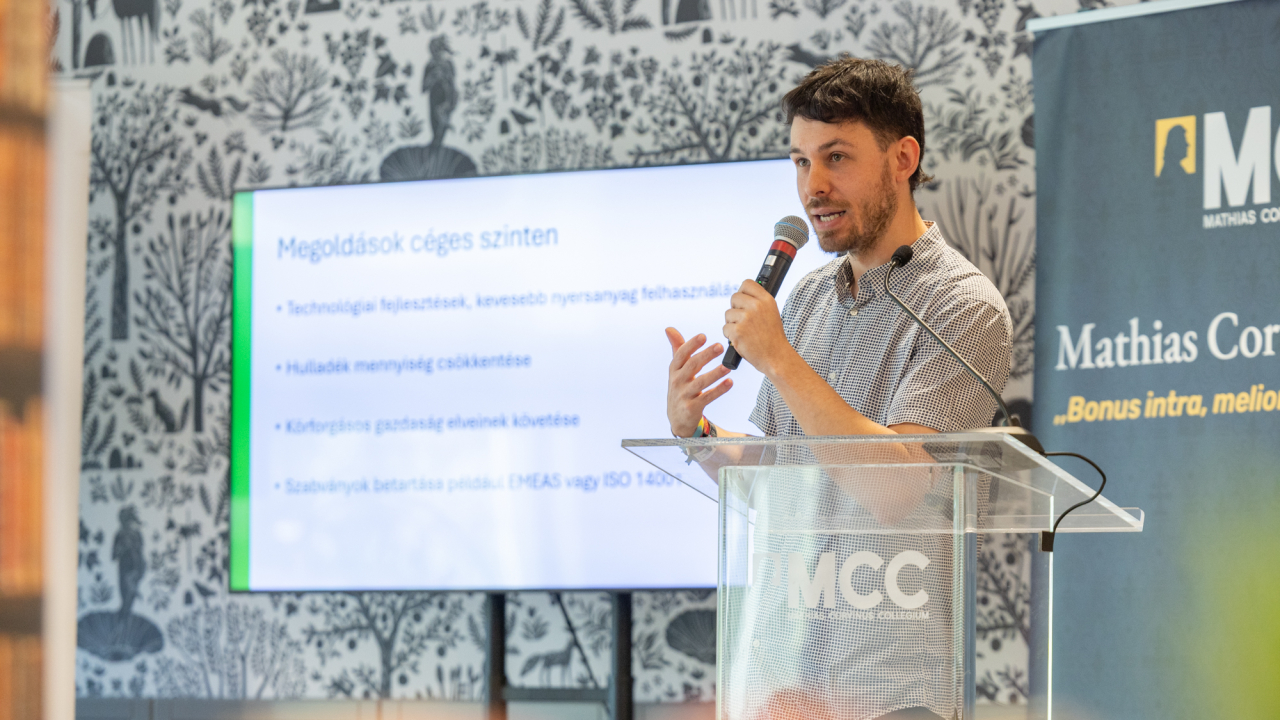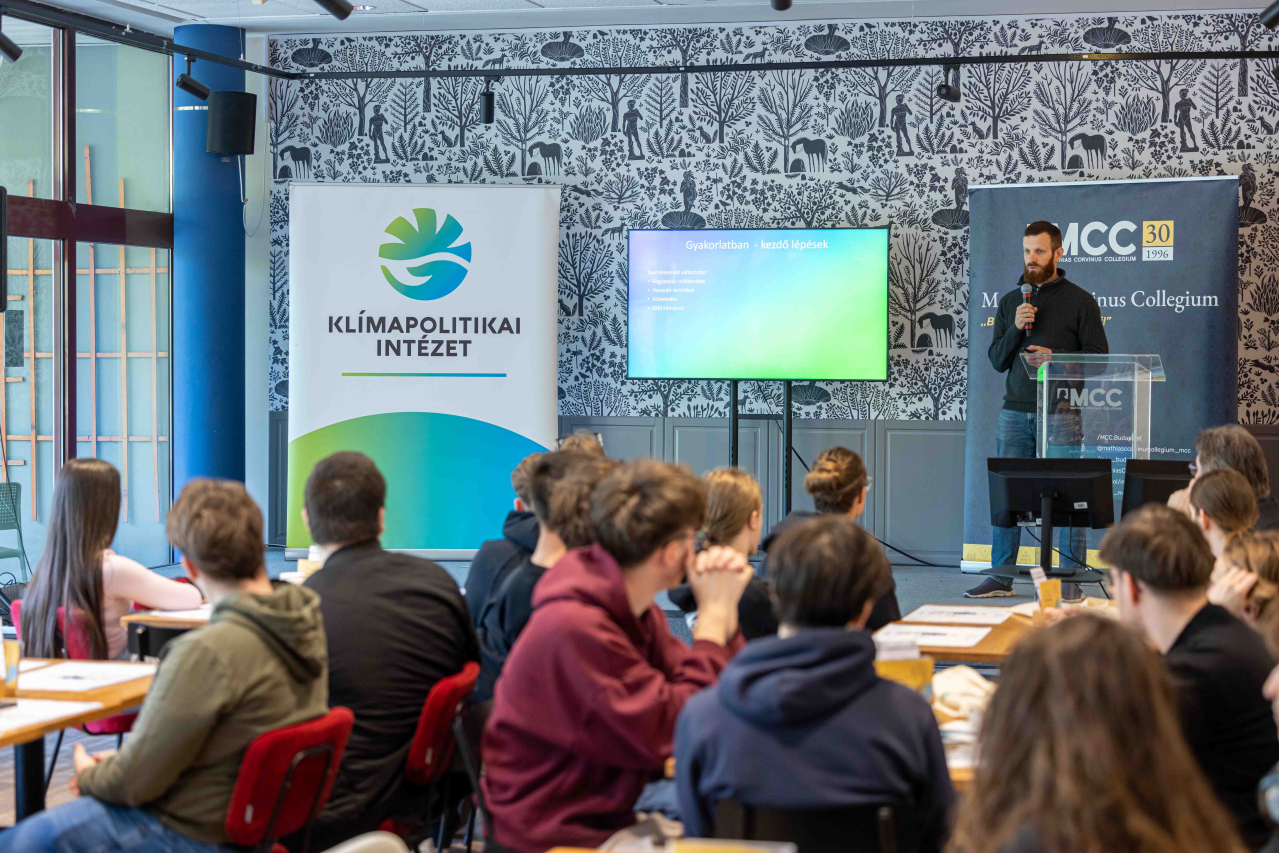
MCC's Climate Policy Institute once again joined the nationwide Sustainability Week, welcoming primary and secondary school students to a series of thought provoking lectures between April 21 and 25. The program set out to bring sustainability closer to students by offering a clearer and more comprehensive understanding of today’s environmental challenges and their everyday relevance.
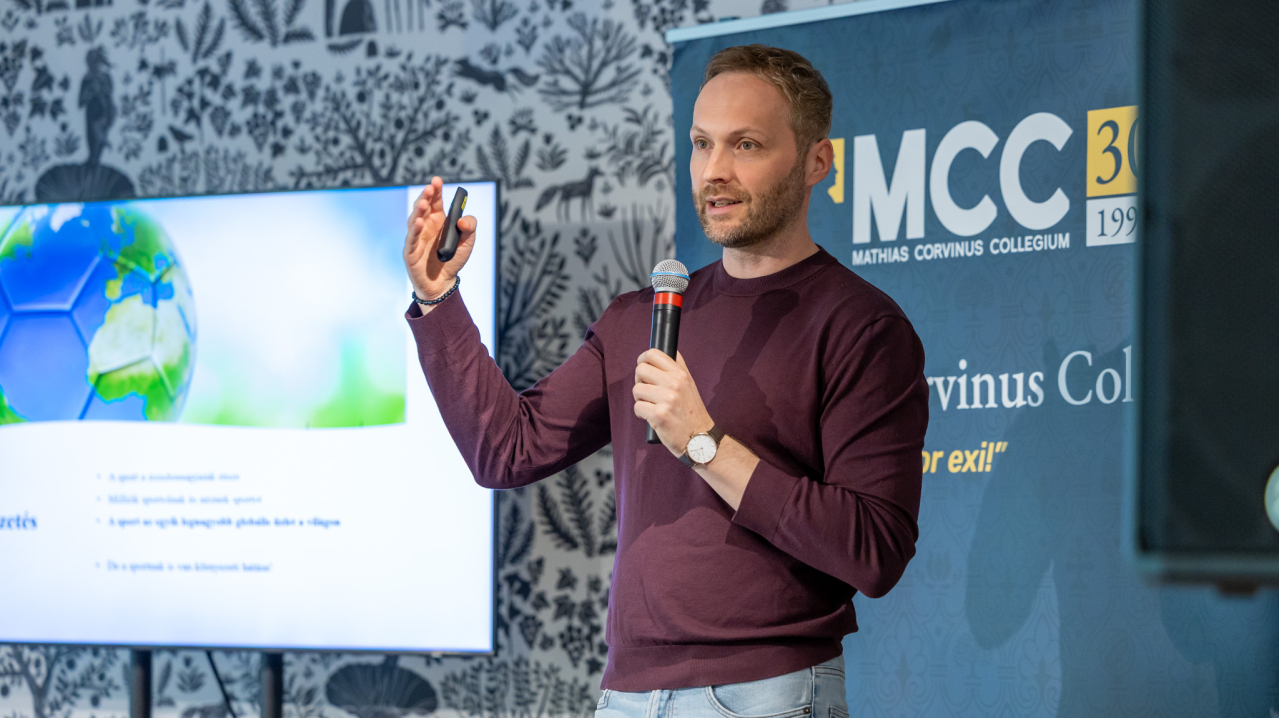
The opening session placed sustainable sport in focus, with Dr. Erik Kovács, Head of Research at the Climate Policy Institute, guiding participants through the topic. His lecture highlighted how the ecological footprint of sporting events can be reduced, the growing importance of conscious consumption in the world of sport, and the practical steps individuals can take to support more sustainable practices.
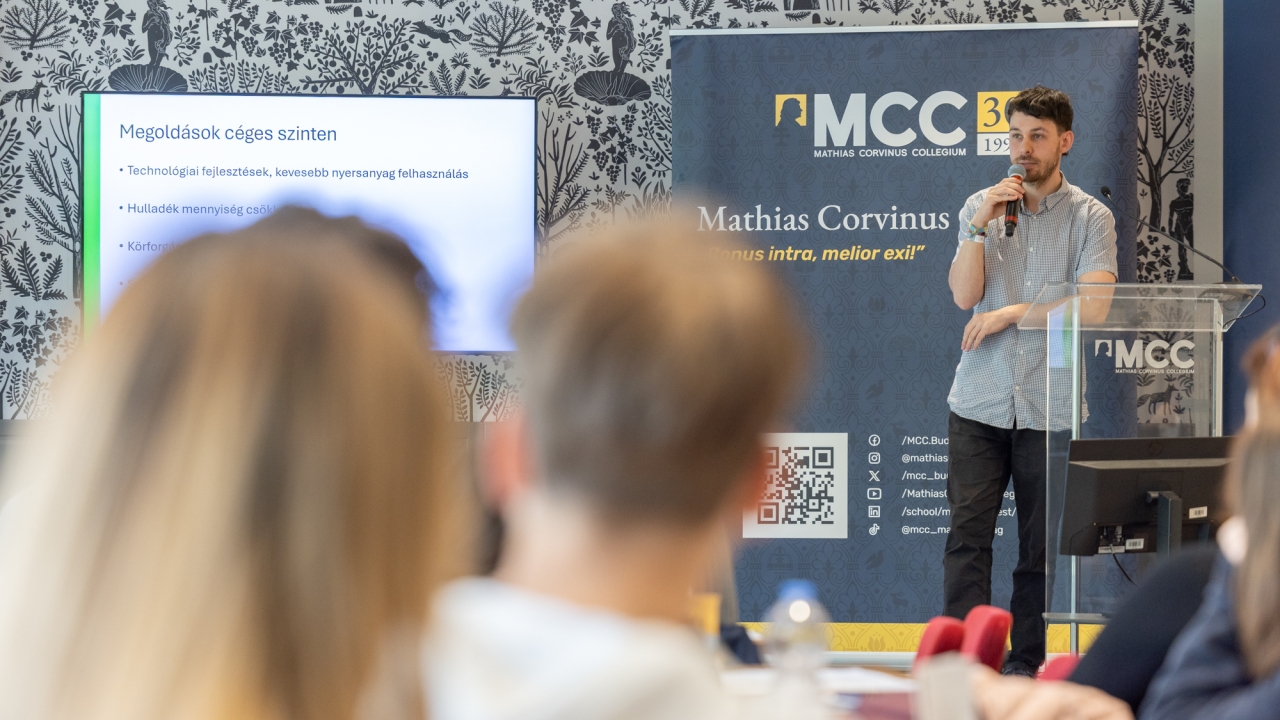
As the week progressed, students were introduced to a range of key sustainability issues. Dr. Zoltán Somosi, Researcher at the Climate Policy Institute addressed the challenges of waste management, drawing attention to the increasing volume of waste and the opportunities presented by a circular economy. His presentation encouraged participants to rethink waste not only as an environmental burden but also as a potential resource when approached with the right perspective.
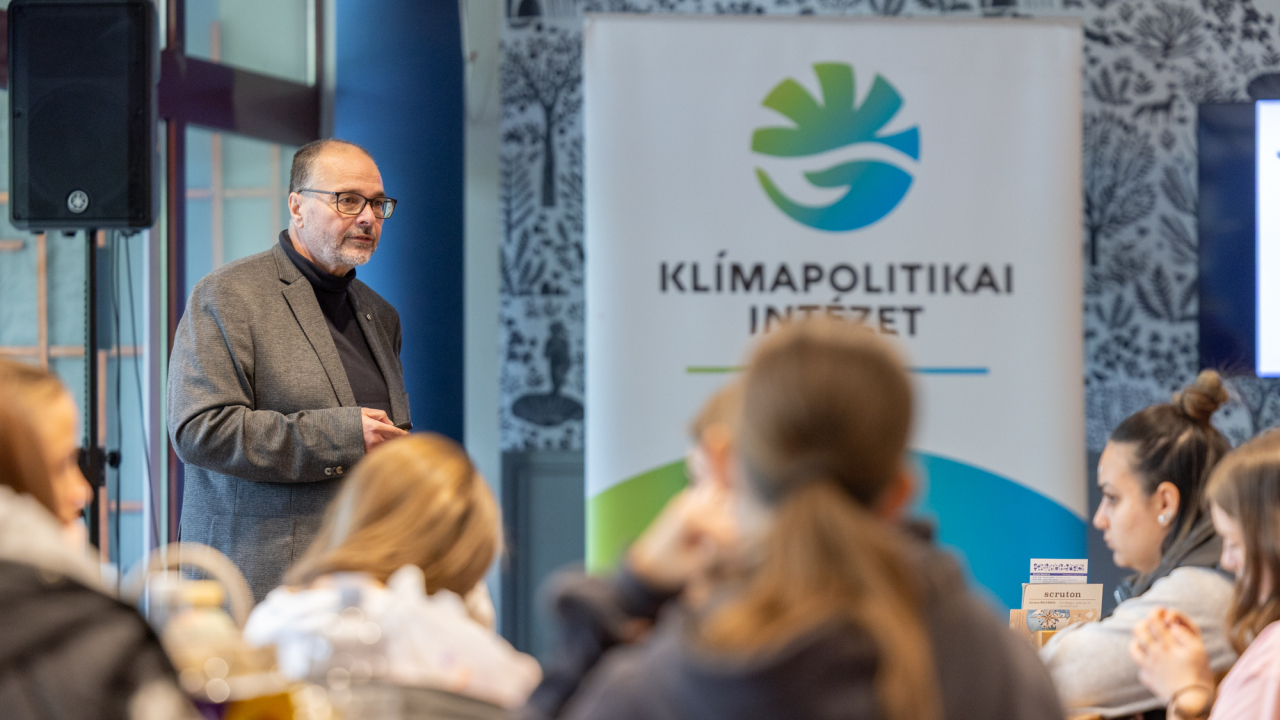
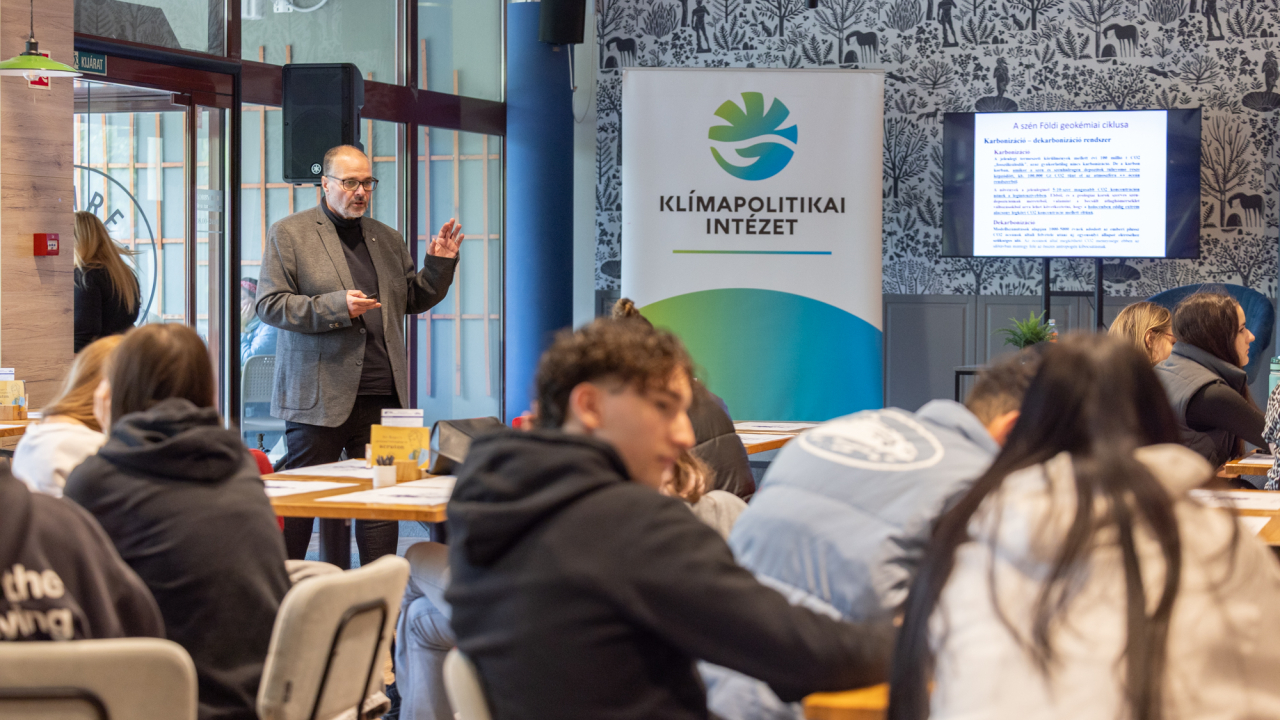
Senior Researcher, Dr. Ottó Toldi’s lecture explored the role of plants and forests in mitigating climate change. Participants gained valuable insight into how vegetation contributes to carbon dioxide absorption and how these processes may influence the future of agriculture and food production.
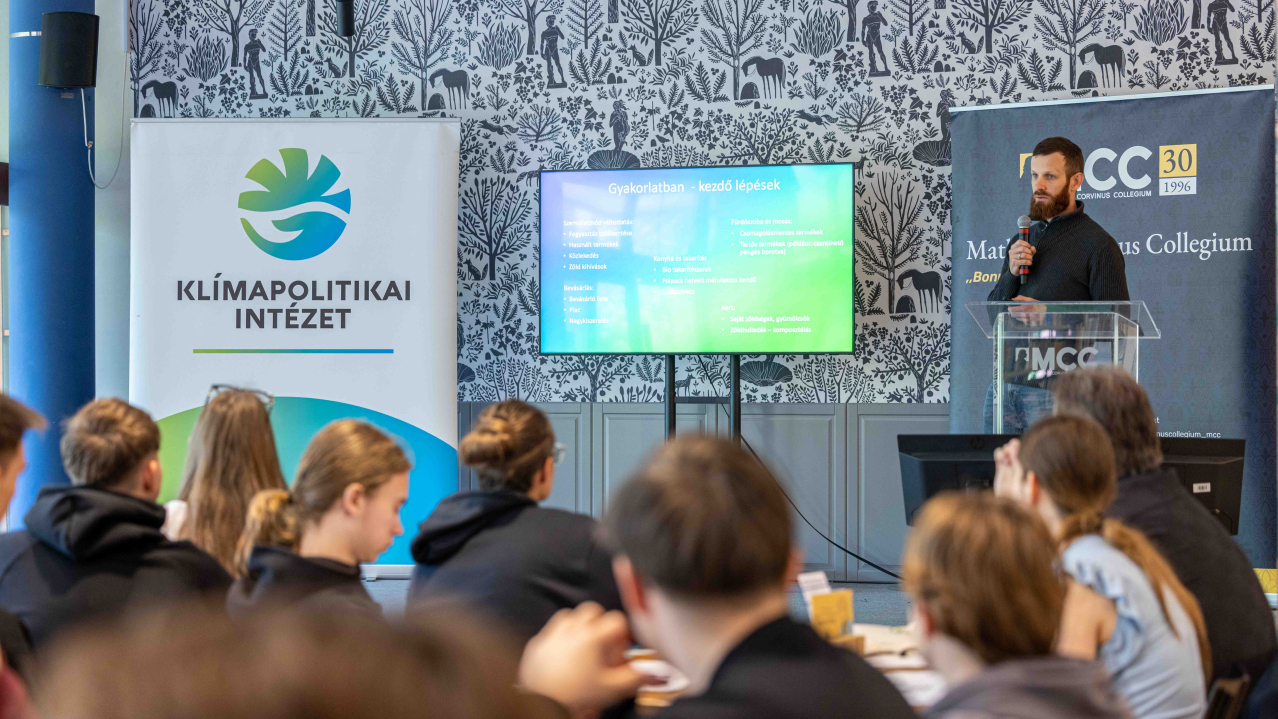
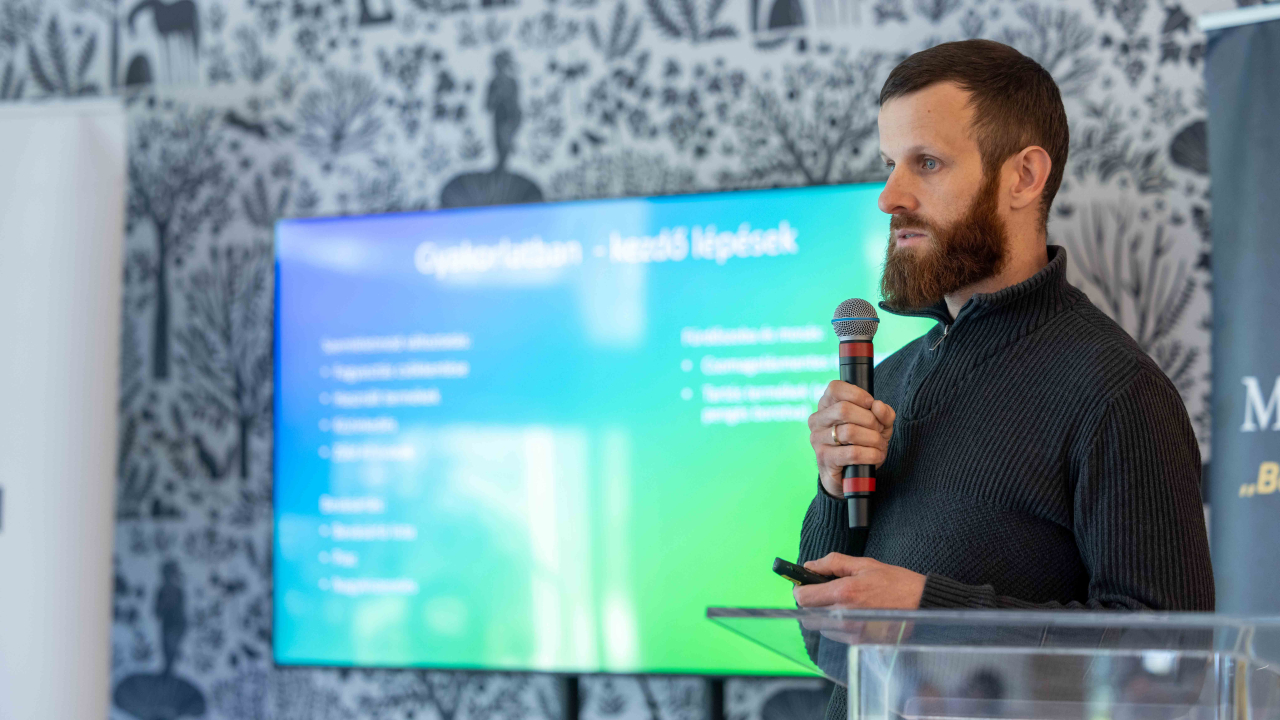
The program concluded with a lecture by Péter Szebenyi, Researcher at the Climate Policy Institute who focused on conscious consumption. Through concrete and relatable examples, he demonstrated how everyday decisions can significantly affect environmental impact, while also showing that a sustainable lifestyle can be achieved through a series of small, practical choices.
The Sustainability Week program clearly showed that younger generations are open to engaging with environmental issues and are eager to deepen their understanding when given the right framework. Through its contribution, MCC's Climate Policy Institute supported participants in developing a more conscious and informed approach to sustainability in their daily lives.