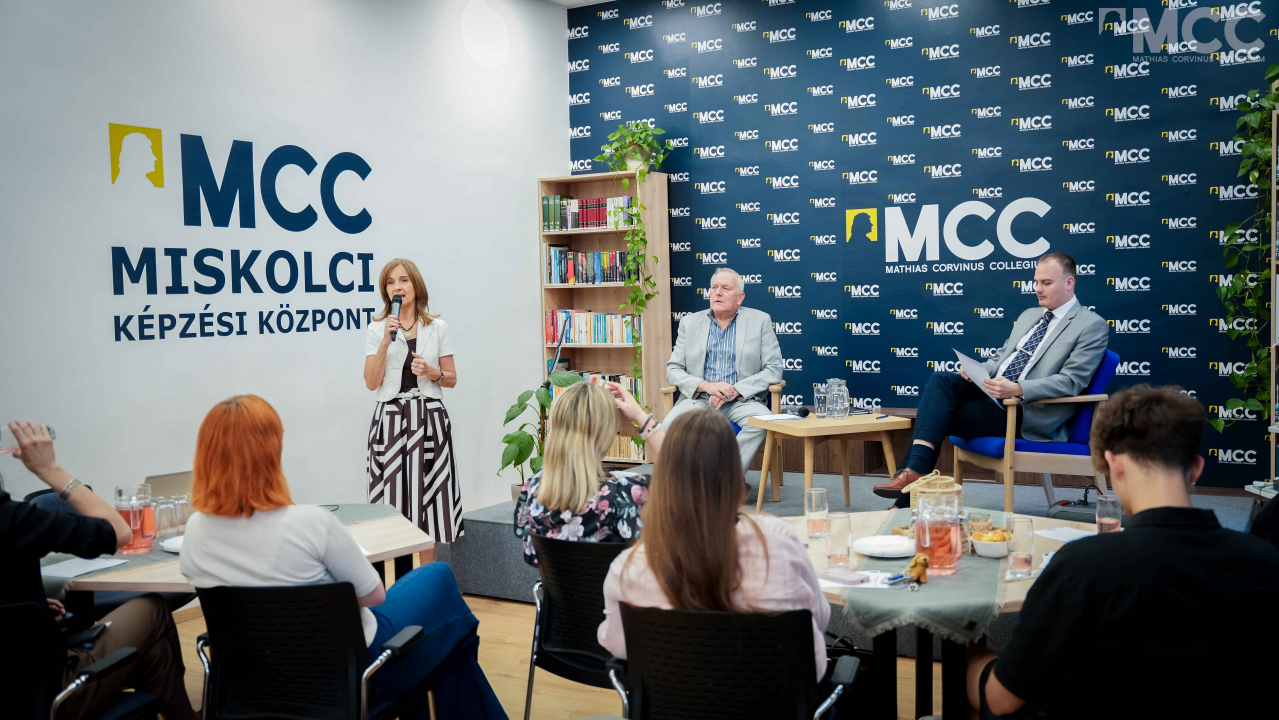
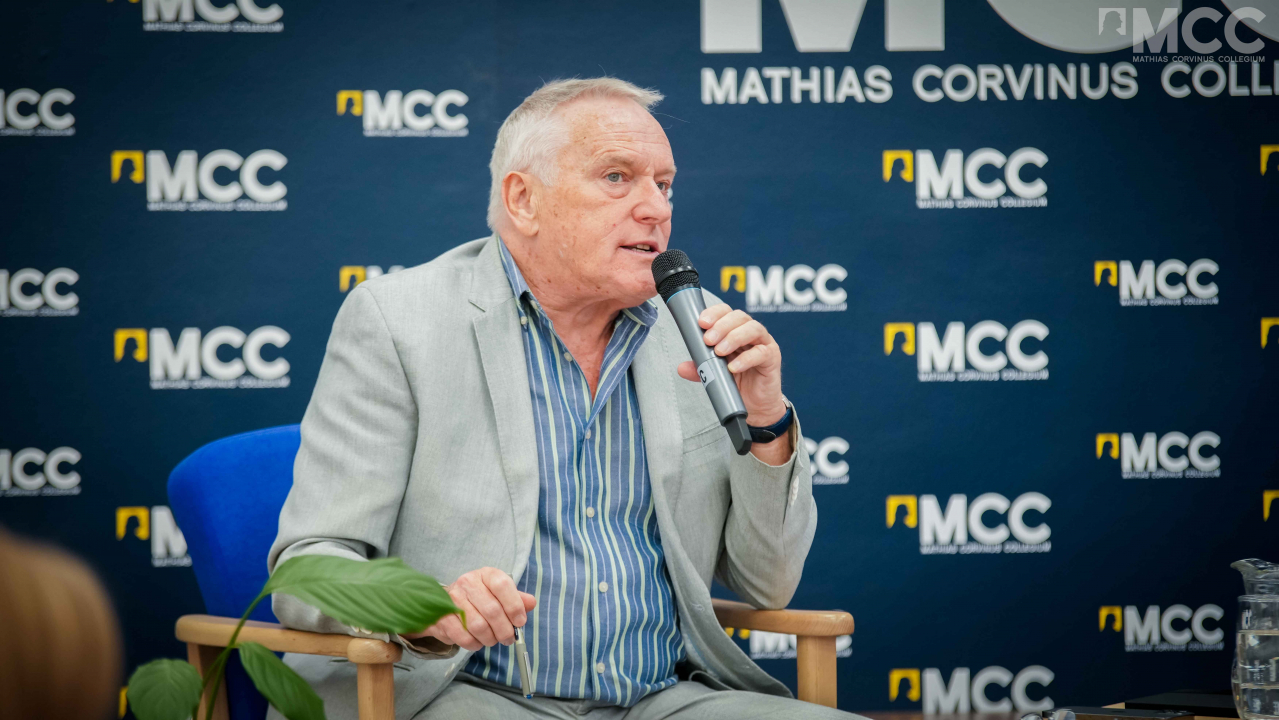
One of the greatest challenges facing modern society is understanding what technology truly means to us: is it merely a tool to make our daily lives easier, or has it become something more—a kind of savior we rely on and place our trust in? This was the focus of the lecture delivered in Miskolc by Jamas Woudhuysen, guest speaker of the MCC Budapest Summit on Technology and Society. The discussion was moderated by Máté Sipos, an MCC student from the Miskolc center.
During the discussion, the guest lecturer from London South Bank University highlighted that the concept of technology is much broader than we usually think. It is not just about computers and smartphones, but includes any tool designed to improve our living conditions, from ballpoint pens and household appliances to medical technologies and pharmaceuticals. In essence, technology is the materialization of our efforts to enhance the quality of human life.
Technological advancement can undoubtedly be life-saving. Think of airbags or modern medical equipment. However, we must not forget that technology does not always serve good purposes. The atomic bomb is a tragic example that shows how the results of human ingenuity, though morally neutral in themselves, can have vastly different effects depending on how we use them.
According to James Woudhuysen, it is a mistake to personify technology. We often talk to our computers or devices as if they were human, even though machines have no judgment and cannot distinguish between right and wrong. This mindset distances us from real responsibility. We, as humans, are the ones using technology, and therefore we are responsible for its consequences.
In Western societies, we increasingly hear about our dependency on technology, especially on mobile phones. But this view can be misleading. Woudhuysen argued that when we criticize technology, we are also, in a sense, attacking human nature, since we are the ones who created these tools. The relationship between humans and technology is mutual. We shape technology, and it shapes us in return, even physically, as seen in how excessive phone use affects our posture.
Critical thinking is essential in discussions surrounding technological development. We must not blindly accept everything the media or social platforms present to us. Belief in progress does not mean we should see technological advancement as all-powerful. The key question is how to strike a balance between technological possibilities and human values.
Perhaps the most important takeaway, Woudhuysen noted, is that we must not lose sight of the essential role of human relationships, even as technology advances. For a speaker, regardless of what technology they use, direct eye contact and immediate awareness of the audience’s reactions are indispensable. When communicating through technology, we lose facial expressions and instant feedback, which significantly diminishes the quality of human interaction.
Speech is not only a tool for expressing our thoughts, it also shapes and refines how we think. When we speak in a structured way, we also structure our thoughts, and this process works most effectively within the context of direct human communication.
According to James Woudhuysen, exploring the relationship between technology and society reminds us that although technological progress has undoubtedly propelled us forward, we should neither demonize nor idealize it. The real challenge lies in finding the right balance. We should make use of the opportunities technology provides while preserving the most valuable aspects of our humanity: direct relationships, critical thinking, and responsible decision-making. Only then can technology truly serve our lives as a tool, rather than becoming a stylized savior or a demonized force.