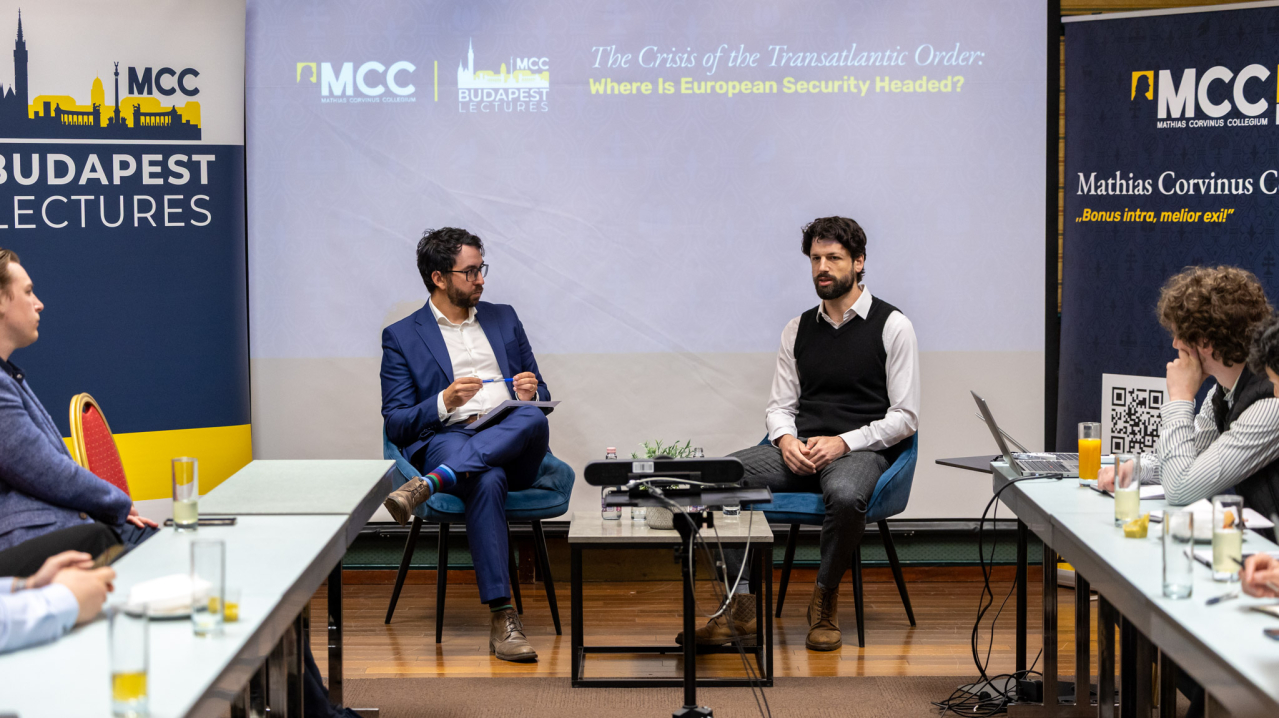
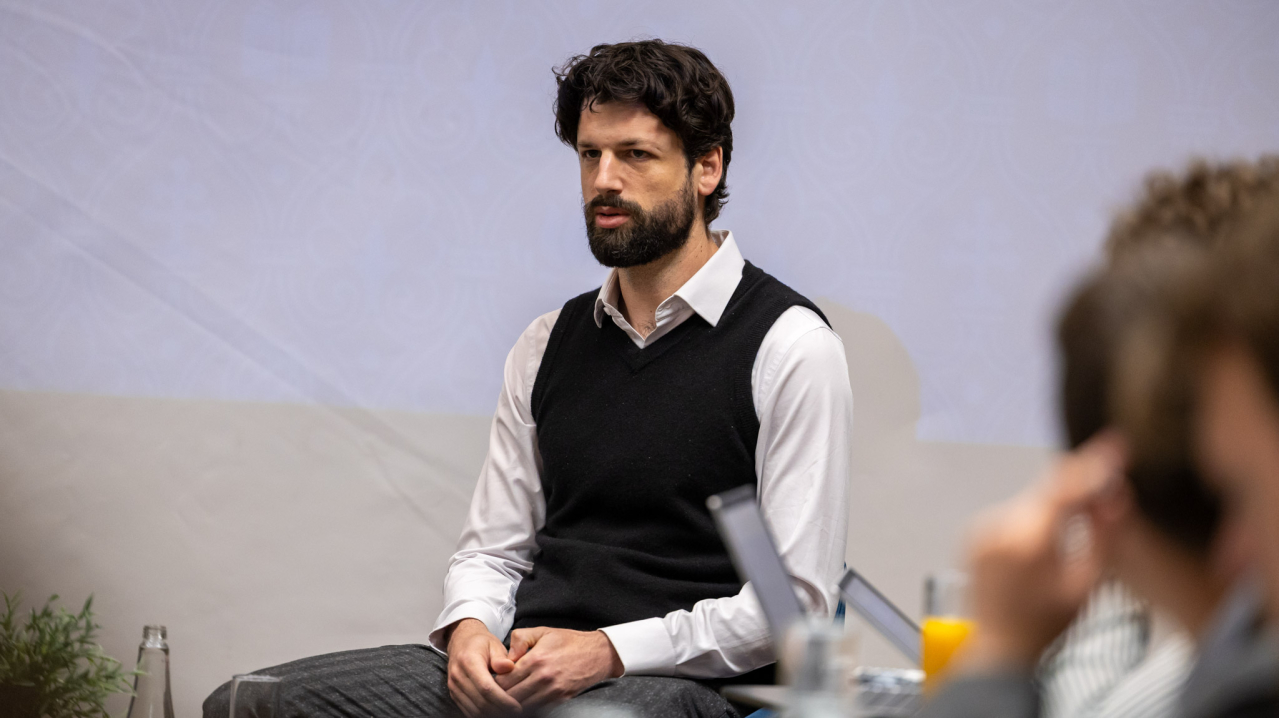
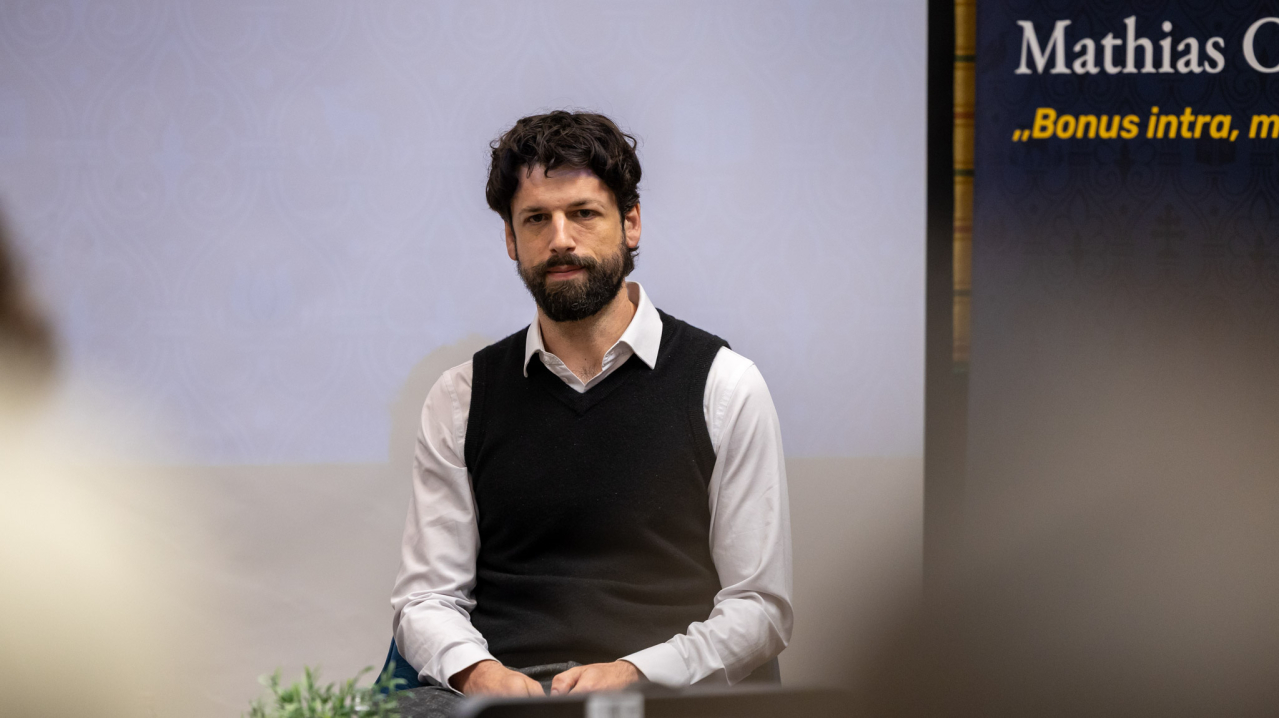
Peter Slezkine, Director of the Russia Program at the Stimson Center, was the latest guest of MCC's Budapest Lecture series, where he examined the future of transatlantic relations, Europe’s security architecture, and the evolving role of NATO.
During his lecture, Dr. Slezkine argued that the current transatlantic security system has become increasingly disproportionate and requires reassessment.
Discussing NATO’s eastern enlargement, he described it as both a success for post-Soviet states seeking greater sovereignty and a process that contributed to the emergence of a new sphere of influence. He also raised questions about the credibility and sustainability of existing security guarantees in the region.
Looking ahead, Dr. Slezkine outlined three possible paths for Europe’s security policy: the creation of an independent European military force or expanded regional defense cooperation.
In his concluding remarks, Dr. Slezkine argued that the European Union should focus less on becoming a geopolitical great power and more on strengthening its position as a global leader in technology, trade, and economic influence.