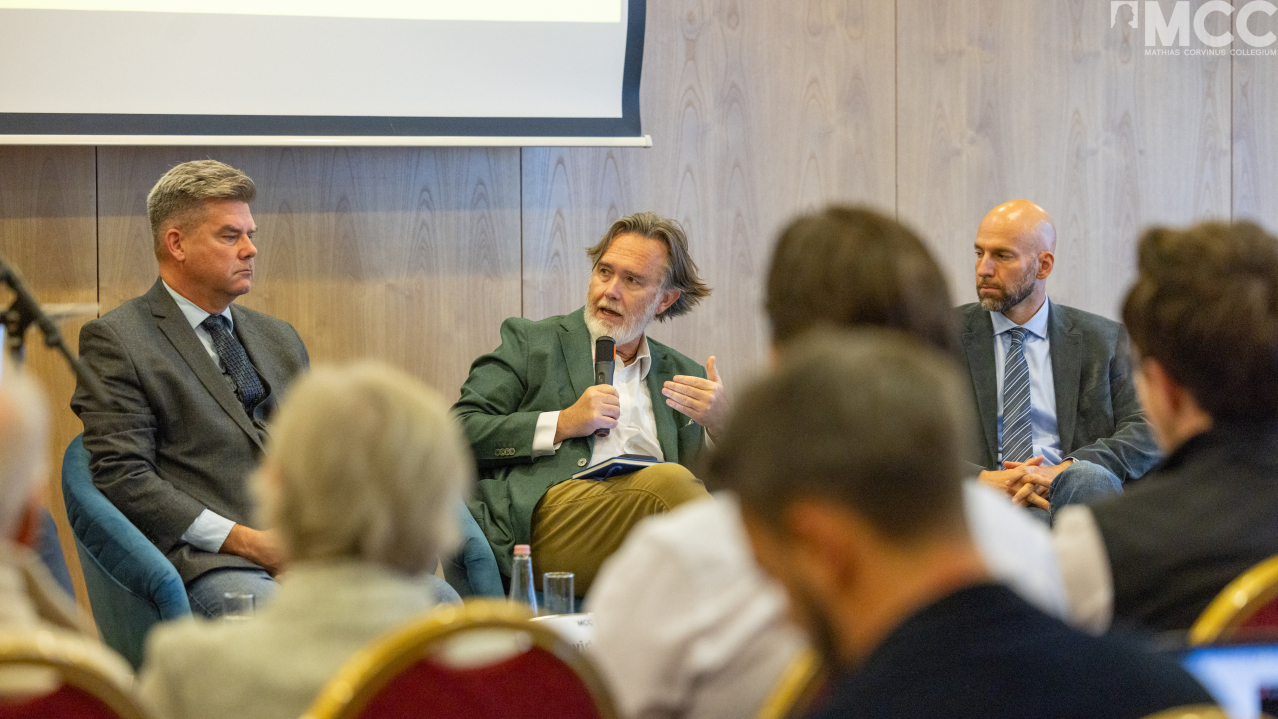
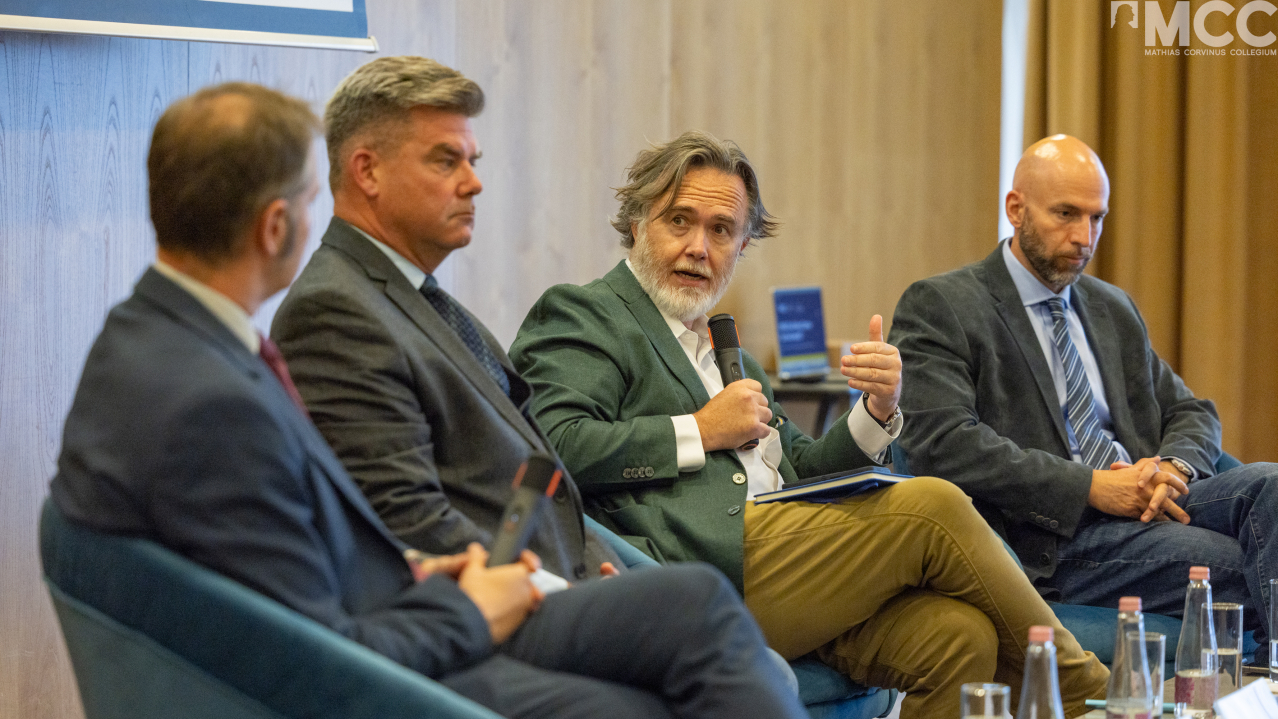
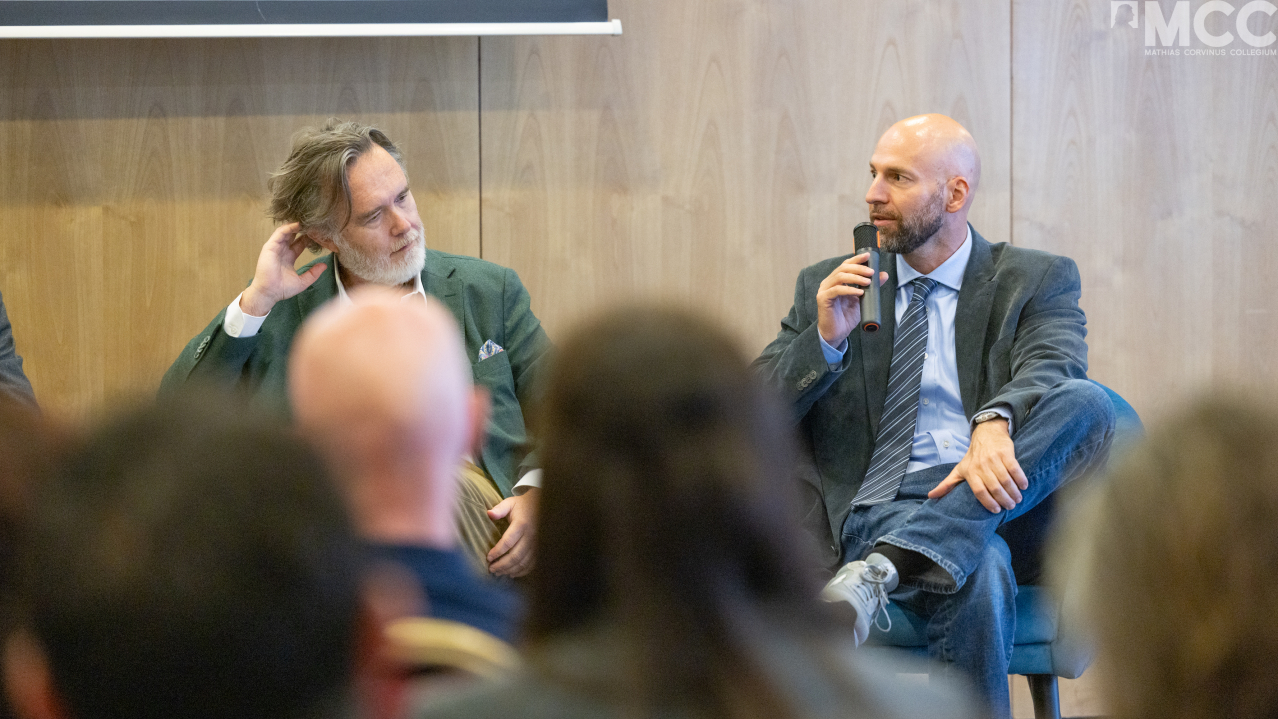
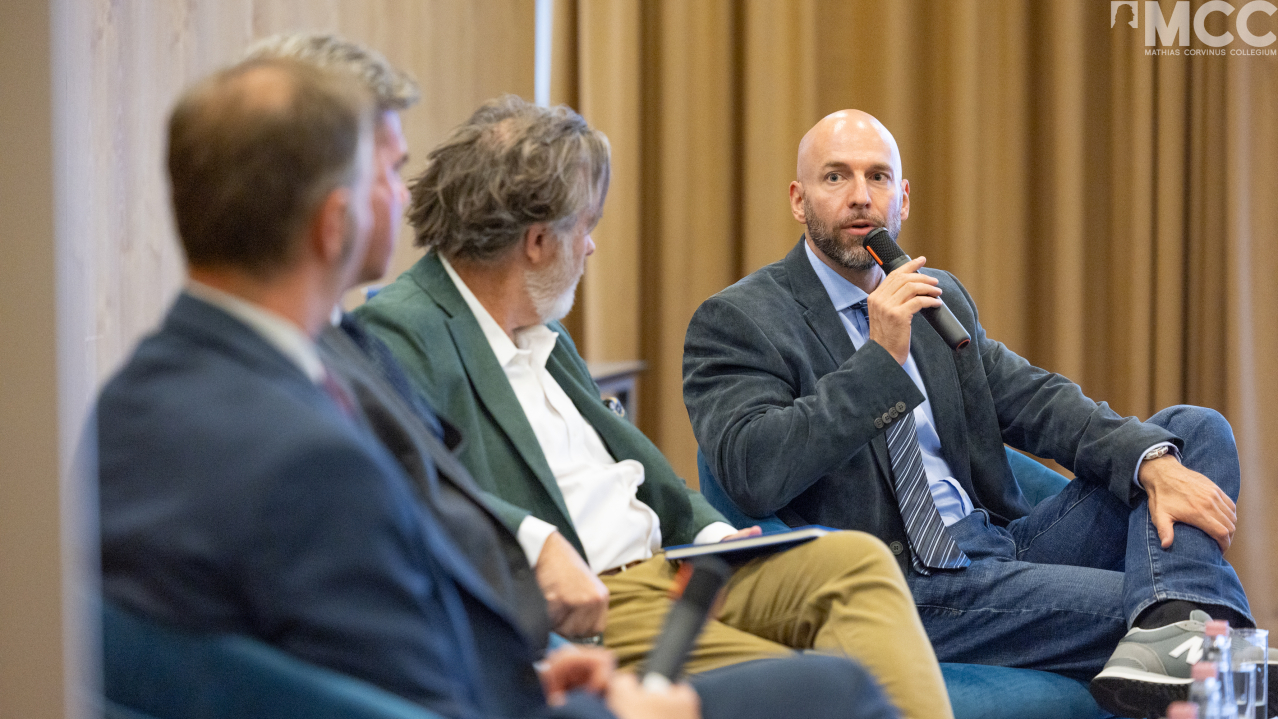
Mathias Corvinus Collegium (MCC), in cooperation with the Migration Research Institute and the Danube Institute, recently hosted an event titled Will Civil War Come to the West? The program featured an opening address by Stephen Betz, followed by a panel discussion with Rod Dreher and Ralph Schoellhammer.
Betz presented his thesis that civil war is approaching in Western societies. He noted that while the claim was highly controversial a decade ago, it is no longer so. The event began with a moment of silence in memory of Charlie Kirk’s assassination, which Betz described as one of the first casualties in this emerging conflict.
He argued that multiculturalism, which he defined as an elite-driven project rooted in post-nationalism, is the primary driver of this trend. According to Betz, “The blob is post-national, the street is national.” He maintained that ordinary citizens have been drawn into supporting this project without realizing its implications, but are now beginning to resist. Betz concluded that to prevent such a conflict, citizens must engage one another in honest dialogue about the challenges ahead.
The panel examined key questions surrounding democracy, immigration, and the potential nature of civil conflict in the West.
On the foundations of democracy, Betz argued that democratic systems rely on “pre-political loyalty,” a shared sense of identity rooted in culture, history, tradition, and language. He warned that multiculturalism erodes this common ground and undermines the ability of citizens to resolve disagreements peacefully.
Rod Dreher addressed how immigration has changed in recent generations. He observed that earlier waves of immigrants primarily came from Europe, whereas current migration patterns are different. He also noted that the strong assimilation framework that once existed in the United States has been weakened by multicultural policies.
Ralph Schoellhammer emphasized that multiethnic societies can remain stable if unified by cultural cohesion. He gave the example of German immigrants in Austria, who integrated successfully, and pointed to Austria-Hungary as a historical example where diverse groups shared cultural foundations.
When discussing the nature of future conflicts, Betz warned that civil wars are uniquely intimate and devastating, as opposing sides know precisely how to inflict harm. He predicted that Western societies could fragment into zones divided along ethnic and factional lines.
Dreher, however, pointed to recent voting patterns as a sign of complexity. He highlighted how some immigrant communities, particularly Latinos with European Christian backgrounds, are aligning with conservative politics and integrating more effectively into American society, especially as they directly experience the challenges of mass migration.