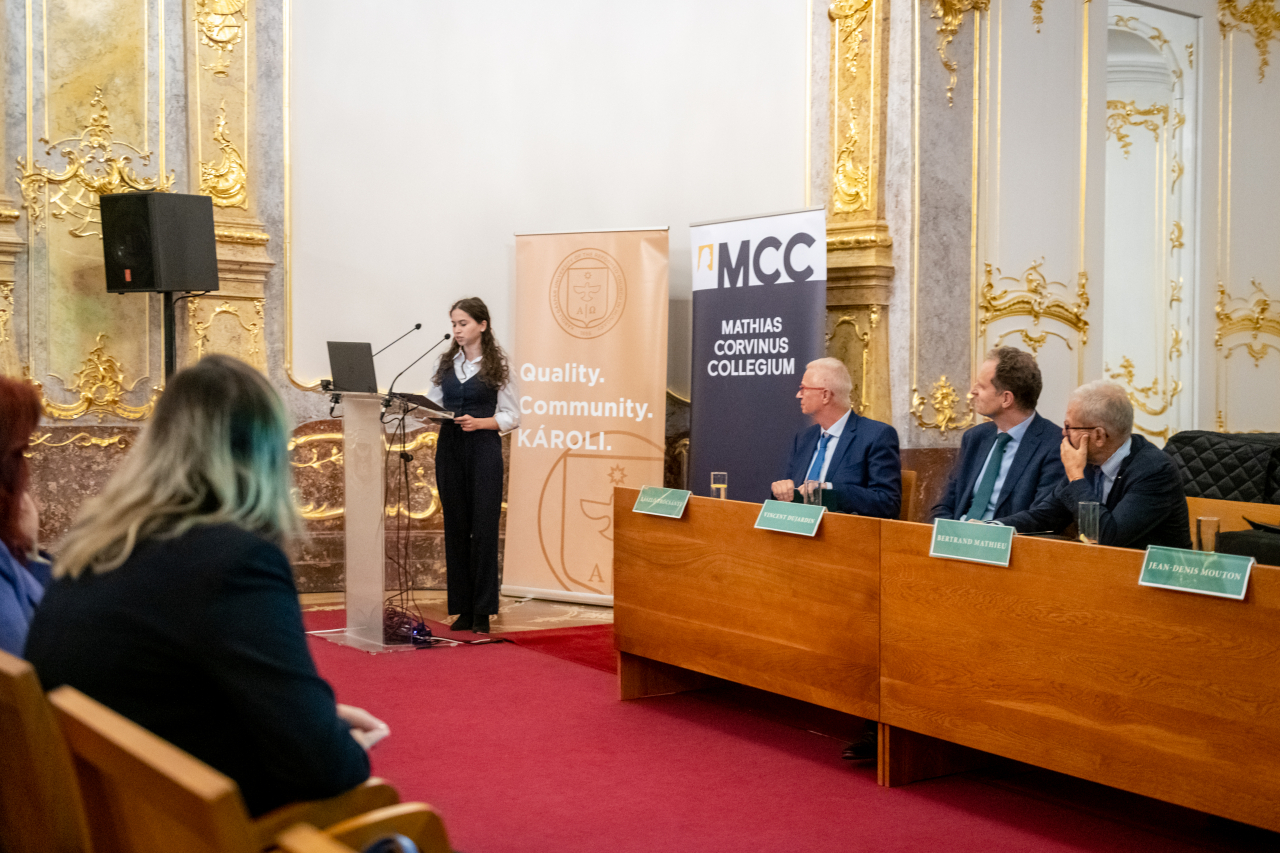
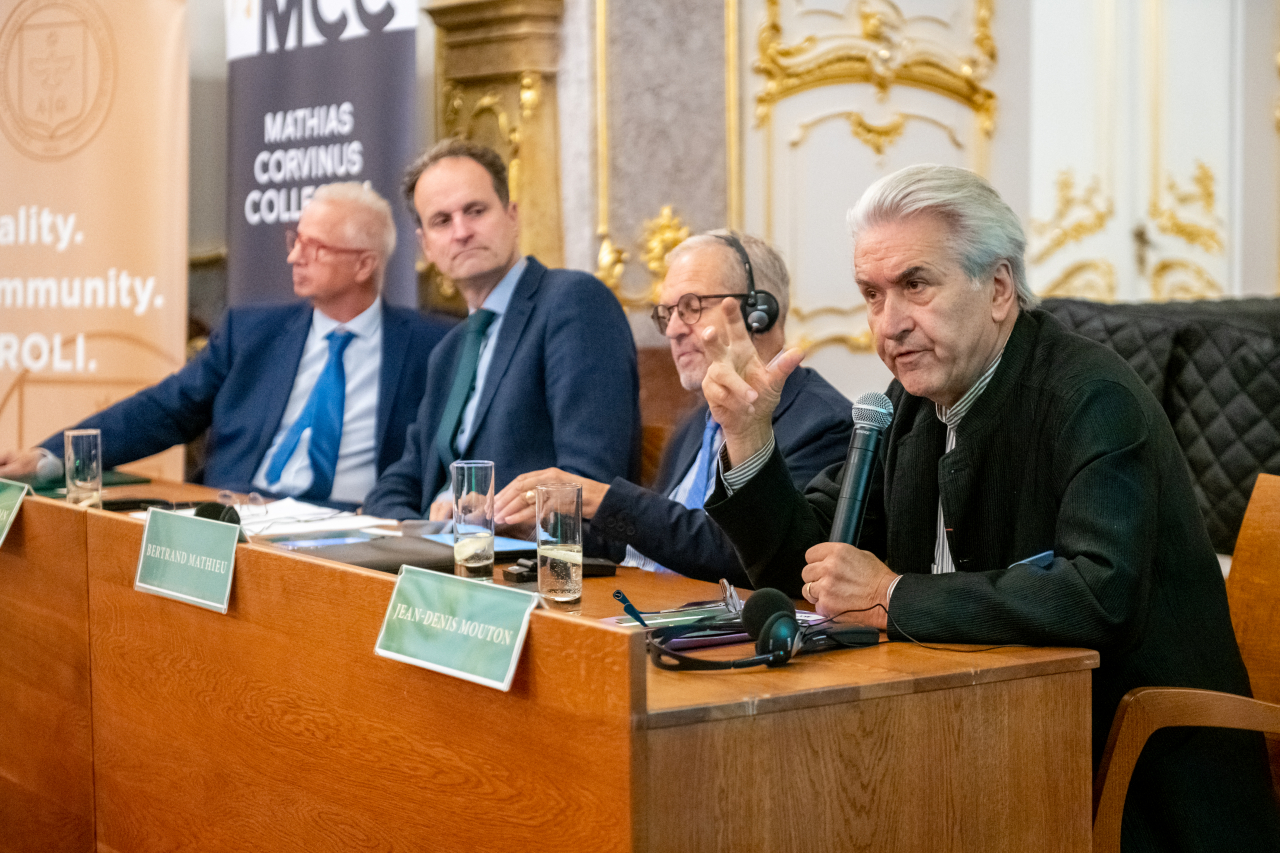
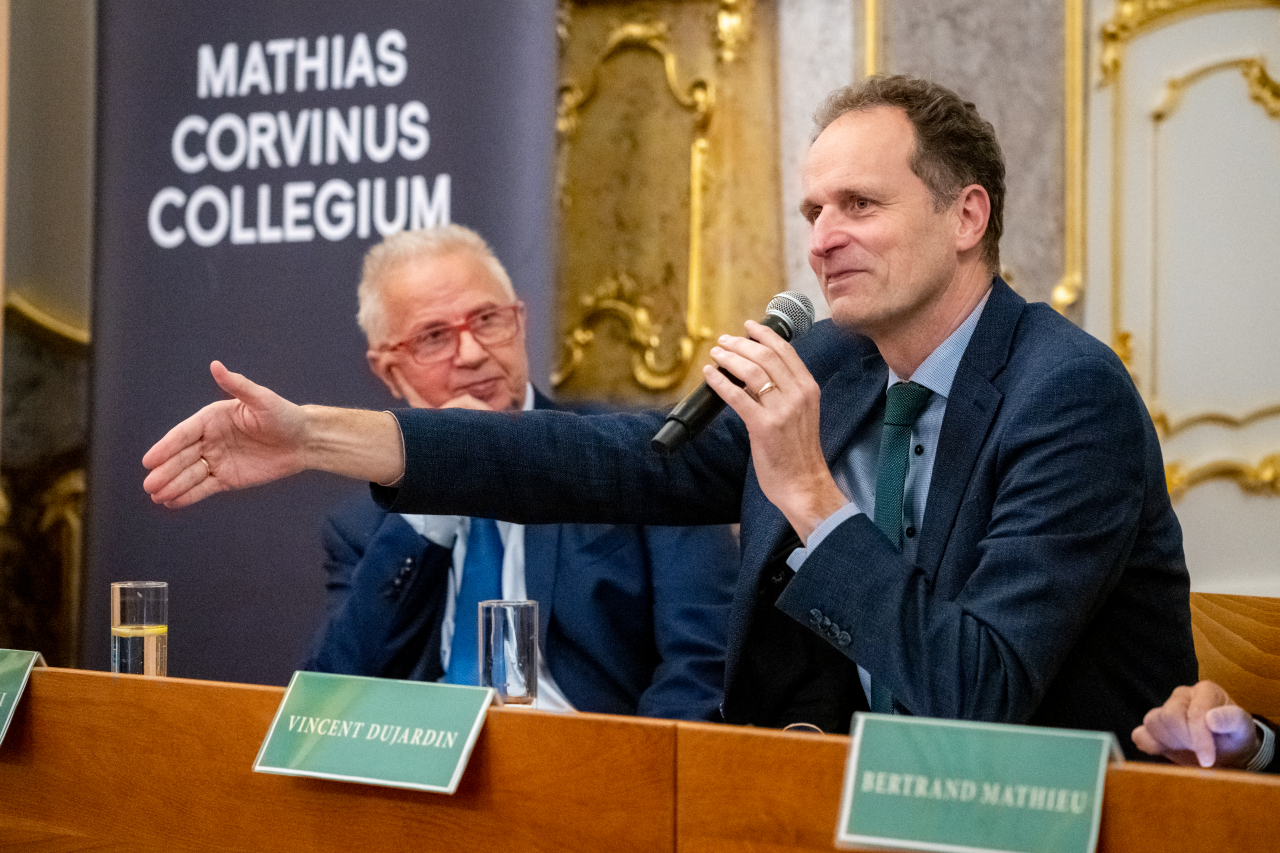
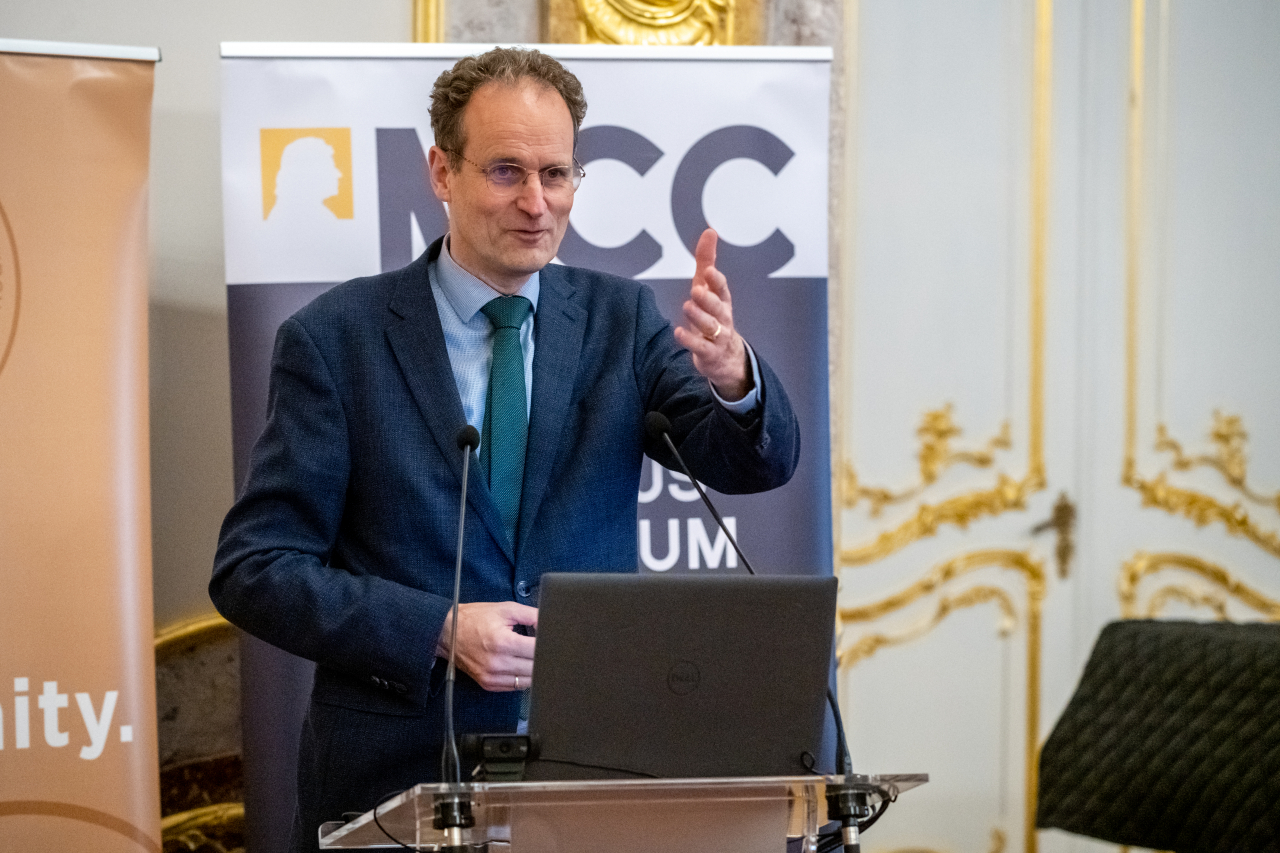
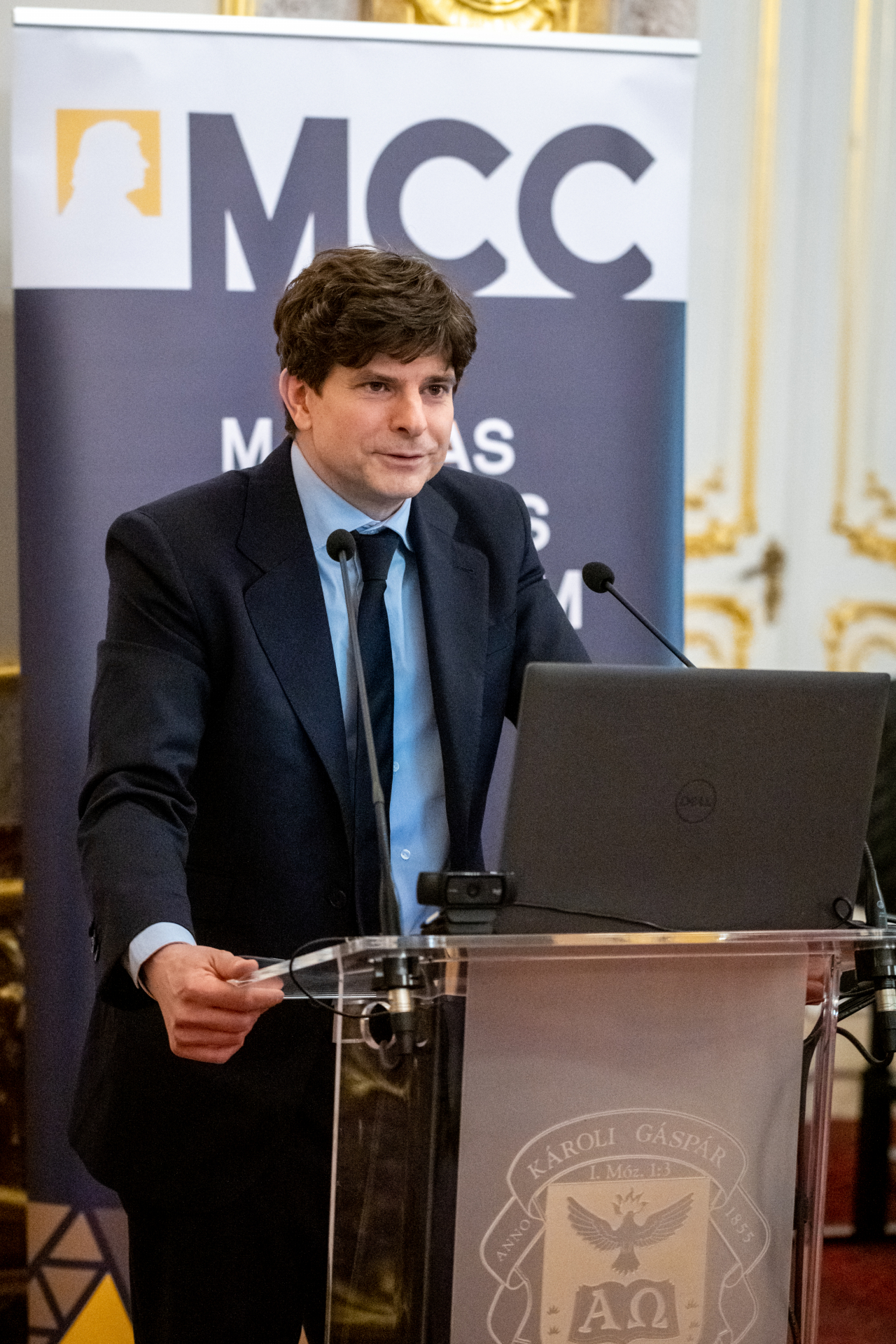
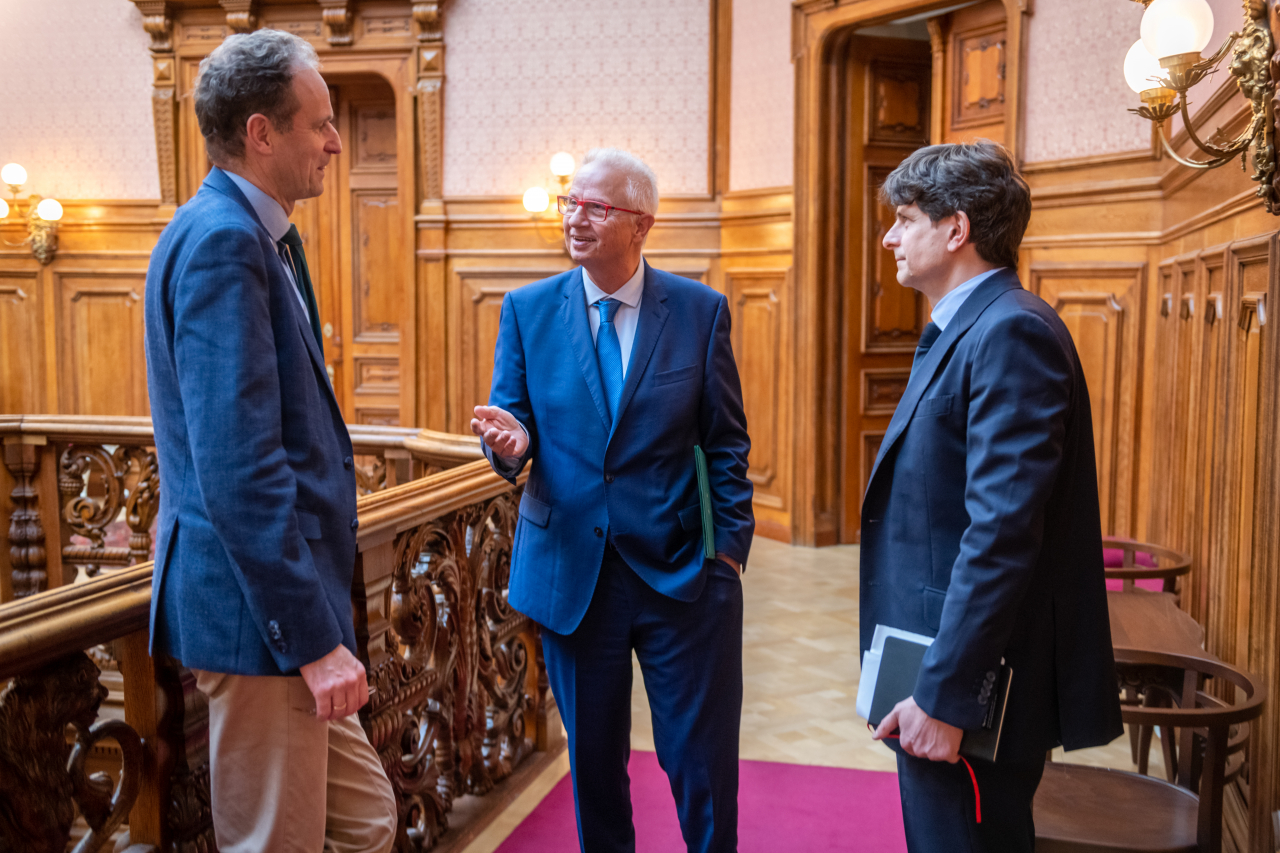
As the European Union enters the era of deglobalization, it faces unprecedented challenges that can no longer be addressed within its existing operational logic. The very legitimacy of European cooperation must now be redefined — and it can only find its foundation by building upon the unique identities of its Member States. These key ideas were expressed during the International Conference on Globalization, Integration, and Identity, a distinguished gathering of leading Francophone scholars in Budapest.
Co-organized by the Center for International Law of the Mathias Corvinus Collegium (MCC), the international conference aimed to examine, in light of the decline of the globalization era, the underlying fault lines that characterize the European Union’s strategy and institutional structure. Uniquely, the discussions took place in French, and featured prominent Francophone scholars such as Bertrand Mathieu, Professor Emeritus at the Sorbonne University; Jean-Denis Mouton, Professor at the University of Lorraine; Vincent Dujardin, Professor at the Catholic University of Leuven; and Jean Fahed, former member of the Supreme Court of Lebanon. The conference provided a platform for a lively debate on the future of European institutions, addressing not only Europe’s economic, competitiveness, and geopolitical challenges, but also engaging with the ongoing values-based discourse shaping the continent’s identity today.
The presentations and subsequent discussions highlighted that the historical era in which European integration its very existence, ambitions, and direction was taken for granted has come to an end. This shift is closely linked to the fact that the once linear trajectory of globalization has fractured over the past decade, giving way to an increasingly intense competition among global power centers. According to the conference’s speakers, while European cooperation must now justify its relevance to the Member States within this environment of competition, supranational institutional structures are unable to deliver responses that are both swift and effective, and that would enjoy genuine political legitimacy within the Member States. A similar pattern can be observed in the ongoing debates surrounding the interpretation and enforcement of European values. Recalling the example of President Charles de Gaulle, although the empty chair today underscores more strongly than ever the necessity of a shared table, Europe’s institutional design and competences must adapt to this new era. In this context, the concept of national identity assumes a key role: it forms a bridge connecting the political structures that enable action with the values that provide legitimacy.