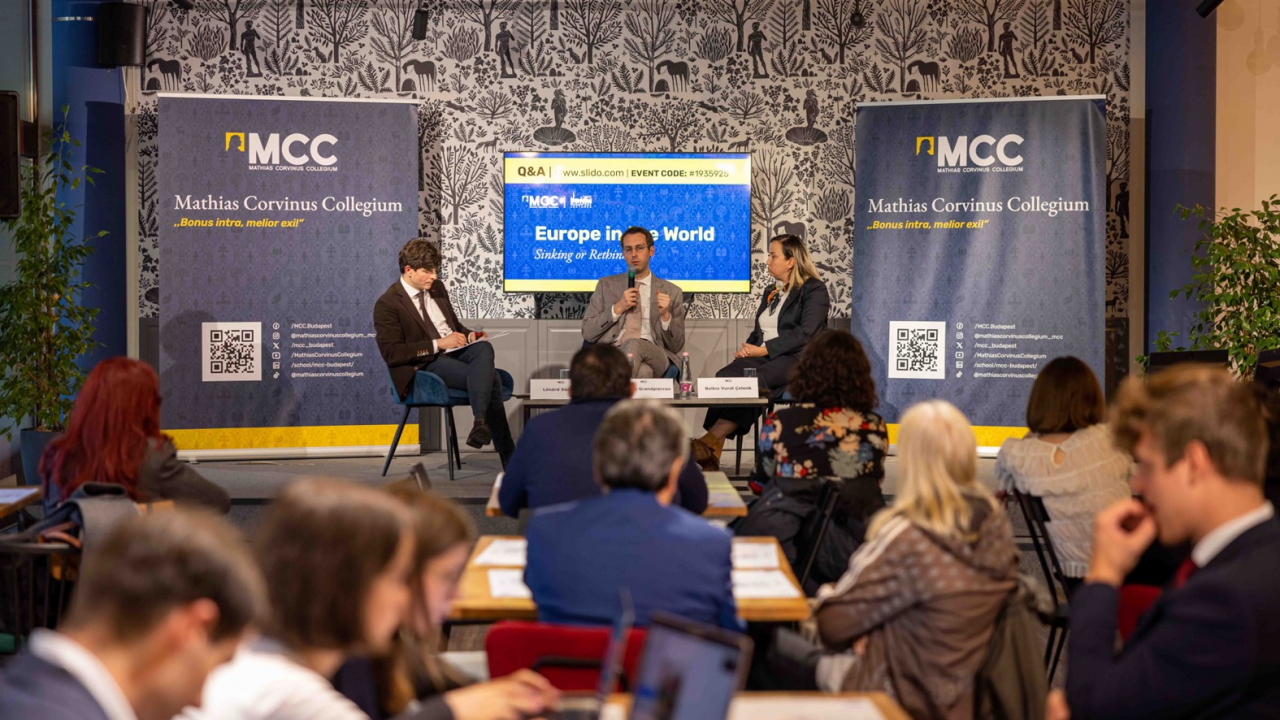
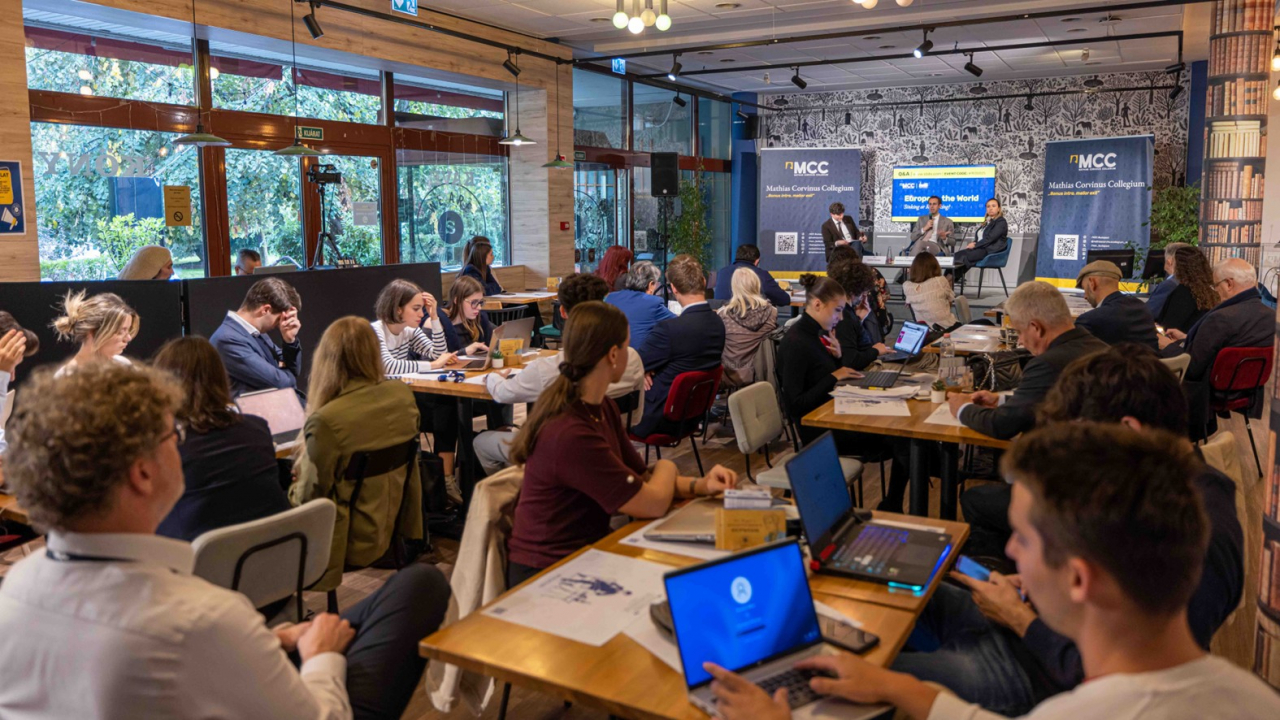
The future of European cooperation depends on its ability to rethink its strategic direction and institutional architecture to meet the challenges of the 21st century — this was the key message of the latest MCC Budapest Lecture titled “Europe in the World: Sinking or Rethinking.”
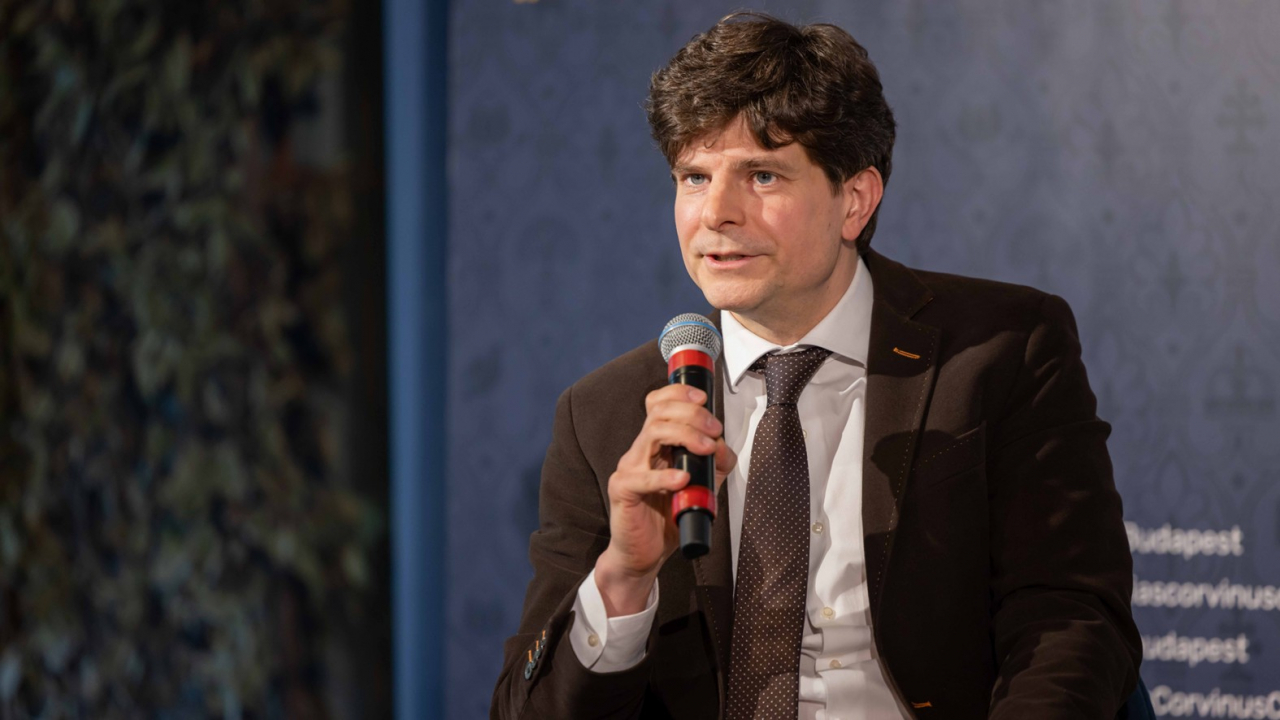
Held as part of the international conference Globalization, Integration and Identity: The Laws of the European Construction, the event brought together Belkıs Vural Çelenk, Associate Professor of Private International Law and Vice Dean at the Faculty of Law of Ankara Yıldırım Beyazıt University; Matthieu Grandpierron, Head of the Political Science Department at ICES-Vendée Catholic University; and Lénárd Sándor, Head of the MCC School of Law. The discussion examined the crossroads of European integration, questioning whether the continent is capable of adapting to an evolving geopolitical landscape.
Speakers highlighted that the fall of the Berlin Wall and the signing of the Maastricht Treaty created a historic opportunity for a more autonomous and independent European Union. However, subsequent institutional reforms and enlargement policies failed to meet those expectations. Vural Çelenk underlined that the EU’s strength lies primarily in its regulatory influence, while Grandpierron argued that its geopolitical identity and appeal have weakened. Participants also discussed the EU’s complex relations with major powers — particularly China — as well as its protracted engagement with Turkey and the Western Balkans.
The conversation concluded that Europe must redefine its identity and purpose if it wishes to preserve its heritage and secure greater autonomy on the world stage. Achieving this, however, would require a profound rethinking of the institutional foundations of European cooperation.