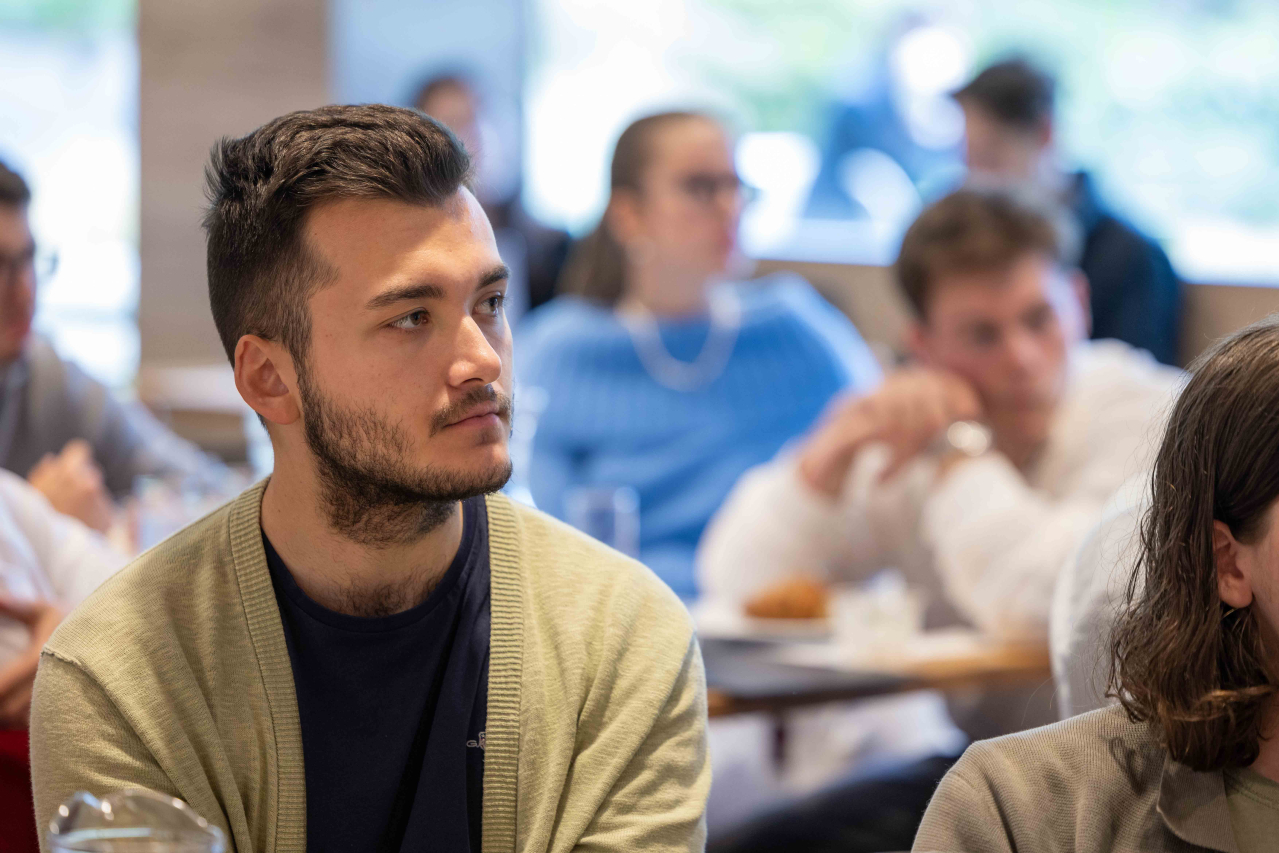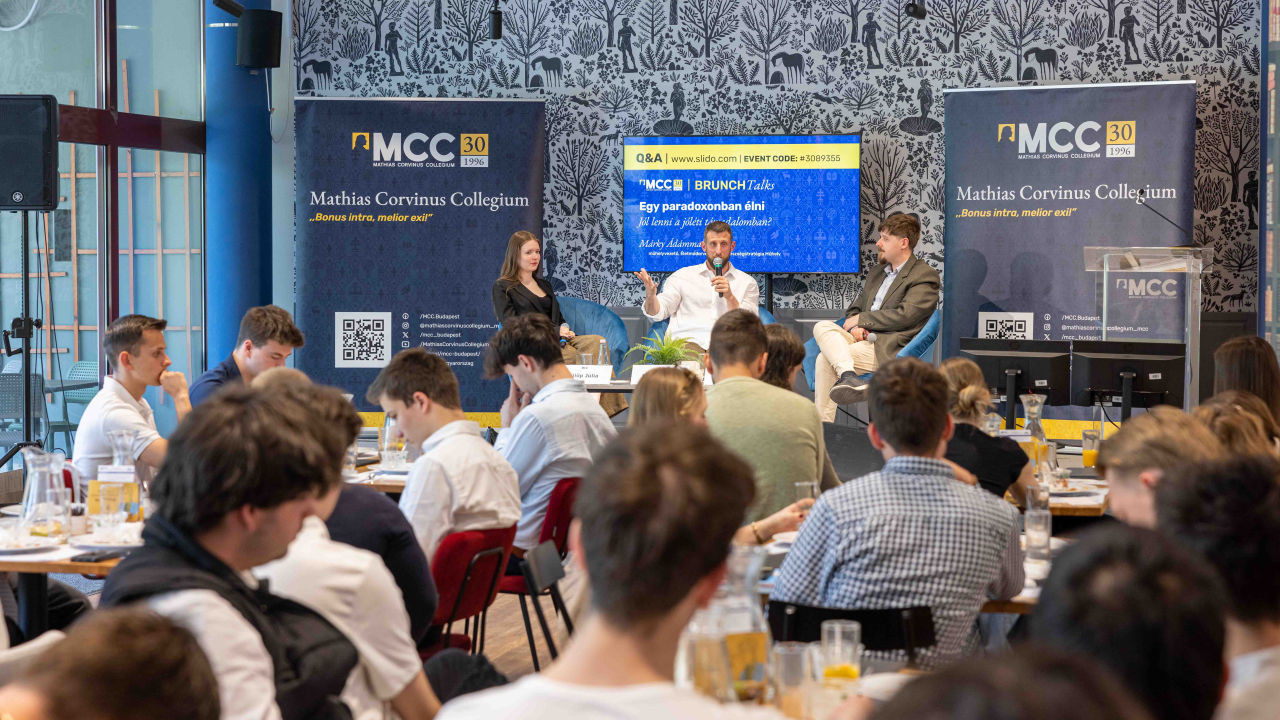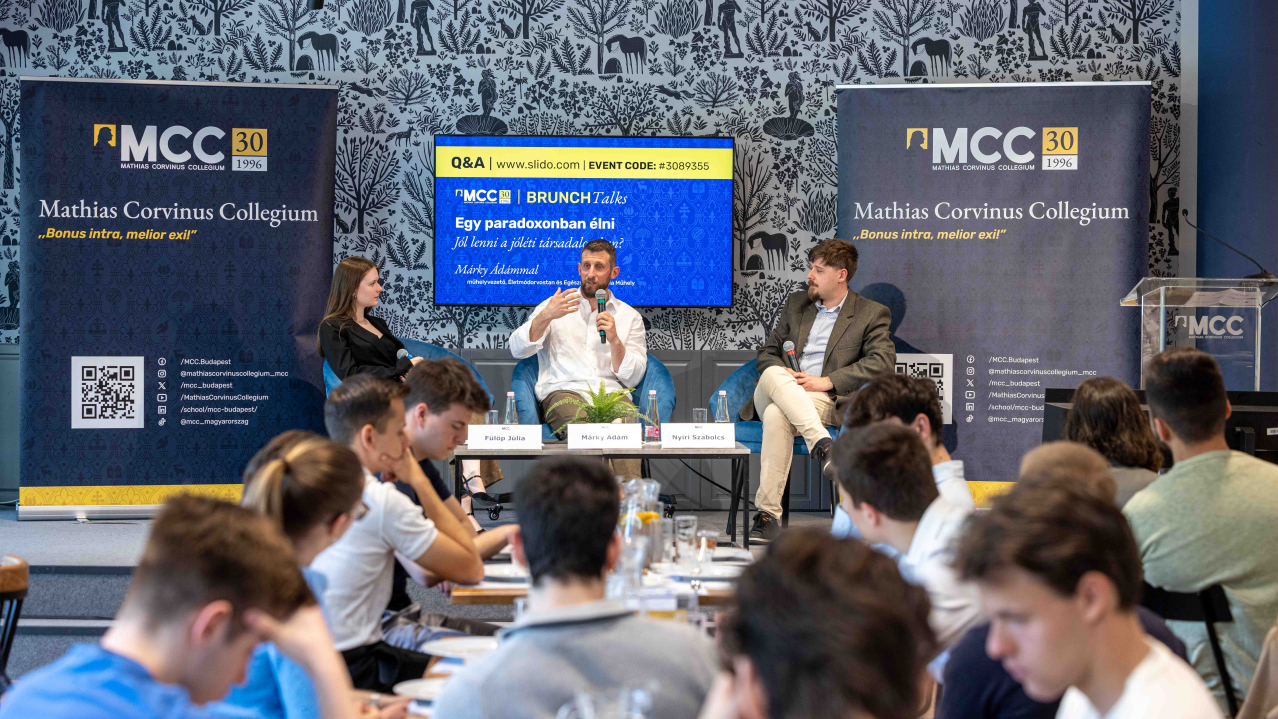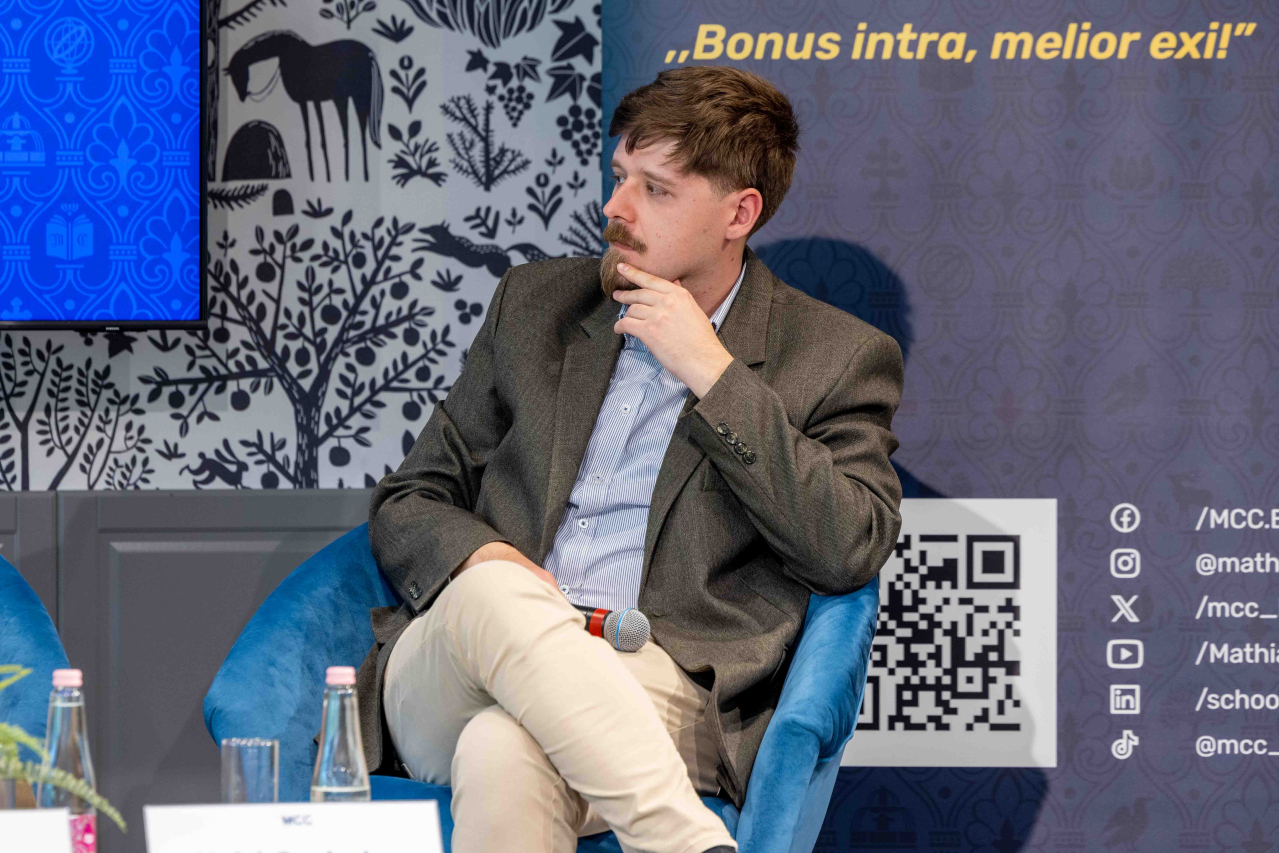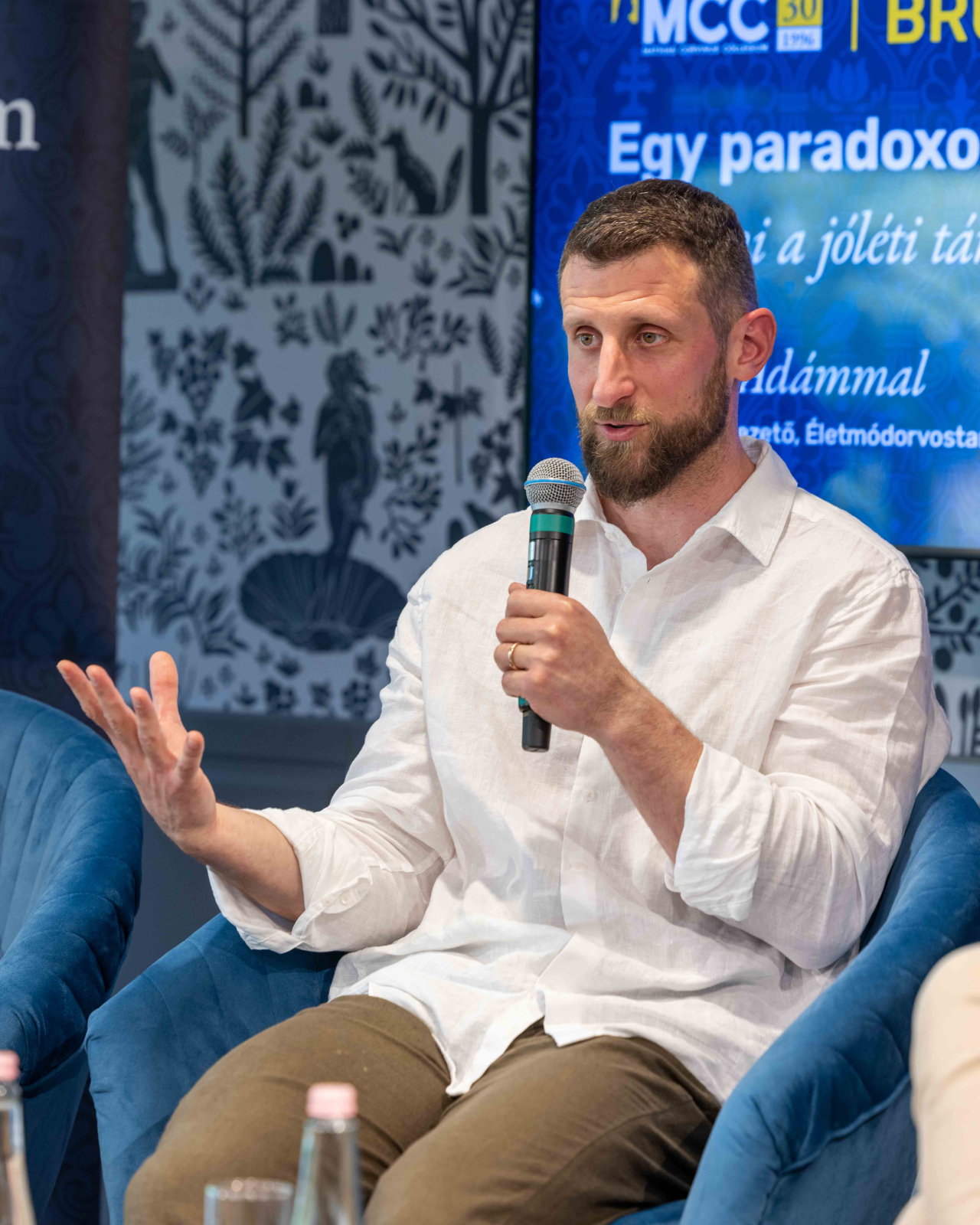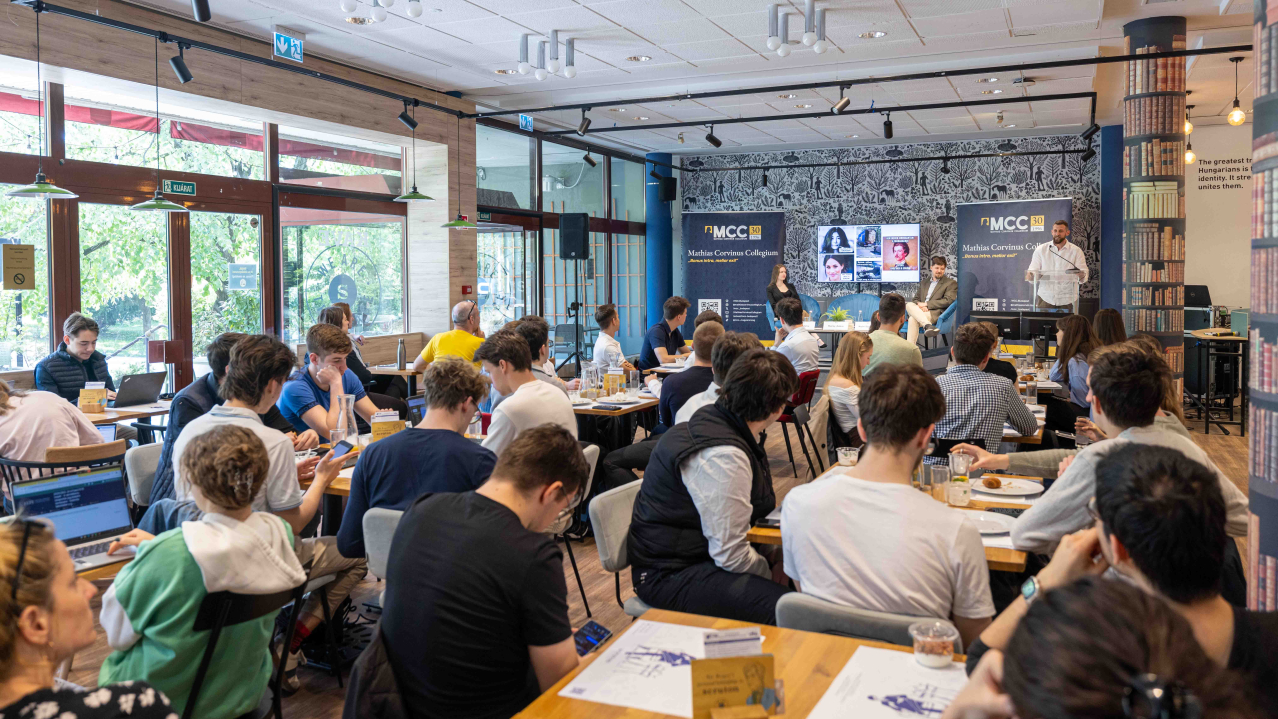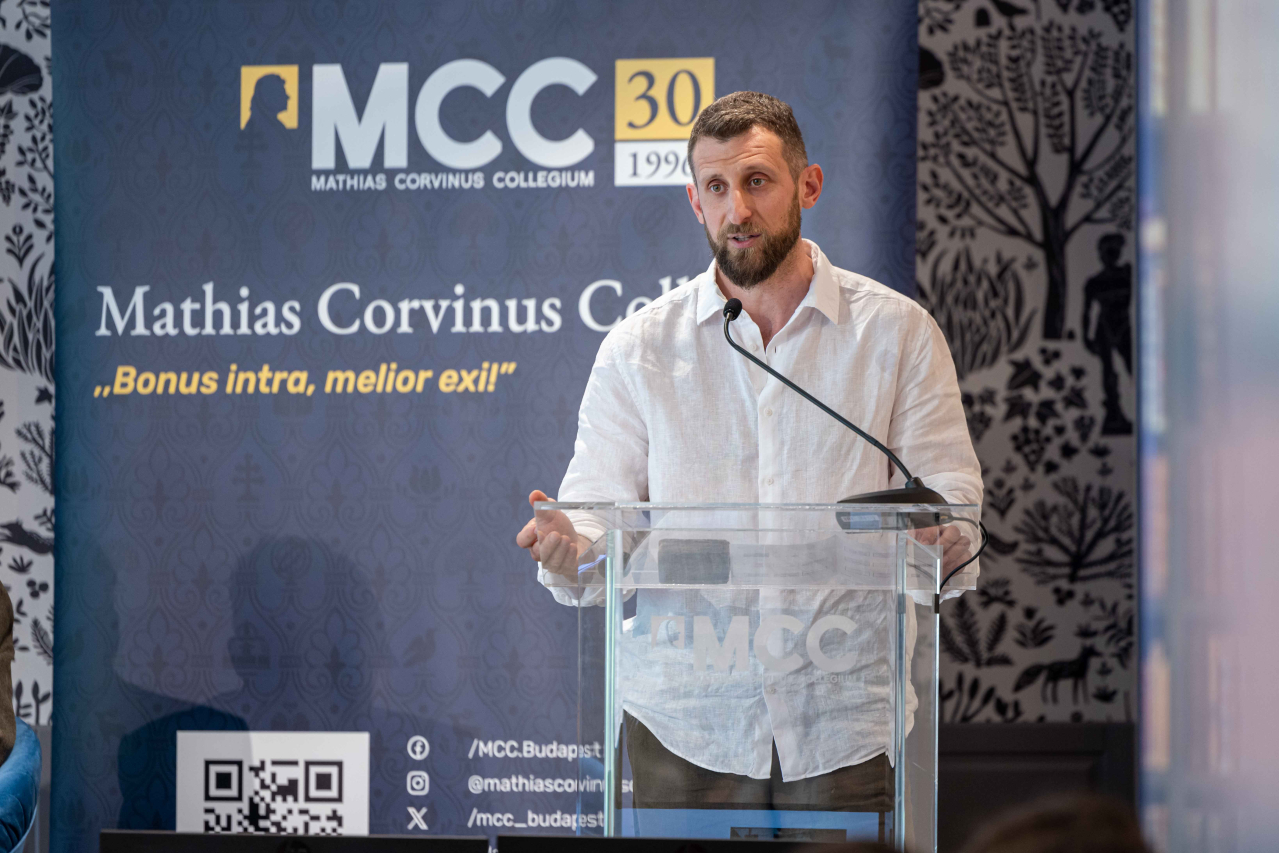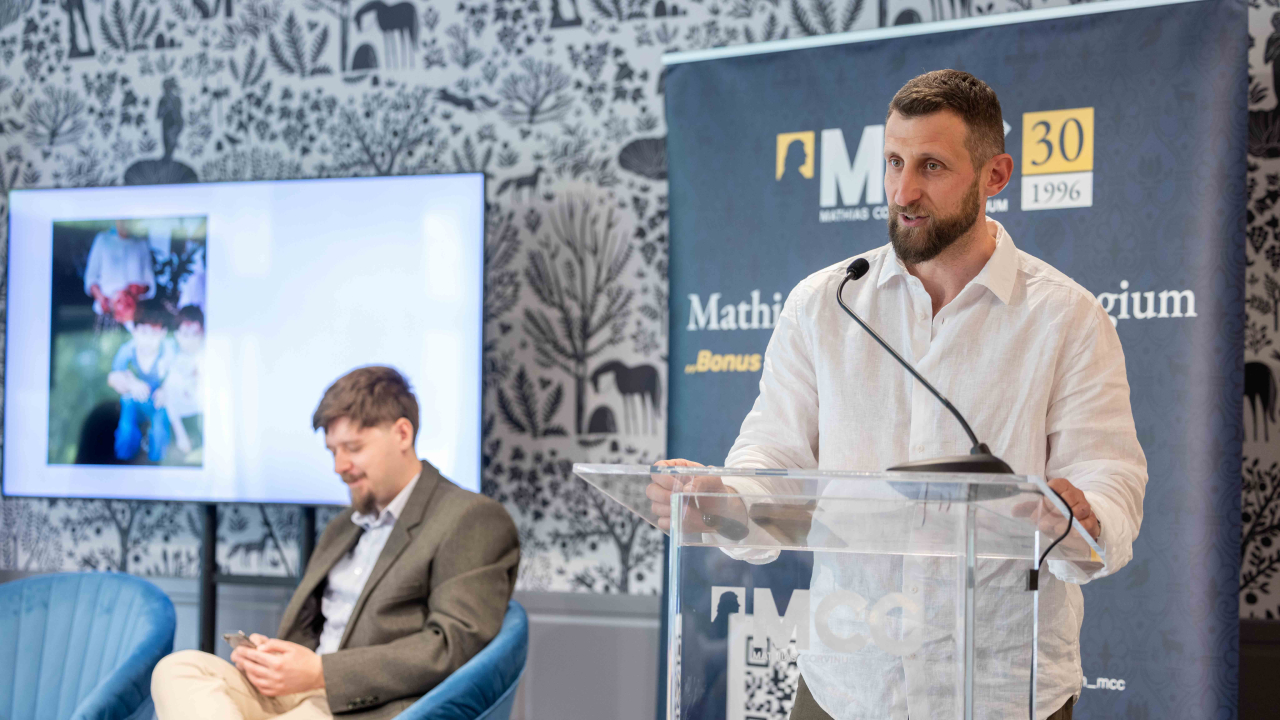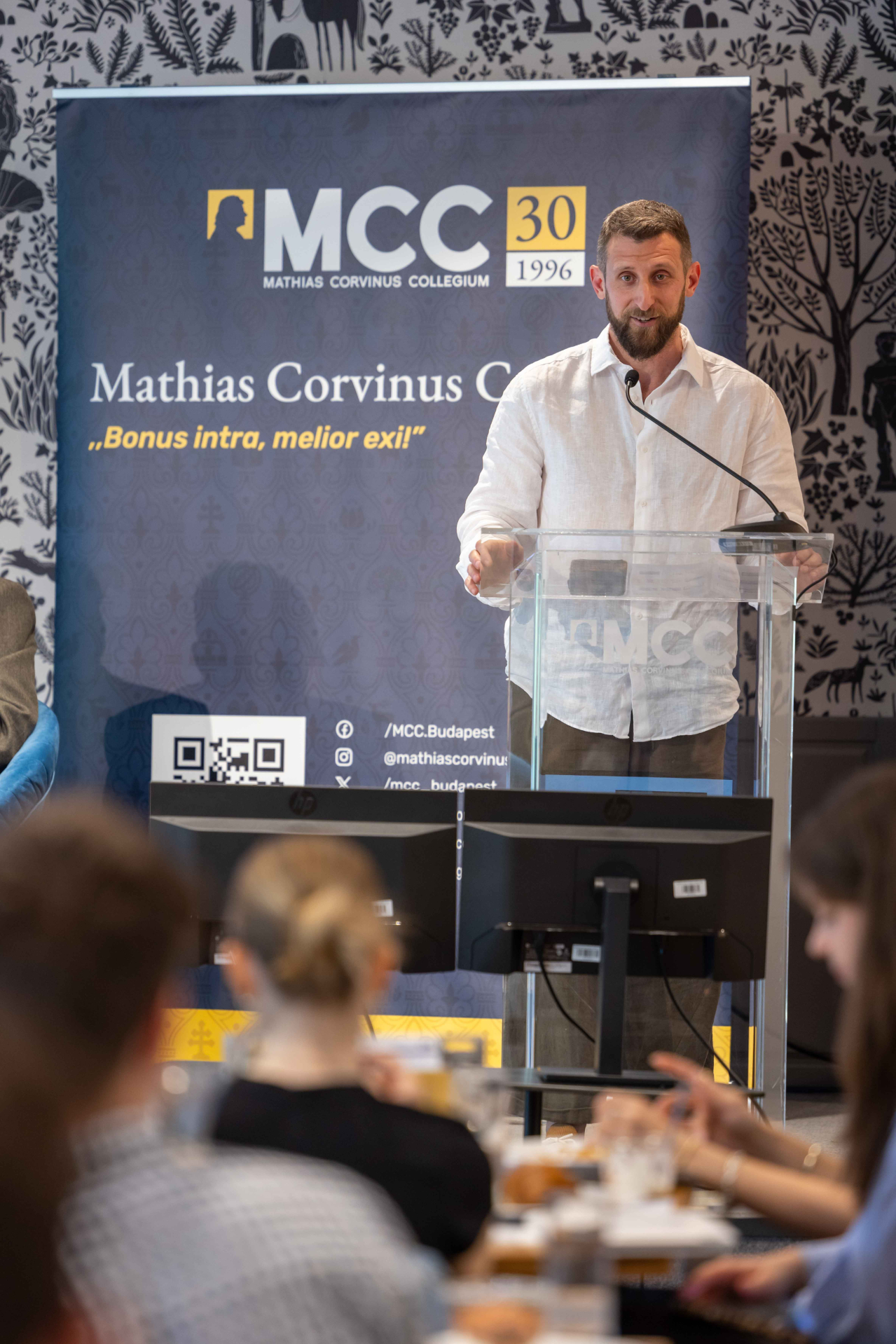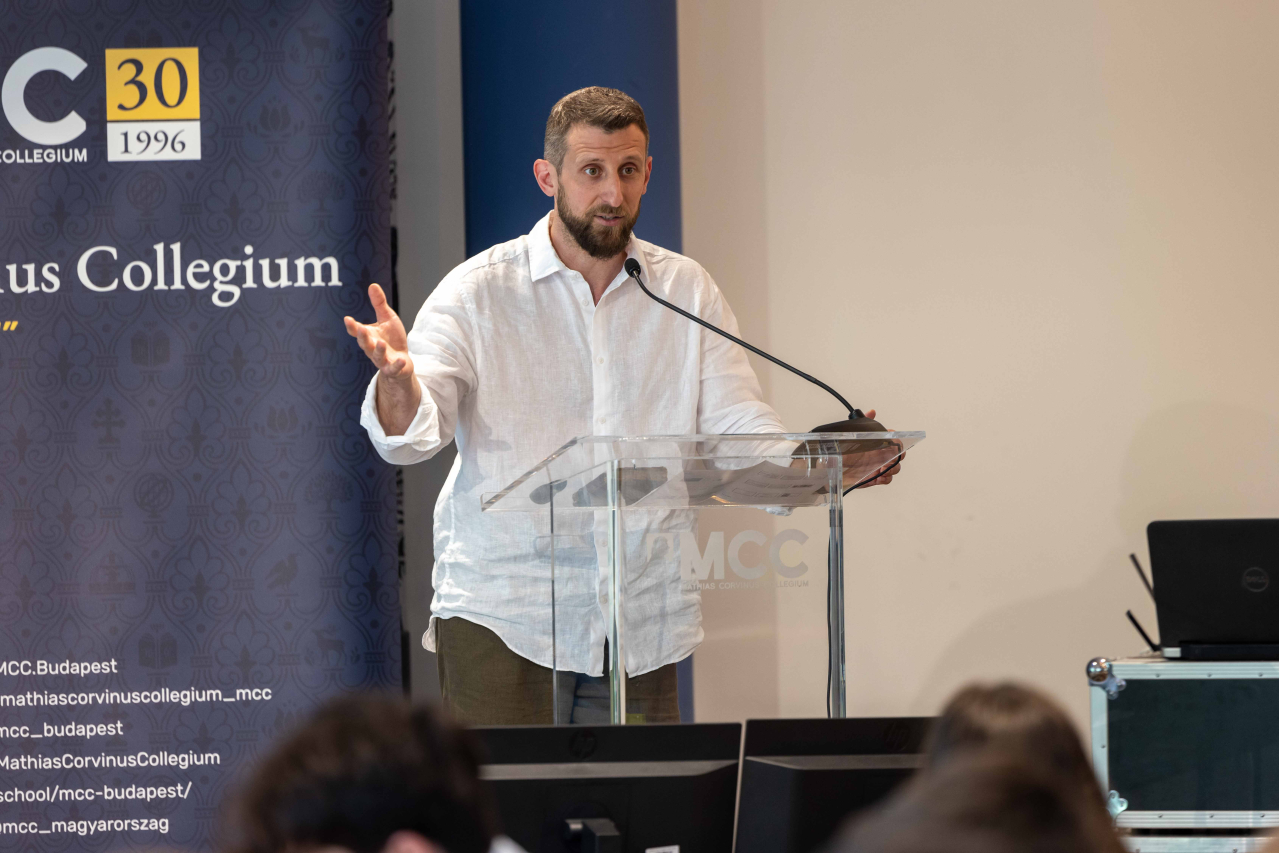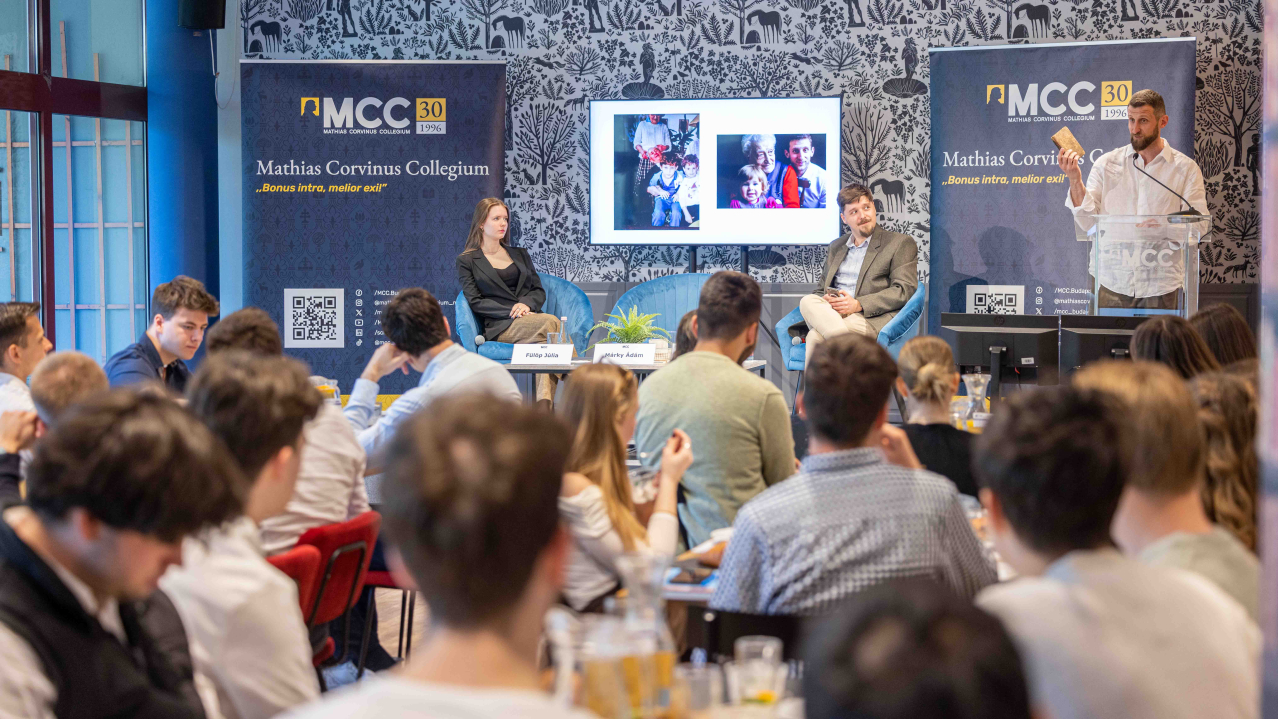
The latest event of the spring semester Brunch Talk series welcomed Dr. Ádám Márky, Head of the MCC-Mindset School of Psychology. In his lecture titled Living in a Paradox. Being Well in a Welfare Society?, Dr. Márky examined the growing tension between material prosperity and psychological well-being. The discussion was moderated by academic moderator Szabolcs Nyiri, PhD researcher at the Academy, and student moderator Júlia Fülöp from the MCC-Mindset School of Psychology.
The Brunch Talk series aims to introduce the MCC community to ongoing research across its centers while fostering active dialogue around key findings. In this spirit, the event focused on the rapid transformation of social norms and the growing difficulty of individual value-based decision-making. Dr. Márky emphasized that the central question is not what we build, but whether we do so based on consciously chosen values. From an evolutionary perspective, humans are inherently tribal beings who monitor whether their behavior aligns with group norms, as belonging once ensured survival. Today, however, diverging from these norms often triggers feelings of guilt and shame.
A key theme of the discussion was the paradox of the welfare society. Despite unprecedented comfort, modern societies are experiencing a rise in difficult emotional states. According to Dr. Márky, this is driven in part by three major stressors: lack of information, uncertainty, and loss of control. At the same time, individuals must navigate the expectations of multiple communities, including family, workplace, and social circles, often leading to conflicts of loyalty and identity.
The conversation also highlighted possible ways forward. Aligning actions with personally chosen values and developing psychological flexibility were identified as essential strategies. Third-wave psychotherapies, such as acceptance and commitment therapy, focus not on eliminating difficult emotions but on building a more balanced relationship with them. Functional contextualism similarly suggests that decisions should be evaluated based on whether they help individuals move toward their values.
Reflecting on these ideas, Szabolcs Nyiri referenced Émile Durkheim and the concept of functional differentiation, noting that increasing social complexity contributes to layered and often conflicting commitments. He also emphasized that the experience of the journey is often more important than the final outcome.
Audience questions further enriched the discussion, highlighting that genuine well-being is rooted in authentic connection to reality and our environment. Drawing on Hartmut Rosa’s theory of resonance, the speakers stressed that fulfillment cannot be reduced to self-optimization. In closing, they warned that constant monitoring through smart devices may lead to self-exploitation and distance individuals from a more direct understanding of their own bodies.