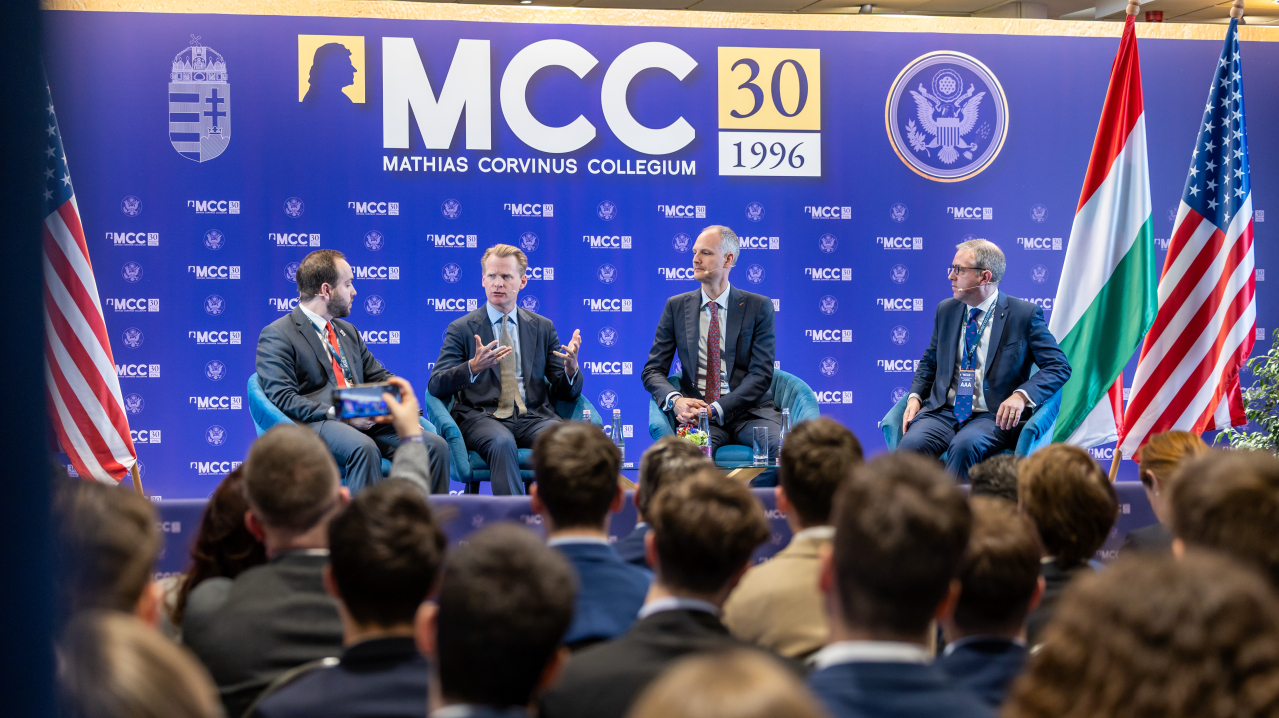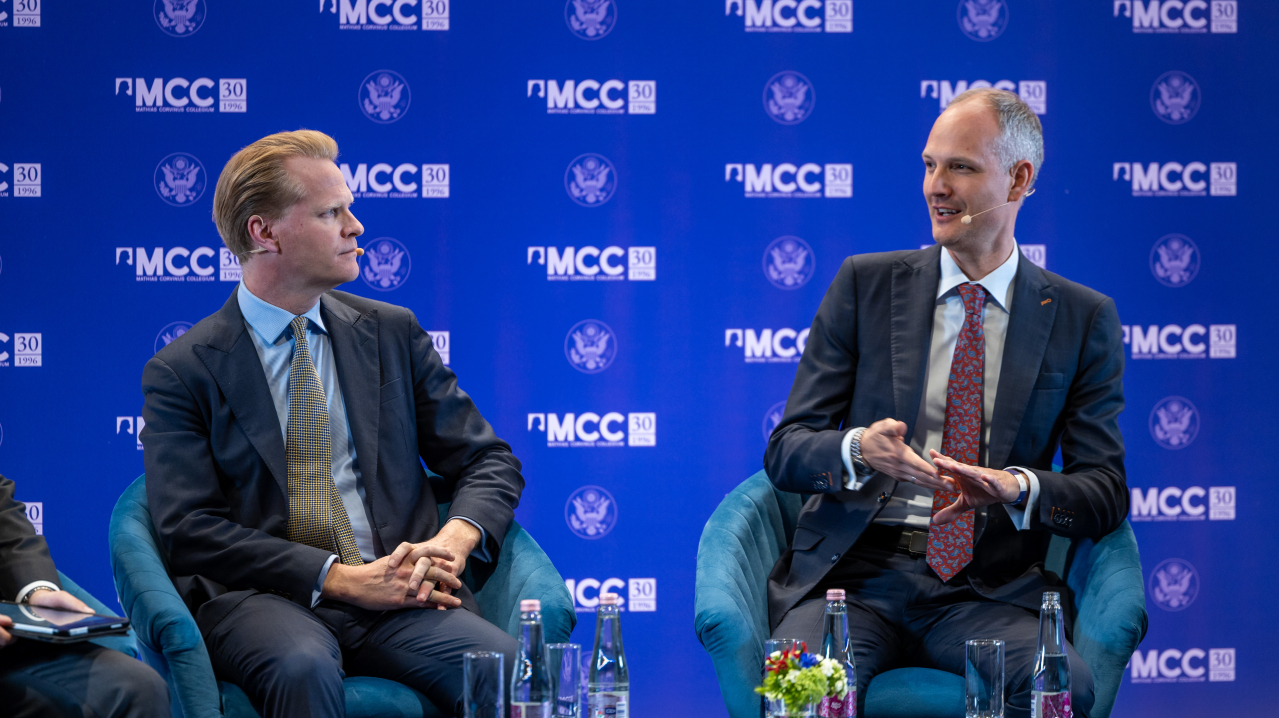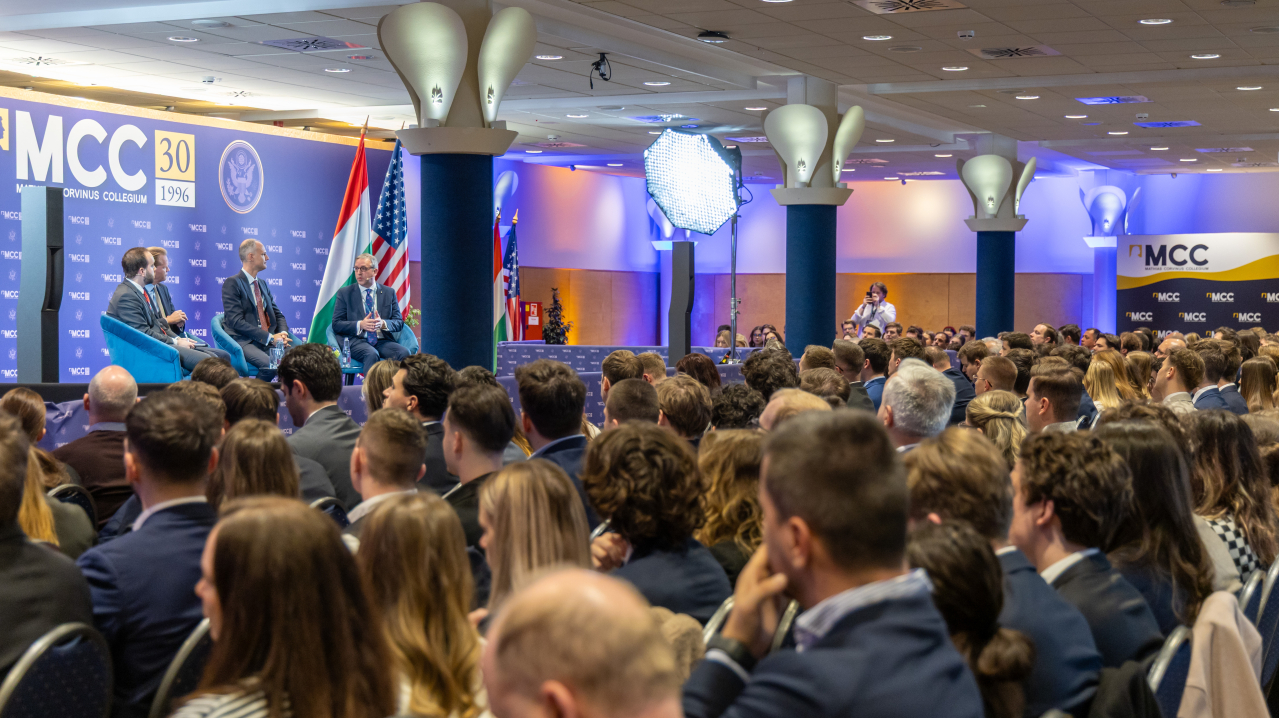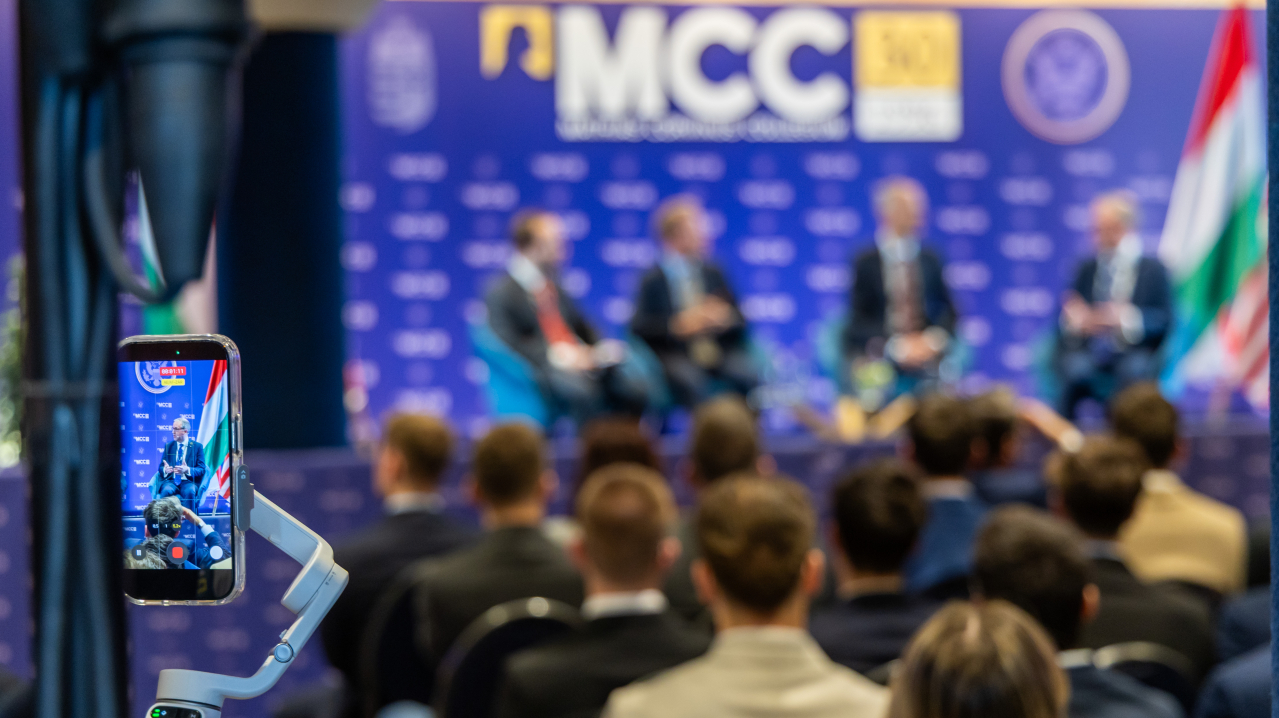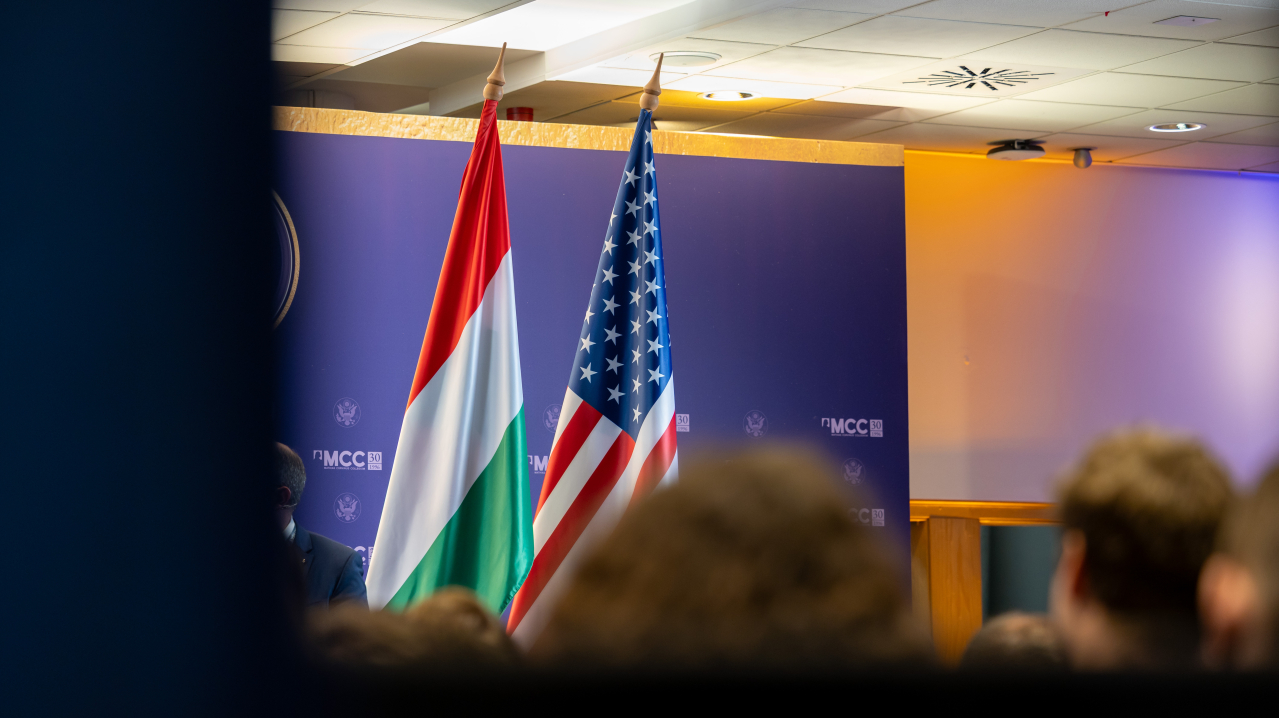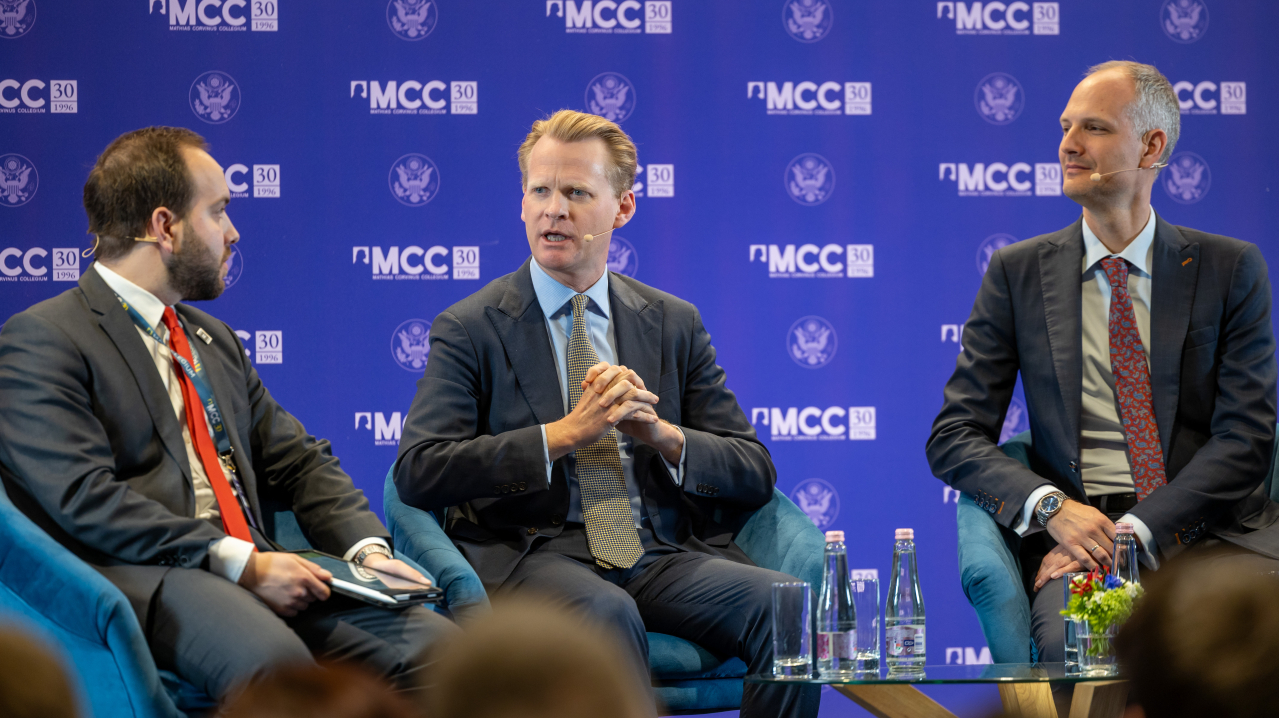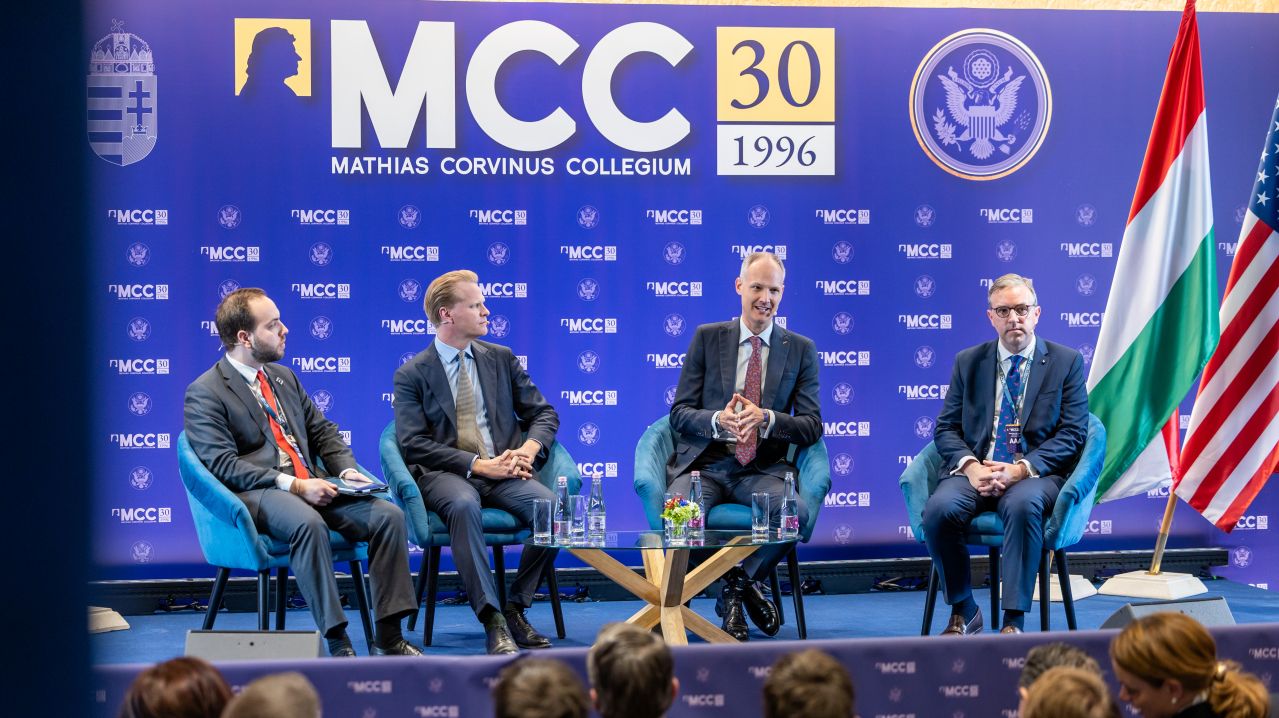
At MCC's headquarters, a high level panel discussion set the tone ahead of the arrival of Vice President JD Vance, focusing on international cooperation, value based thinking, and the key political challenges shaping today’s world. The conversation brought together a distinguished group of speakers, including László Krisztián, Director of International Relations at MCC, James Orr, Professor of Cambridge University, Gladden Pappin, President of the Hungarian Institute of International Affairs, and Márton Ugrósdy, Deputy State Secretary. The panel was moderated by Krisztián László, Director of International Relations at MCC. The discussion offered a wide ranging reflection on the role of institutions, societies, and leadership in an increasingly complex global environment.
A central theme of the panel was MCC’s growing international presence. James Orr, Professor of Cambridge University, emphasized that the institution extends far beyond bilateral engagement, highlighting its active international role. According to him, openness and dynamic connections are essential in preparing future leaders capable of navigating global challenges.
Márton Ugrósdy, Deputy State Secretary, illustrated MCC’s long term impact through a personal perspective, recalling his time as a student at the institution two decades ago. Today, he returned as a speaker at an event of international significance, attended by the Vice President of the United States. He underlined that MCC provides not only academic knowledge but also a strong value based foundation that shapes careers and perspectives over time.
The necessity of cooperation emerged as a recurring point throughout the discussion. Speakers agreed that addressing today’s political and societal challenges requires collaboration grounded in clear values. In this context, open and honest dialogue was highlighted as a crucial tool for identifying root causes and developing sustainable solutions, particularly at a time when the quality of democratic discourse is increasingly under scrutiny.
Gladden Pappin, President of the Hungarian Institute of International Affairs, pointed to Hungary’s distinct role and responsibility in this broader process. He stressed that intellectual heritage and accumulated knowledge must be consciously preserved and passed on to future generations. Educational institutions, including MCC, play a key role in safeguarding and transmitting these values.
European developments also featured prominently in the discussion. James Orr, Professor of Cambridge University, noted that while the European Union remains an important framework, its current functioning raises important questions. He highlighted education as a decisive field, emphasizing the need for alignment between institutional systems and the values families seek to pass on to the next generation.
Márton Ugrósdy, Deputy State Secretary, emphasized the importance of freedom of speech, arguing that open dialogue must be maintained even on the most sensitive issues. He pointed to topics such as historical narratives and the evolving concept of family as areas where public discussion remains essential, adding that international examples, including those from the United States, can offer useful points of reference.
Gladden Pappin, President of the Hungarian Institute of International Affairs, added that while critical voices are often present in international discourse, it is important to distinguish between opinion and direct interference. He emphasized that openness and cooperation remain fundamental principles of effective international relations.
In closing, the panel also reflected on Budapest’s role in shaping international dialogue. As Gladden Pappin, President of the Hungarian Institute of International Affairs, noted, the Hungarian capital continues to offer a suitable platform for meaningful discussions on peace and the defining questions of the future.
The opening panel thus served not only as a prelude to JD Vance’s visit but also as a standalone statement. It demonstrated MCC’s role as a platform where international thinking, value based dialogue, and the education of future generations converge.