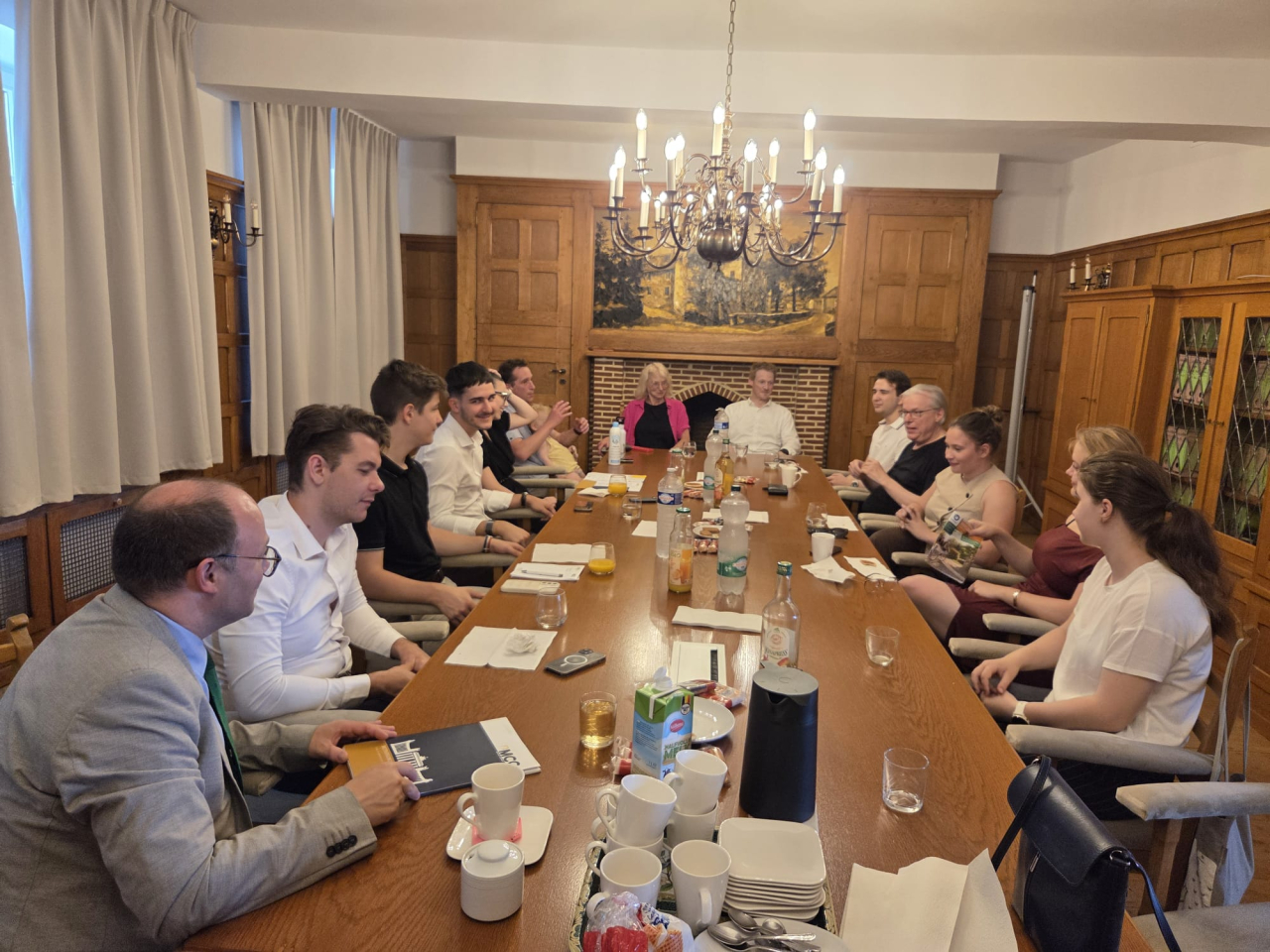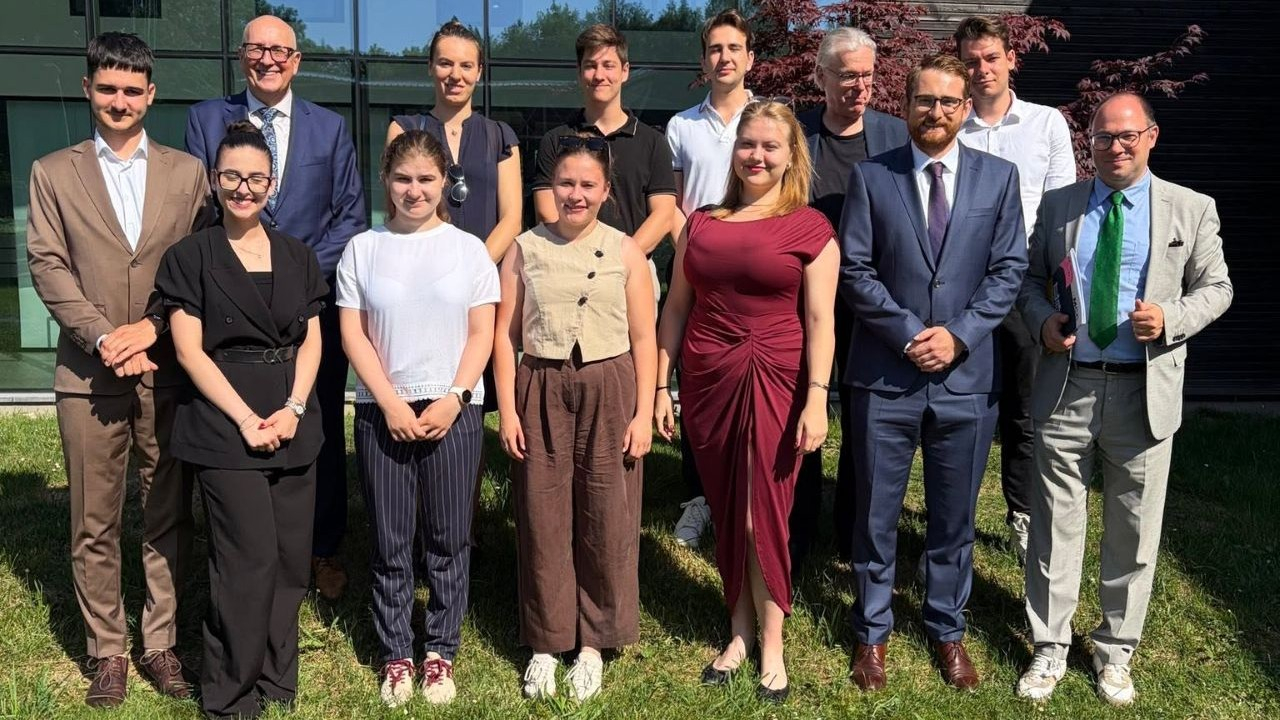
Eight MCC students participated in a professional study trip to Eupen, East Belgium, between in June, organized by the German-Hungarian Institute for European Cooperation. The group was accompanied by Director Bence Bauer, Prof. Dr. Frank-Lothar Kroll, Professor Emeritus at Chemnitz University of Technology and Visiting Fellow at MCC, and Eszter Grifatong, Project Coordinator of the Institute.
The trip began with a meeting at MCC Brussels, where students met Dr. Philipp Siegert, Deputy Research Director, to learn about Belgium's political system, its institutional structure, and the country's linguistic and cultural diversity.
During the following days, students explored the history and identity of East Belgium through visits to the Vieille Montagne Museum in Kelmis and Aachen Cathedral, where they learned about the region's industrial heritage, the history of Neutral Moresnet, and the Hungarian Chapel founded by King Louis I of Hungary.
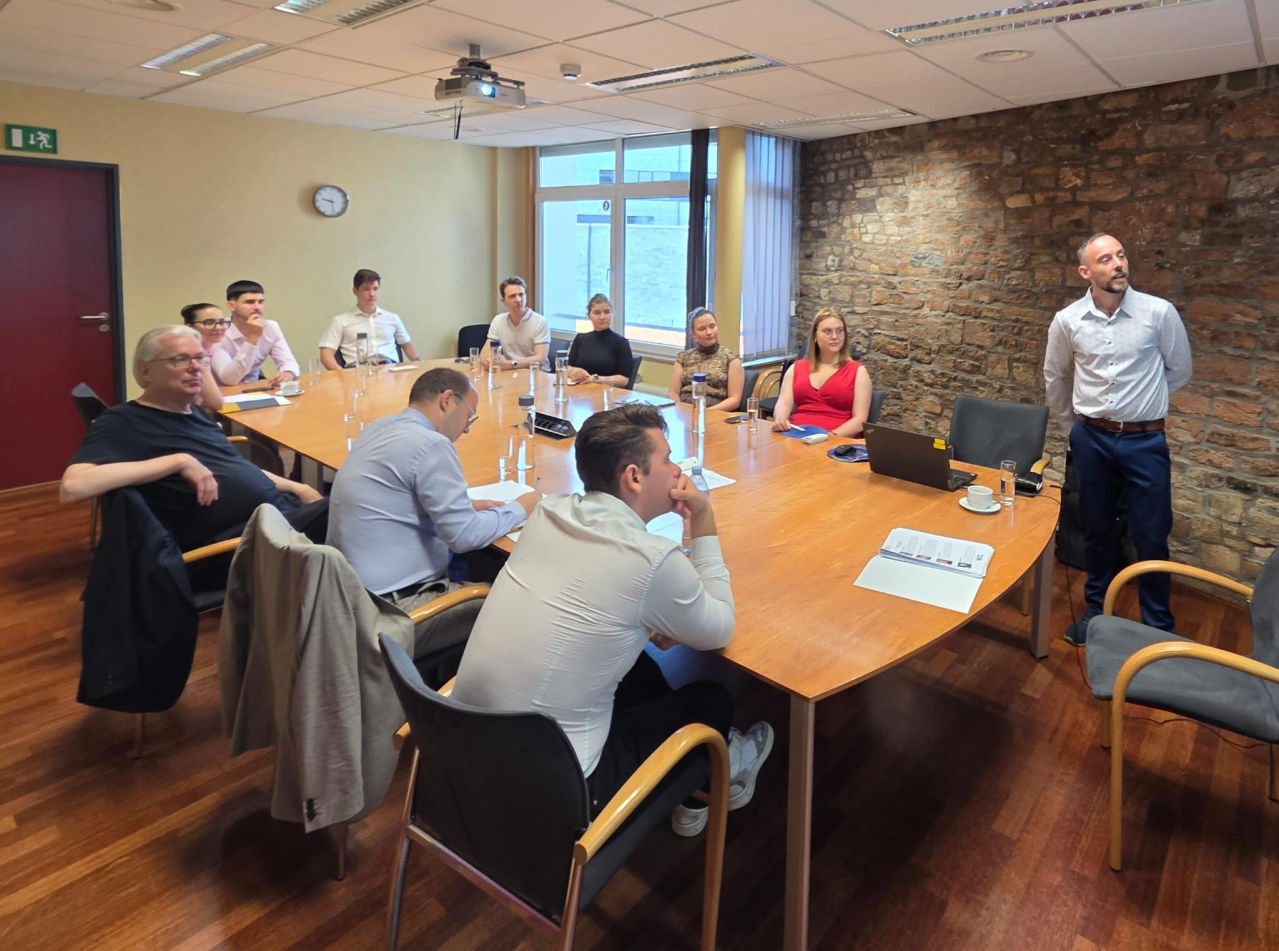
A central focus of the study trip was the German-speaking Community of Belgium. At the Ministry of German-speaking Community, students attended presentations on regional governance, minority representation, youth participation in politics, and current policy issues. They also gained insight into European cross border cooperation through discussions on the Interreg programs supporting collaboration across the Maas-Rhine and Greater Region.
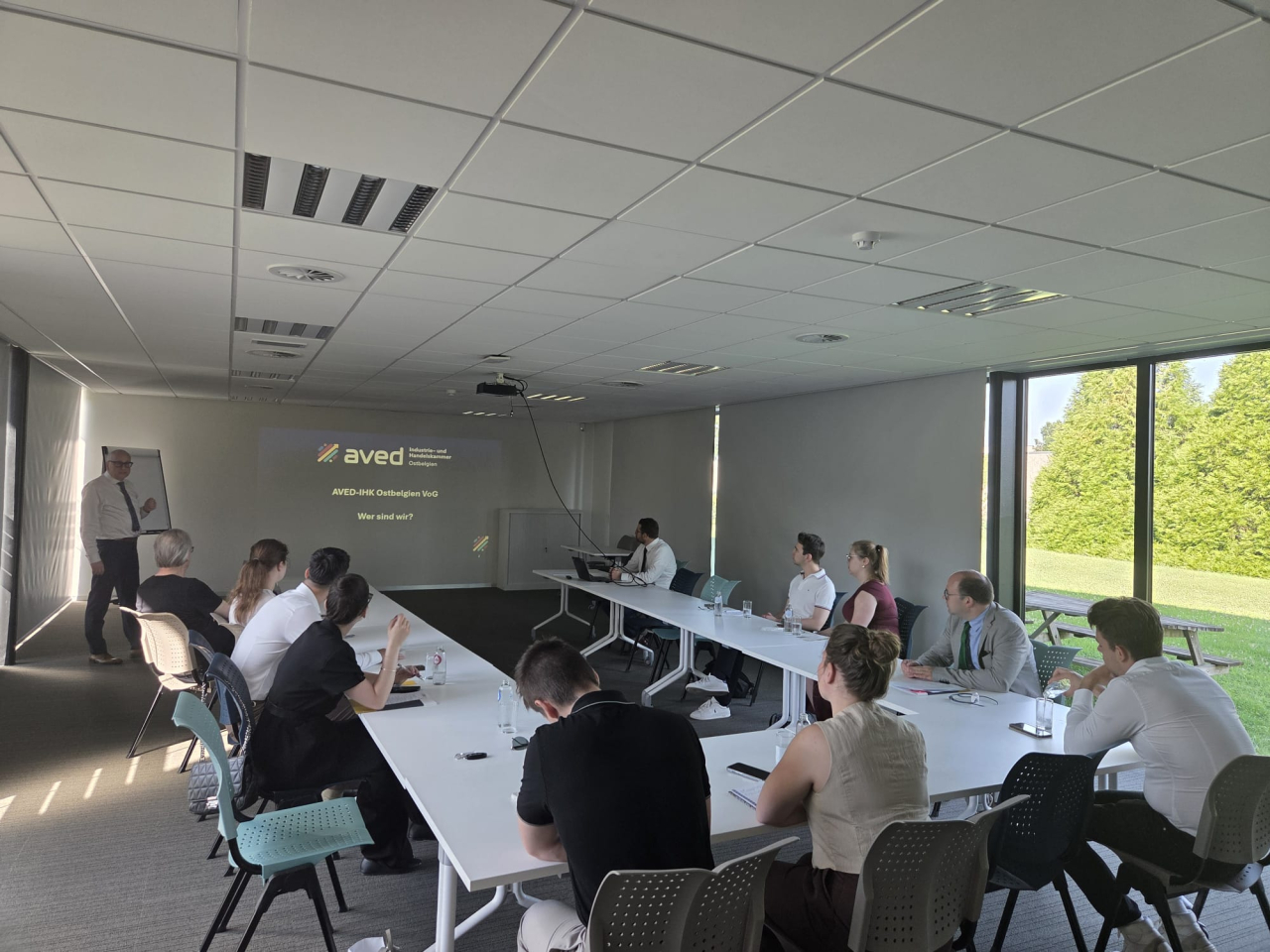
The program also included meetings with representatives of the Aved IHK Chamber of Commerce, the East Belgium State Archives, and Belgischer Rundfunk (BRF), where students explored Belgian-Hungarian economic relations, modern archival practices, and the role of independent public media in the region.
The study trip concluded with discussions with Karl-Heinz Lambertz, former Minister-President of the German-speaking Community of Belgium, and Linda Zwartbol, Chair of the Social Democratic Party. Students learned about the legal status of Belgium's linguistic communities, the autonomy of the German-speaking minority, and visited the Parliament of the German-speaking Community.
The five-day program offered participants valuable first hand insights into regional governance, minority rights, European cooperation, and the political and cultural diversity of one of Europe's most unique regions.