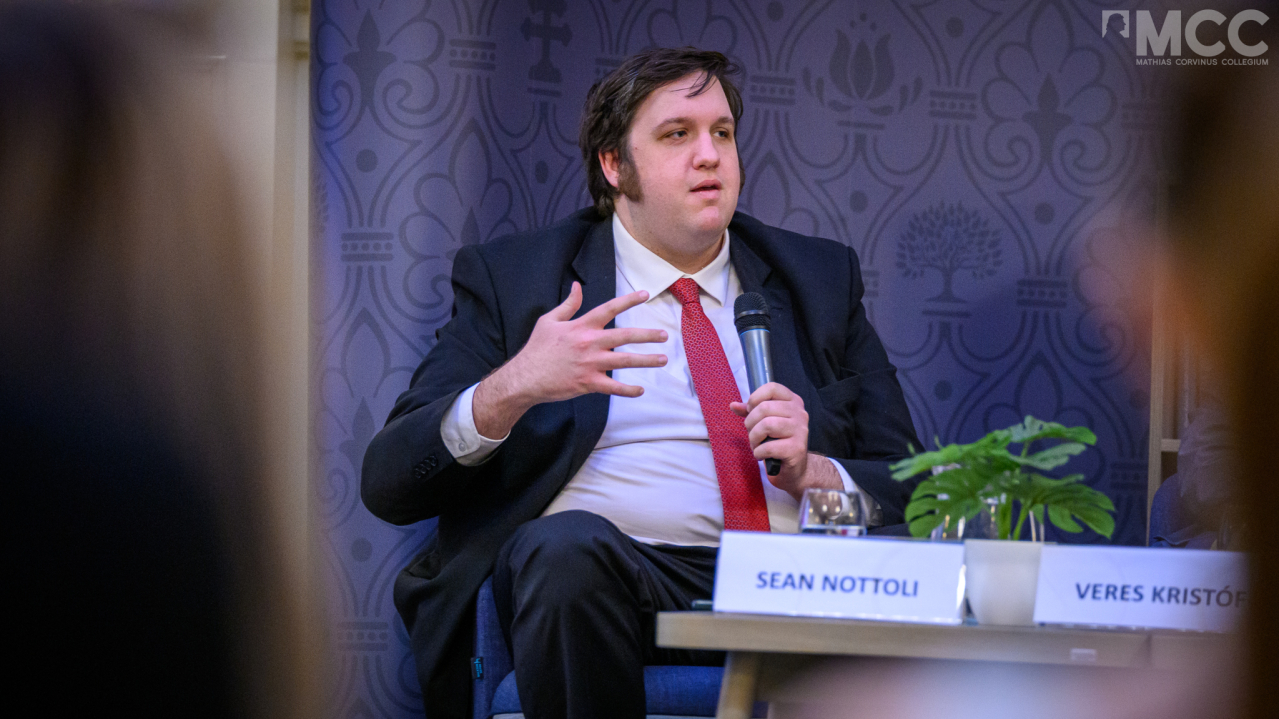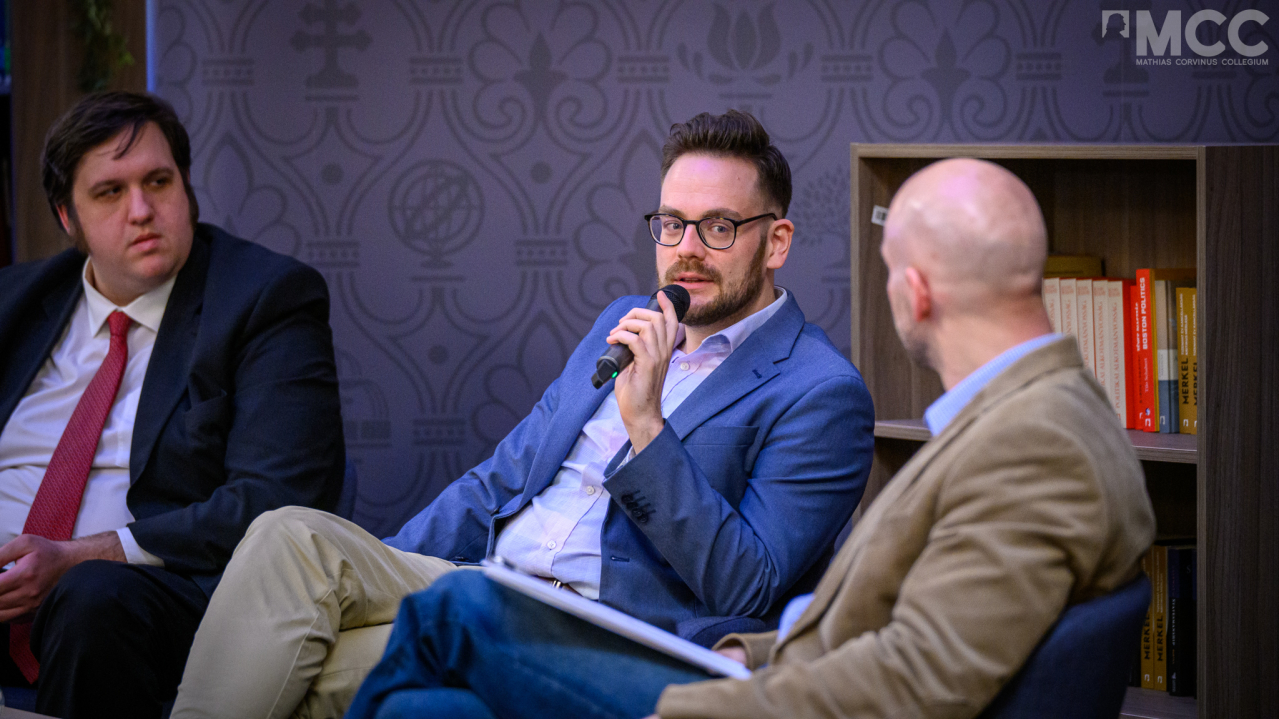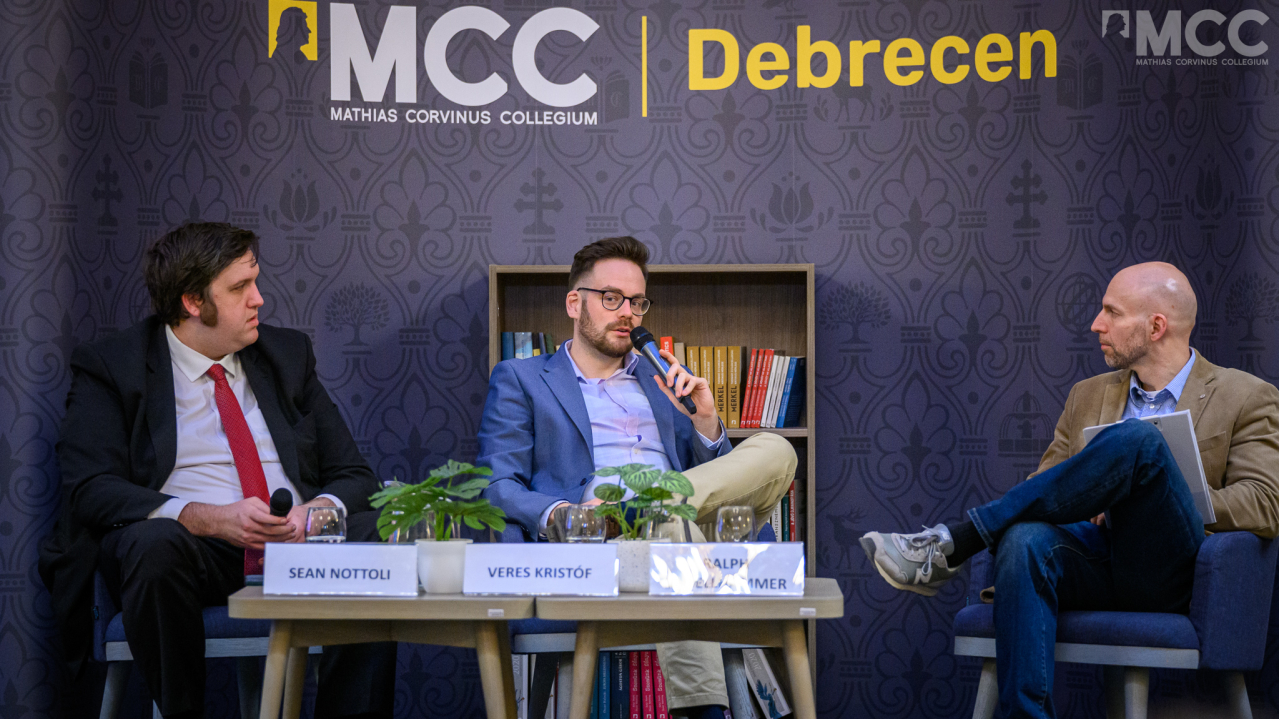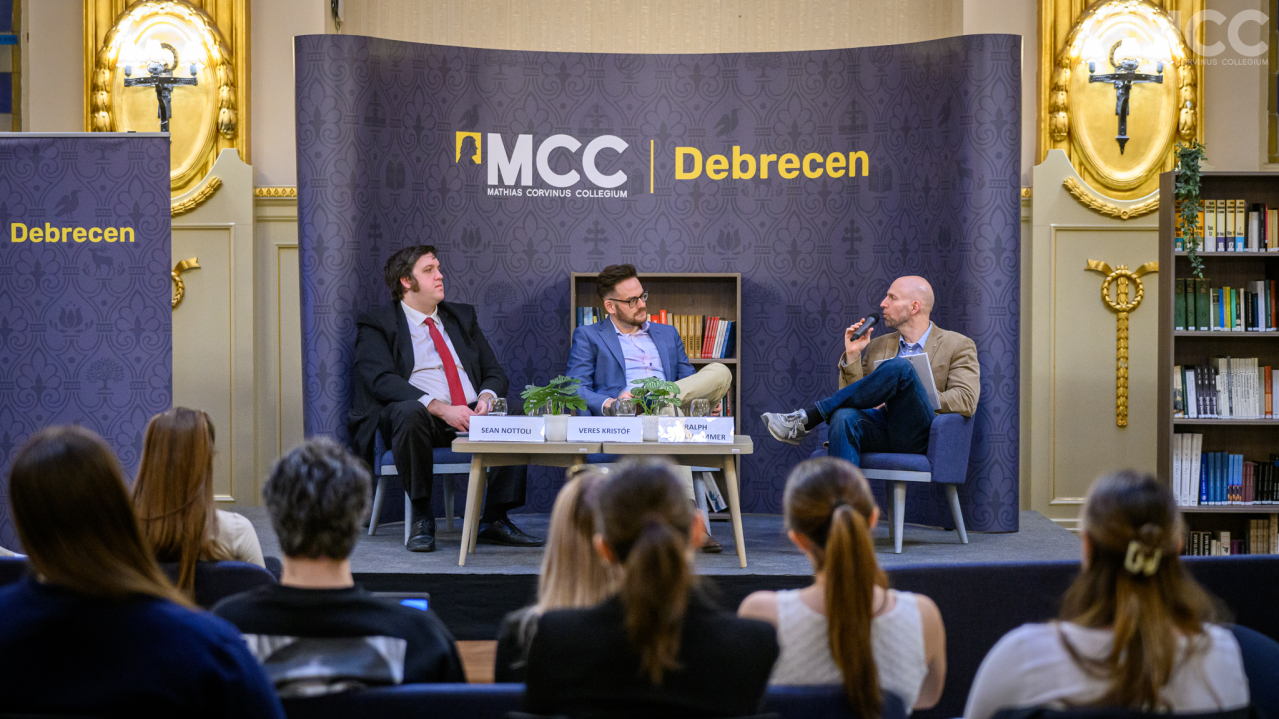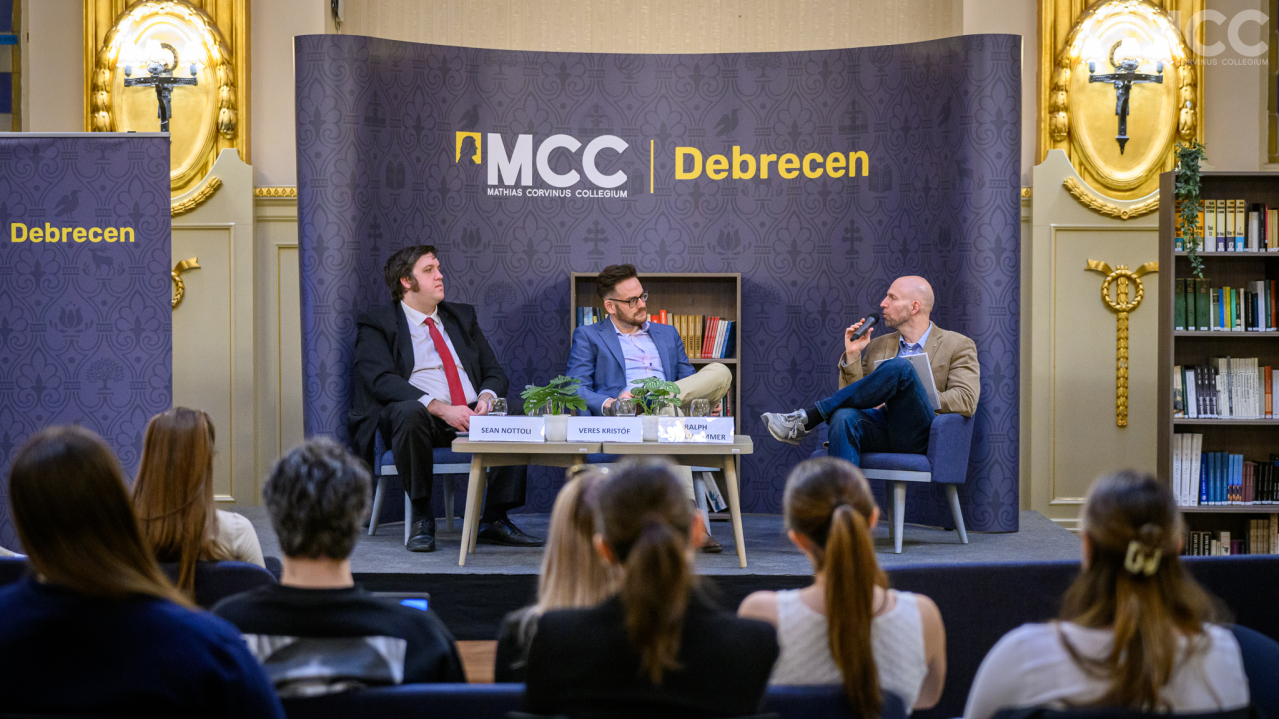
Following two days of discussions in Budapest, the MCC Budapest Summit continued on March 12 in Mathias Corvinus Collegium’s regional centers. In Debrecen, the discussion focused on the future of US–Hungarian relations and how recent political developments in Washington could influence cooperation between the two countries in diplomacy, energy security, and economic investment.
The panel featured Sean Nottoli, Visiting Fellow at the Danube Institute, and Kristóf Veres, International Director of the Danube Institute. The discussion was moderated by Ralph Schoellhammer, Head of the Center for Applied History and IR Theory at MCC.
Speakers noted that the political climate between the United States and Hungary has shifted in recent months. After a period marked by tensions during the previous US administration, the relationship is now increasingly characterized by mutual respect, a stronger emphasis on national sovereignty, and a shared commitment to traditional values.
Sean Nottoli highlighted that economic cooperation is already showing signs of strengthening. In a global environment shaped by intensifying great power competition, reinforcing alliances has become increasingly important for the United States. Hungary, he noted, could play a strategic role in this process, as improving political ties are already accompanied by growing American investment in the country.
Kristóf Veres emphasized that the current rapprochement stands in contrast to the previous period of bilateral relations. He argued that the earlier tensions between Washington and Budapest have been replaced by a renewed interest in cooperation, reflecting broader shifts in regional and global strategic priorities.
Energy security also emerged as a key topic. The speakers stressed that diversifying energy sources remains an important strategic goal for Hungary, although existing infrastructure and regional conditions mean that this transition will take time.