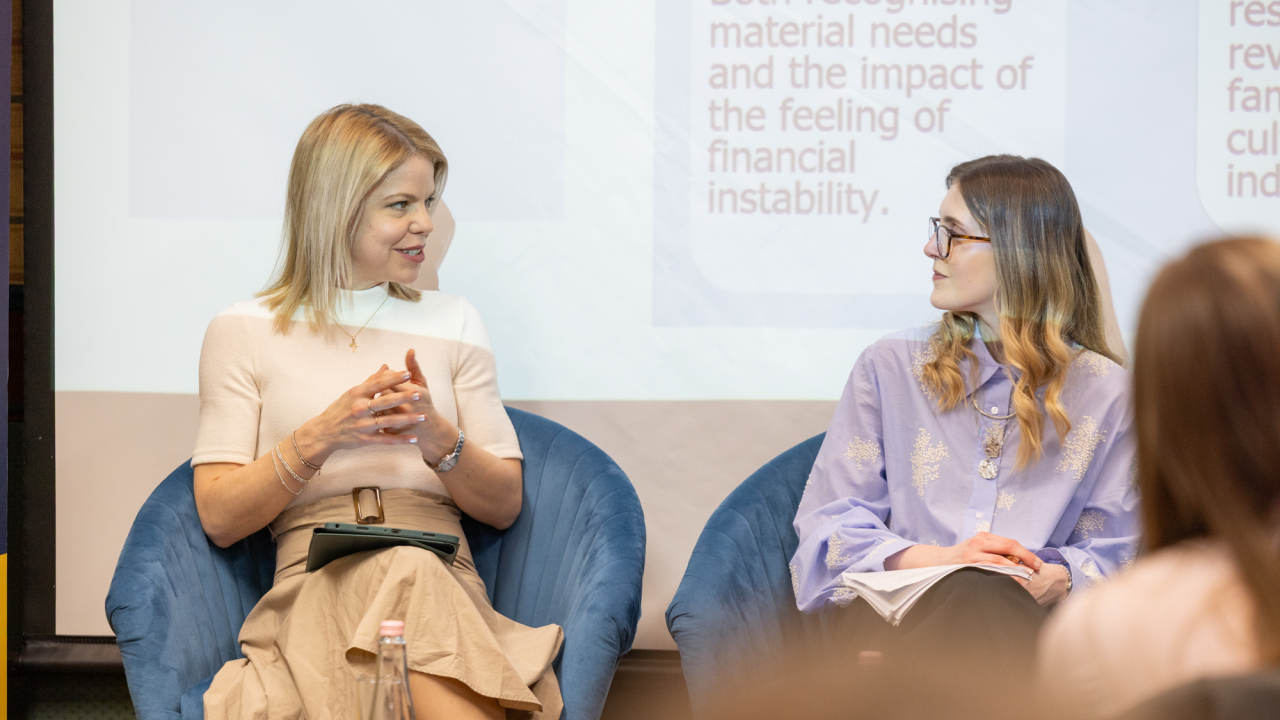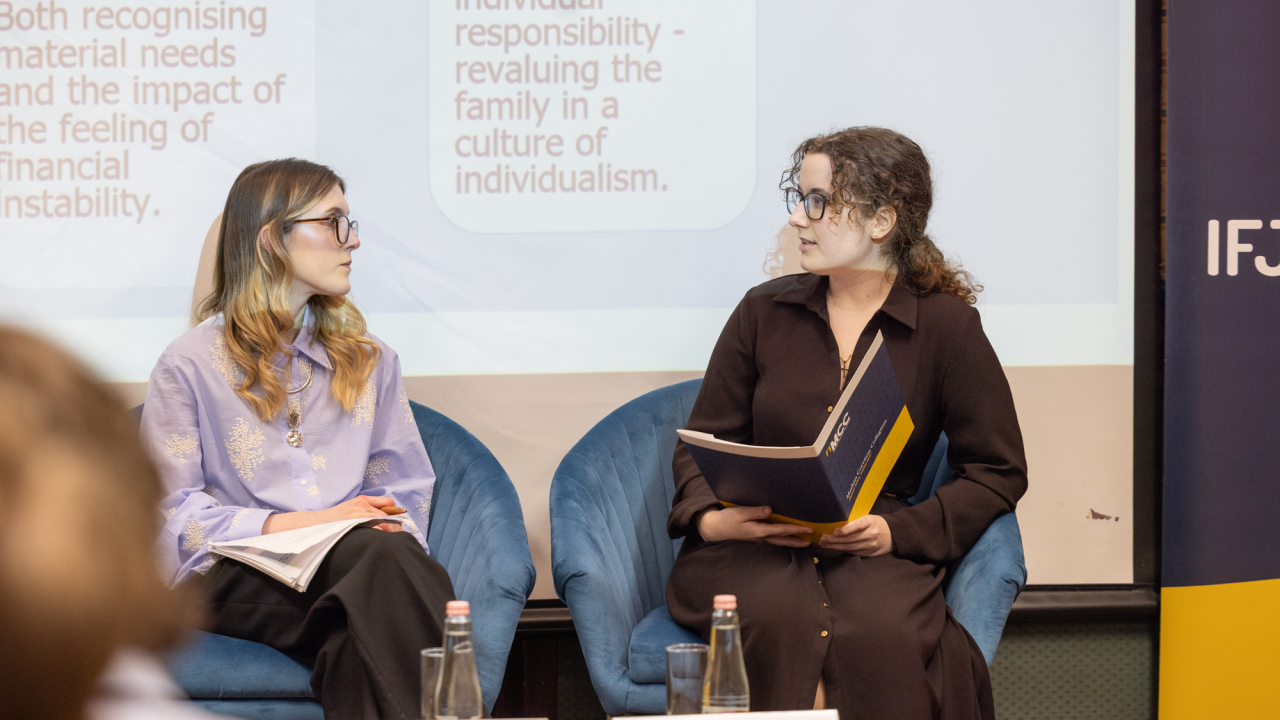
Organized by MCC’s Youth Research Institute, a recent lecture by Emma Gilland explored fertility trends and family policy based on interviews with British Generation Z women. As fertility rates continue to decline across the Western world, the research examined how young women in their twenties approach decisions about having children and what factors shape their choices.
The findings highlight that financial security is a primary concern. While public discourse often focuses on childcare availability, participants pointed to broader structural challenges such as the housing crisis, unstable labour market conditions, and rising living costs. For many, starting a family is closely linked to taking on full financial responsibility in an uncertain environment.
Gilland also emphasized a shift in how parenthood is perceived. Among Generation Z, raising children is increasingly seen as a demanding and resource-intensive commitment. Concerns about parental burnout and the ability to provide sufficient emotional and financial support are widespread, while motherhood is often viewed as a potential obstacle to career progression.
Despite these concerns, the desire for family remains strong. Many young women see family as a source of stability, but are seeking a balance where career and parenthood can coexist through flexible work and shared responsibilities. The research suggests that effective policy responses should focus on creating a predictable economic environment while also addressing the cultural expectations surrounding parenting.
Following the lecture, Georgina Kiss-Kozma, Deputy Director of the Youth Research Institute, highlighted that most young people continue to support marriage and childbearing, even as loneliness becomes an increasing concern. The discussion, moderated by Kamilla Lukász, concluded that for Generation Z, having children is no longer an automatic milestone but a conscious and carefully considered decision.