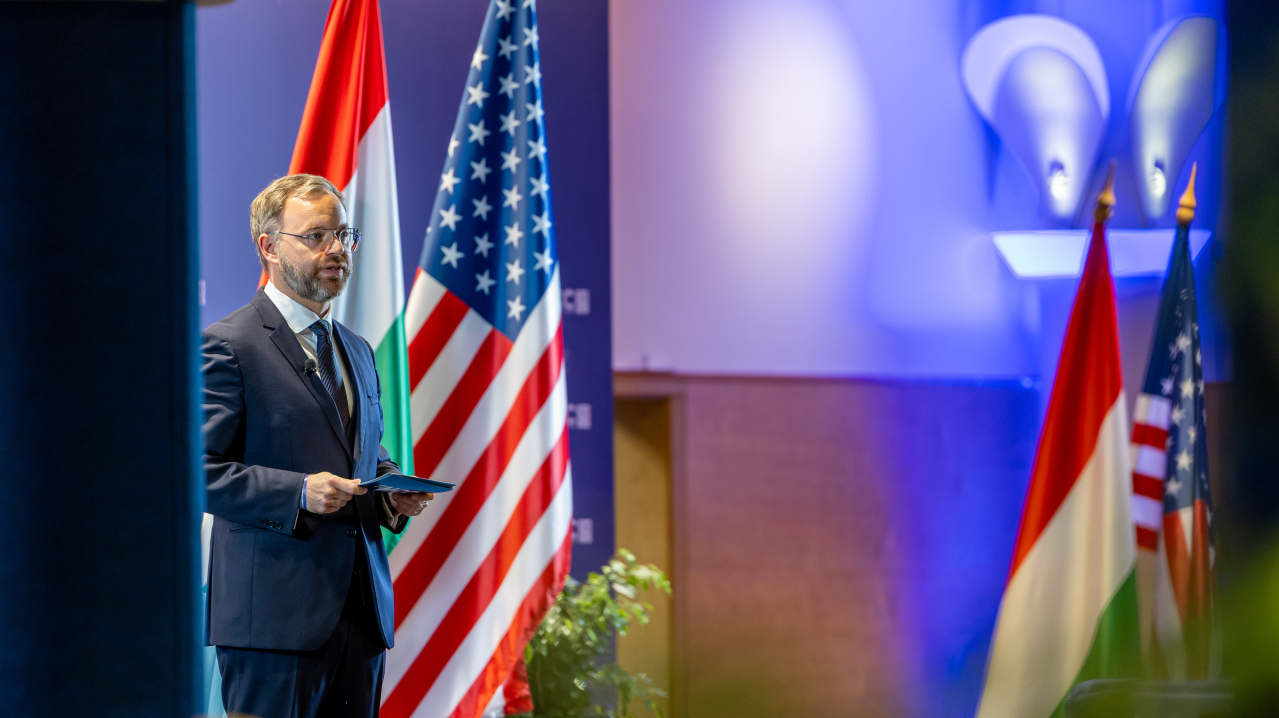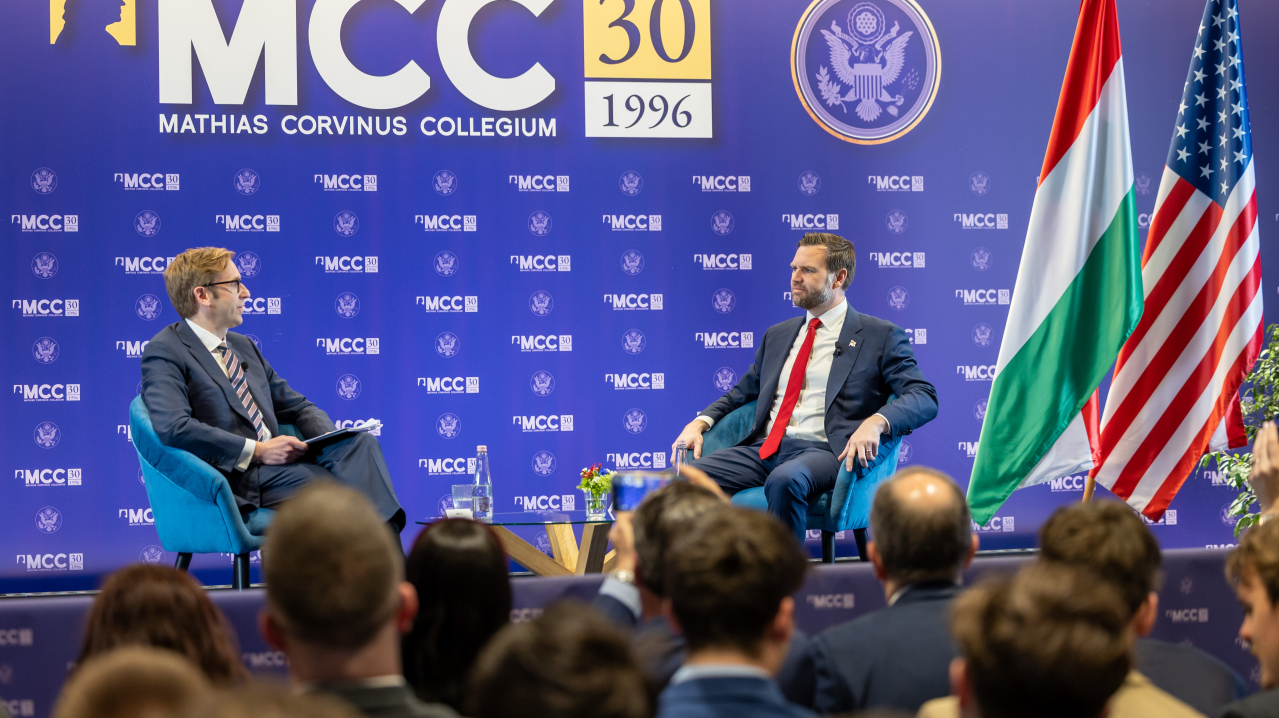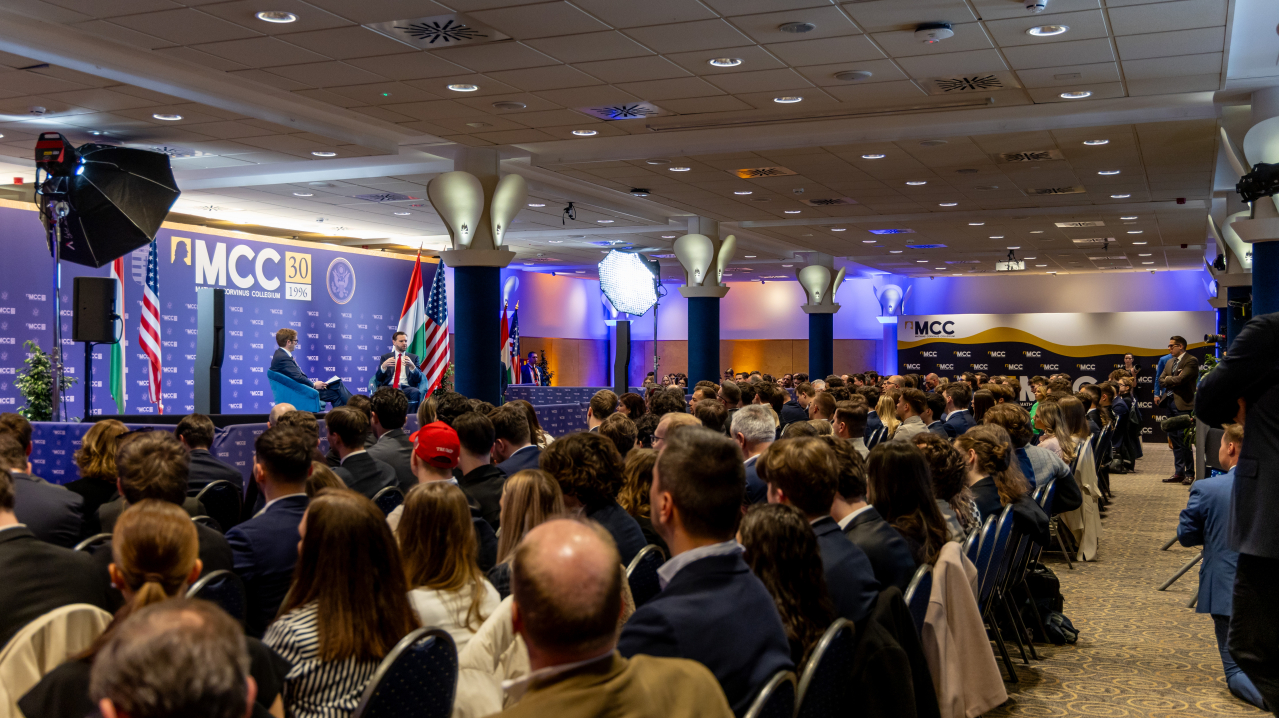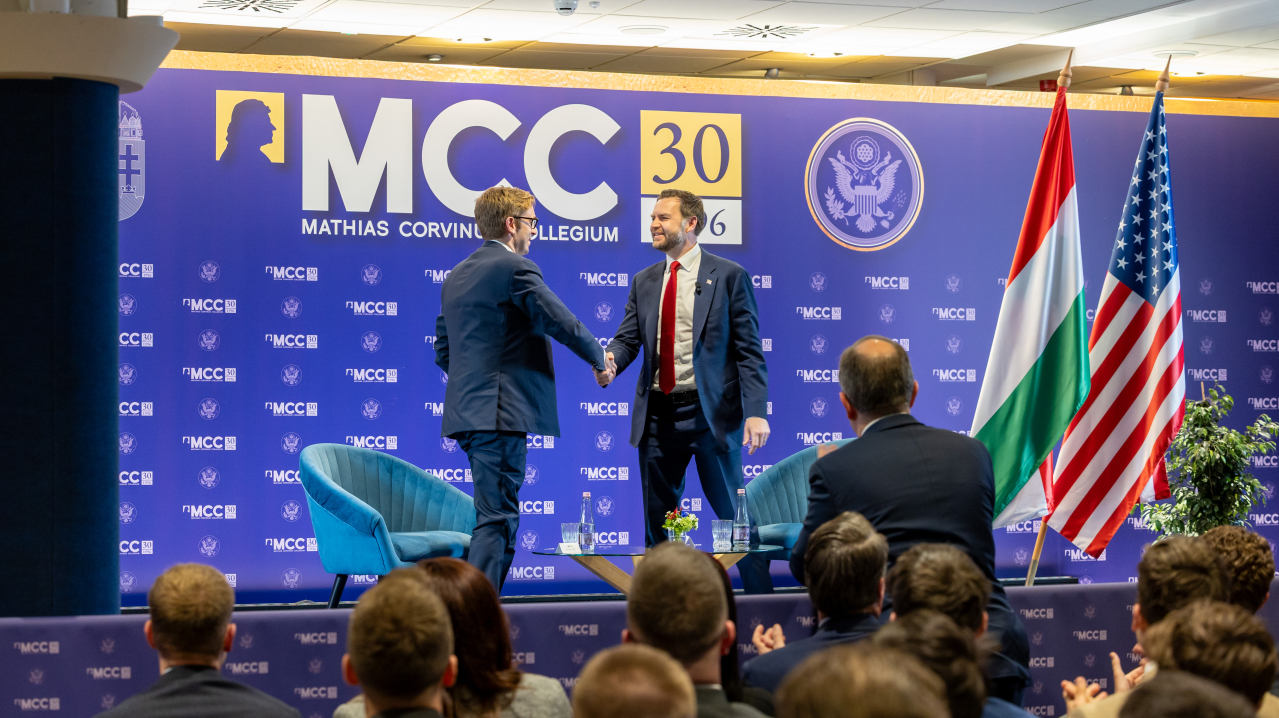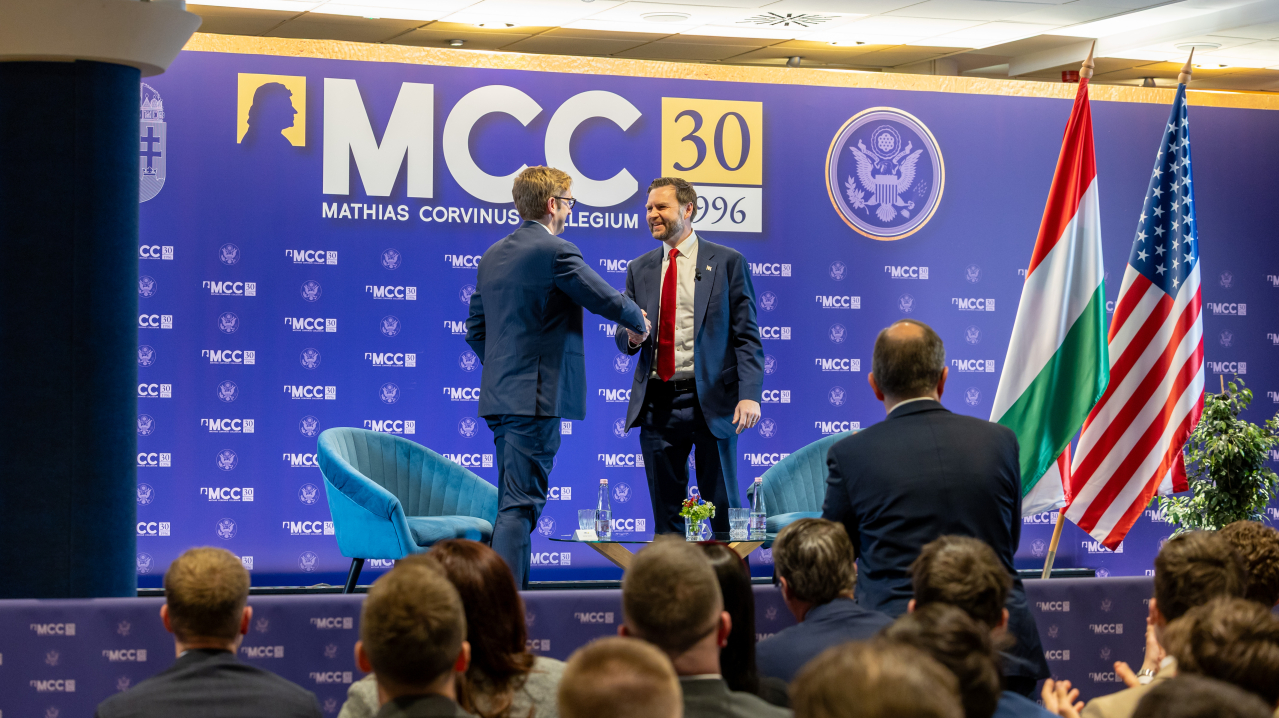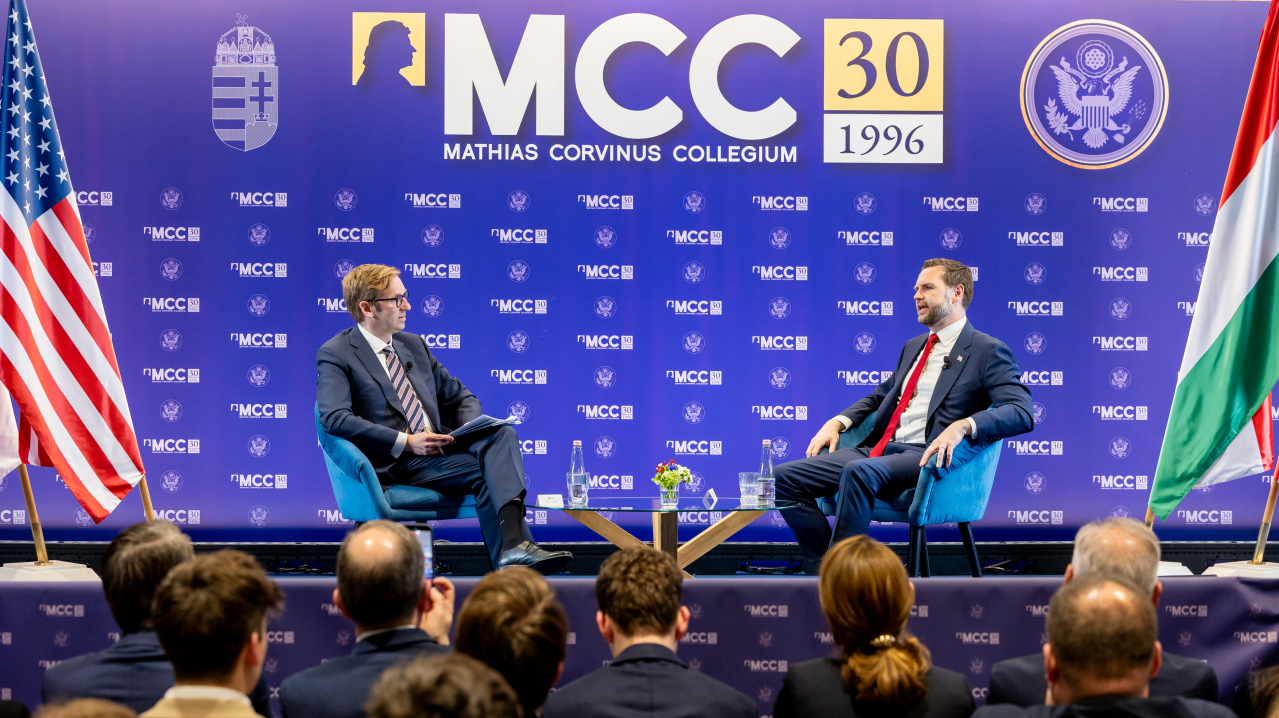
During his visit to the headquarters of Mathias Corvinus Collegium, Vice President of the United States JD Vance not only praised the institution but also offered broader reflections on education, community, and the challenges facing the Western world. Prior to the discussion, Balázs Orbán, Chairman of the Board of Trustees of MCC, welcomed the Vice President and highlighted both the significance of the occasion and the mission of the institution.
In his opening remarks, Balázs Orbán recalled that the connection between MCC and JD Vance dates back several years, when the idea of a visit first emerged during Vance’s time as a U.S. Senator. Since then, he noted, Vance’s career has continued to advance, with a second book published and his elevation to one of the highest offices in the United States. He emphasized the strength of Hungarian American relations and expressed his appreciation for the Vice President’s acceptance of the invitation.
He also underlined that MCC represents more than an educational institution. It is a mission aimed at nurturing young talents who can succeed on an international level. According to Orbán, genuine talent management goes beyond the transfer of knowledge, encompassing values, a clear worldview, and strong foundations. He also addressed the challenges the institution often faces, particularly from liberal perspectives in Europe, and noted that JD Vance has consistently and openly supported the values shared by the institution.
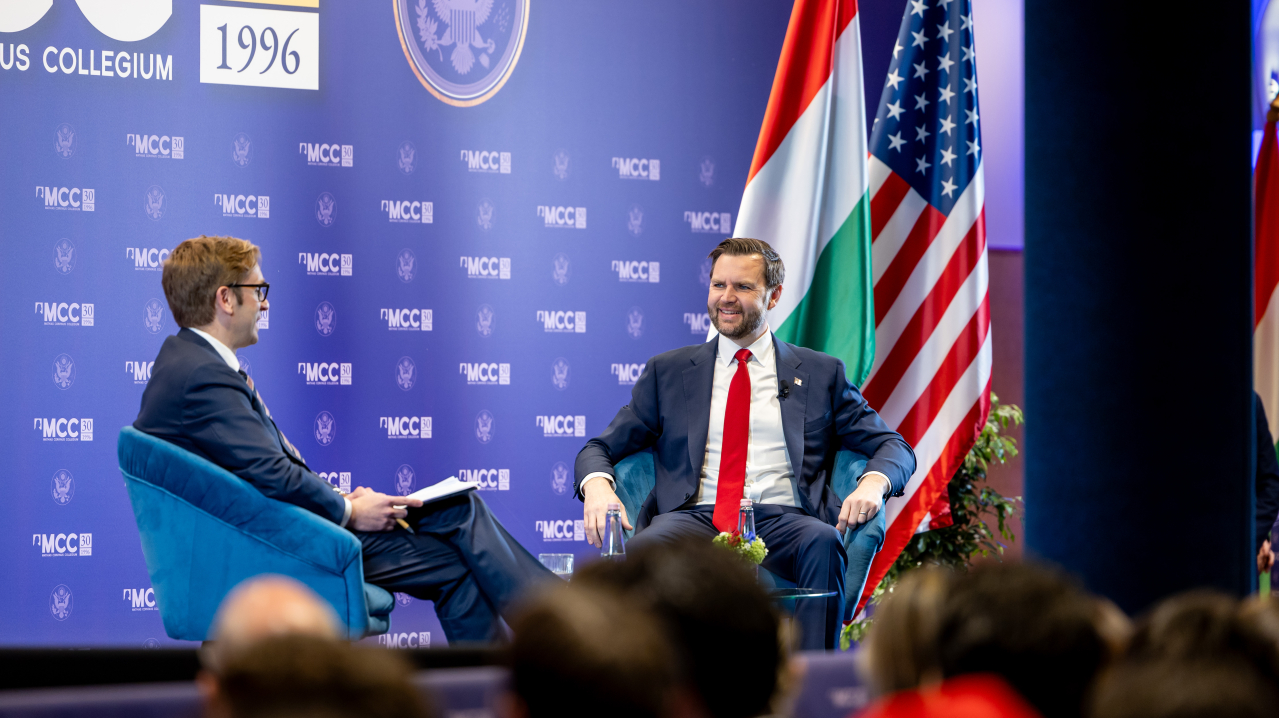
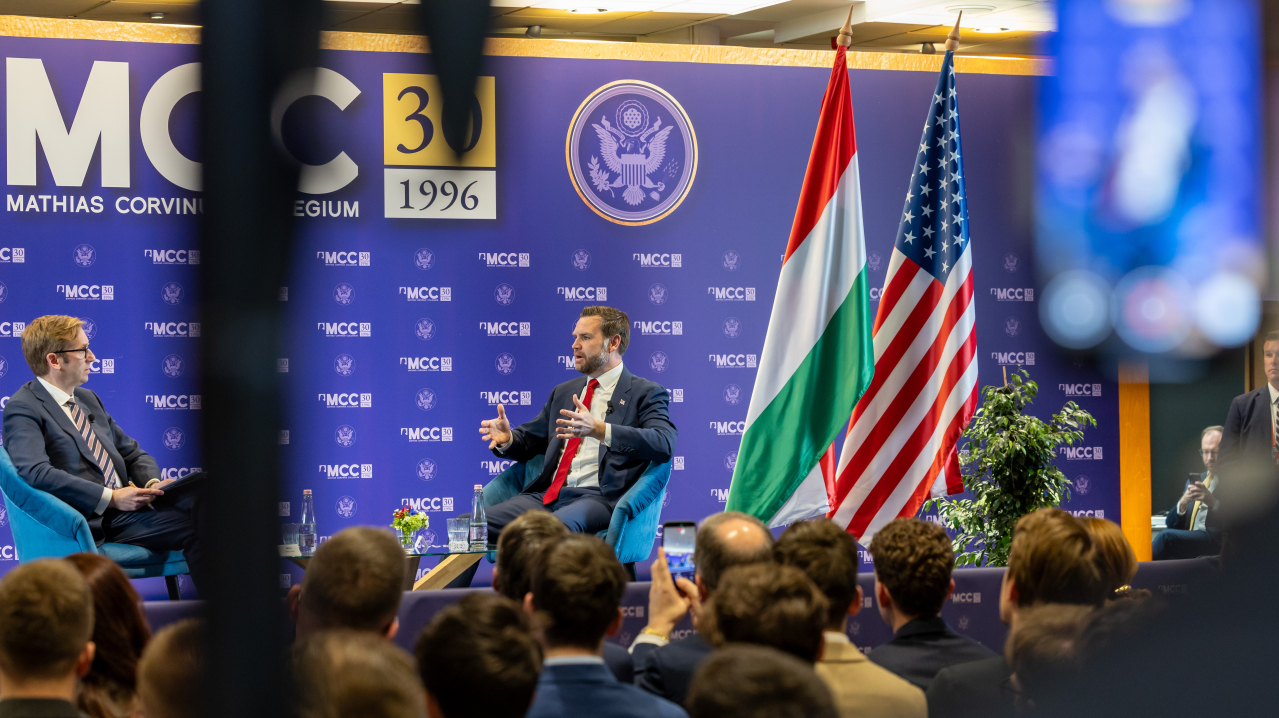
Following the opening, Zoltán Szalai, Director General of MCC, engaged in a conversation with the Vice President. During the discussion, JD Vance elaborated on his views regarding education, social connections, and current geopolitical developments.
He described MCC as a unique actor in today’s educational landscape. Founded in 1996, the institution provides an environment where students can develop from an early age through to doctoral level, while participating in open debates and cultivating critical thinking. JD Vance noted that while many Western universities have moved away from the foundational values of Western civilization, MCC actively contributes to their preservation and strengthening.
Addressing the future of education, he stressed the importance of non discrimination and freedom of speech. Referring to past debates in the United States surrounding university admissions systems, he argued that any form of preferential treatment based on race contradicts the principles of the rule of law. In his view, future education systems should be built on equality and open dialogue.
Drawing on personal experience, JD Vance also highlighted the significance of relationships formed during university years. He noted that one of the most important outcomes of his education was meeting his wife, alongside building lasting friendships and professional networks. He emphasized that young people often underestimate the long term importance of these connections.
At the same time, he cautioned that social circles can limit perspectives. He therefore emphasized the importance of genuine diversity in higher education, where individuals from different backgrounds can engage with one another and gain a deeper understanding of their societies. In this regard, he referred to MCC as a positive example.
The conversation also touched upon current international issues, including the war in Ukraine. JD Vance stressed that respect for sovereignty remains a fundamental principle and rejected any attempts to influence democratic decisions through political pressure. He affirmed that the United States respects Hungary’s sovereignty and considers such external interference unacceptable. During his visit to Budapest, he also viewed the Holy Crown of Hungary, which he described as a powerful symbol of sovereignty rooted in the people.
Regarding the war, he argued that achieving peace requires an understanding of all parties involved, and that only such an approach can lead to a sustainable solution. He also noted that Hungary’s Prime Minister plays a significant role in advancing international efforts aimed at promoting peace.
On Europe, JD Vance emphasized the deep cultural and societal ties between the United States and the continent, while also expressing disagreement with certain aspects of European political leadership. He highlighted issues such as energy policy and bureaucracy, which he believes place considerable burdens on European societies and families.
In his closing remarks, Vice President JD Vance addressed young people directly, encouraging them to make the most of their university years, build meaningful relationships, and make their voices heard. He stressed that meaningful change takes time, but can be achieved through persistence and commitment. He also underscored the importance of community, faith, and traditional values in maintaining social stability.
Overall, the visit conveyed a clear message. MCC represents an institution that not only imparts knowledge, but also builds community, conveys values, and fosters meaningful dialogue on issues of international relevance. According to JD Vance, this model may serve as an example for the future of education.