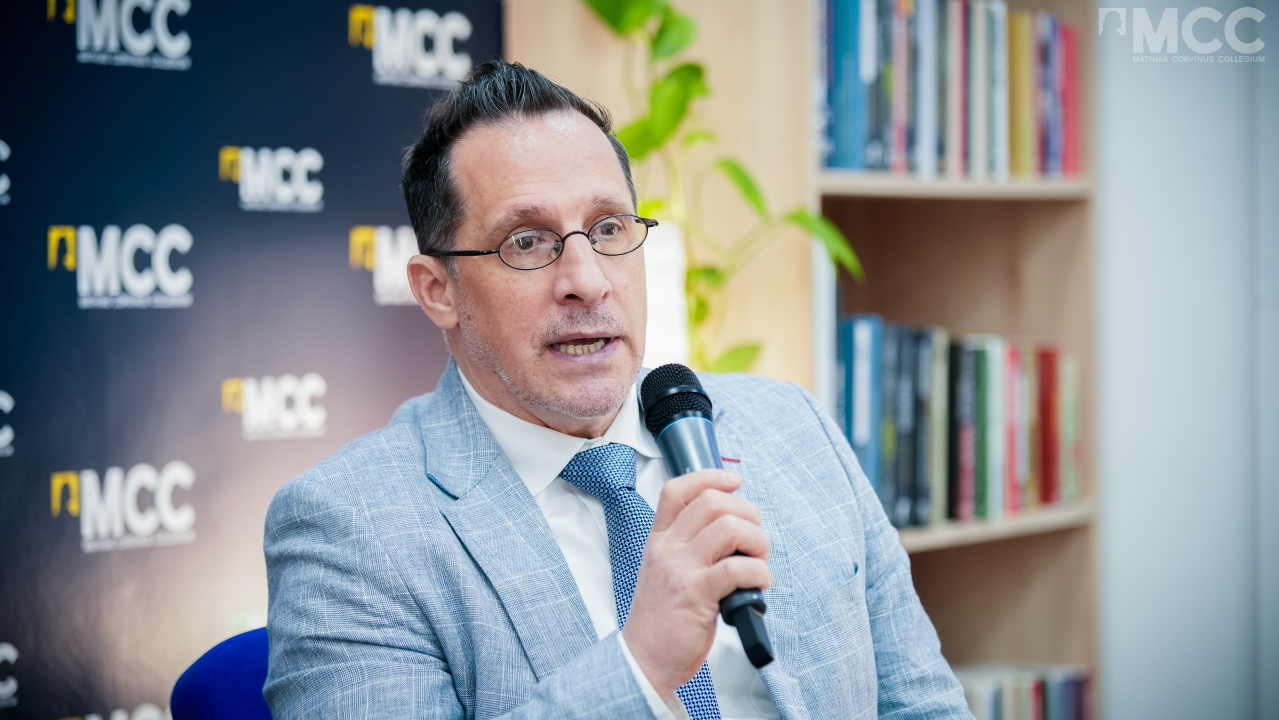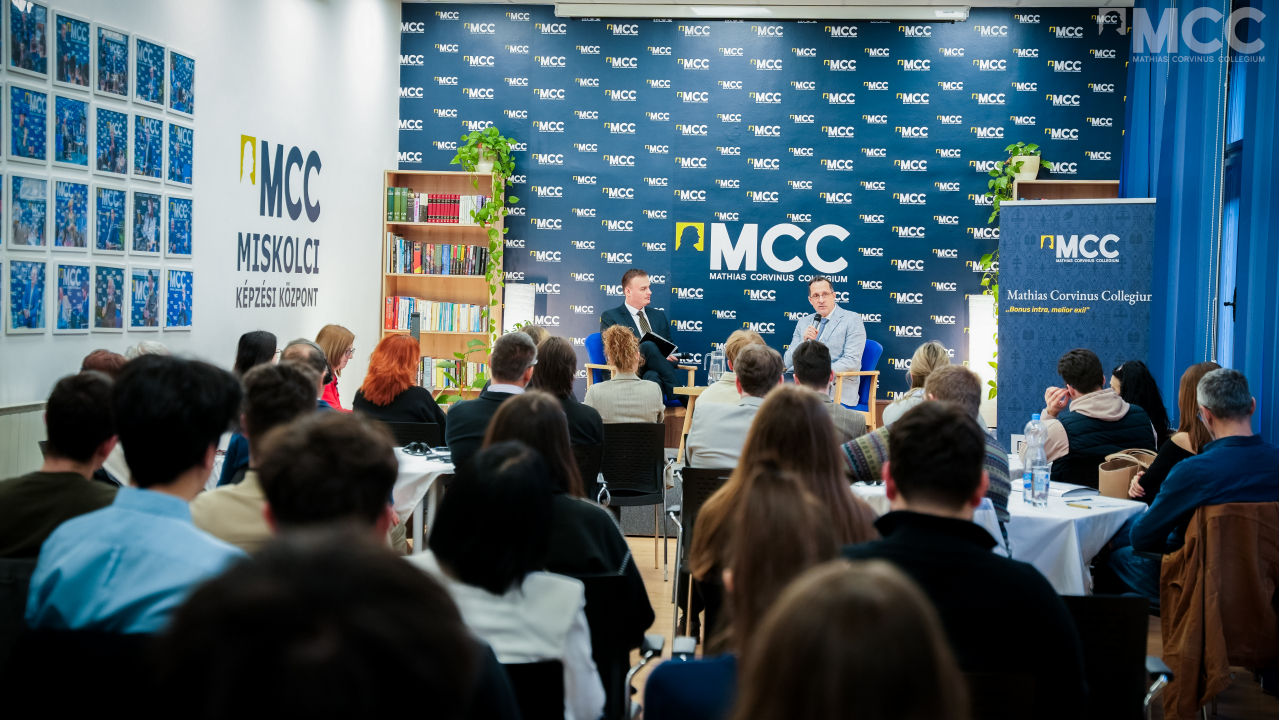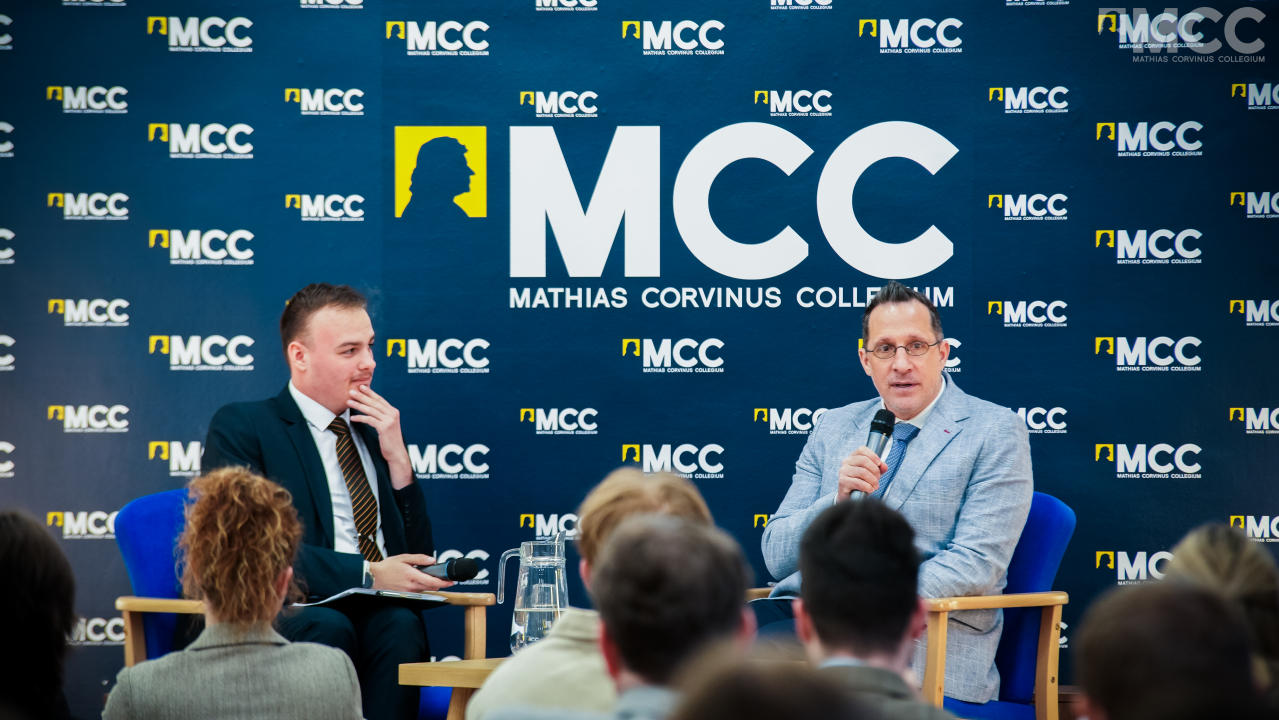
Some of the greatest challenges facing the Indo-Pacific region include maritime and territorial disputes, security concerns related to gray-zone tactics, as well as demographic issues, climate change, piracy, and illegal and unregulated fishing — said Professor Stephen R. Nagy from Tokyo during his visit to MCC in Miskolc. Our guest was interviewed by Máté Sipos, our student from our School of International Relations.
During the conversation, the professor—who has a Hungarian father and currently lives in Japan—spoke about the role the Indo-Pacific region plays in global trade and economic relations. He also touched on how the region’s development is shaped by security challenges, demographic issues, and the intensifying competition between the United States and China. According to the professor, the Indo-Pacific is a heterogeneous area with significant differences in political systems, levels of development, and religions.
In a brief historical overview, Stephen R. Nagy discussed the varying paths of development among countries in the region. Japan began modernizing its economy in the 19th century, while other countries, such as India, opened up to the world more slowly and focused primarily on defense rather than building relationships and developing their economies. Up until the 2010s, Japan was the most influential country in the region, but since then, China has undergone tremendous growth and has taken over the leading role.
The professor also addressed the region’s geopolitical situation and the relationships among the countries. He spoke about the ties between Indonesia and China, as well as the cooperation among the BRICS countries. The alliance—founded in 2009 by Brazil, Russia, India, and China—has since evolved into a cohesive geopolitical bloc and is now considered a rival to the G7 group.
Professor Stephen R. Nagy emphasized the importance of cooperation among Southeast Asian countries, as well as the diversity of the region and the differences in political systems. He also discussed the "Belt and Road" initiative, also known as the "New Silk Road," highlighting China’s ambitions to build infrastructure throughout the region and how this affects regional stability.
Toward the end of the conversation, they touched on future opportunities, changes in the United States' political strategy, and the evolution of global trade. The professor emphasized that the geopolitical landscape is constantly shifting, and accordingly, the dynamics of relationships between various countries continue to develop.