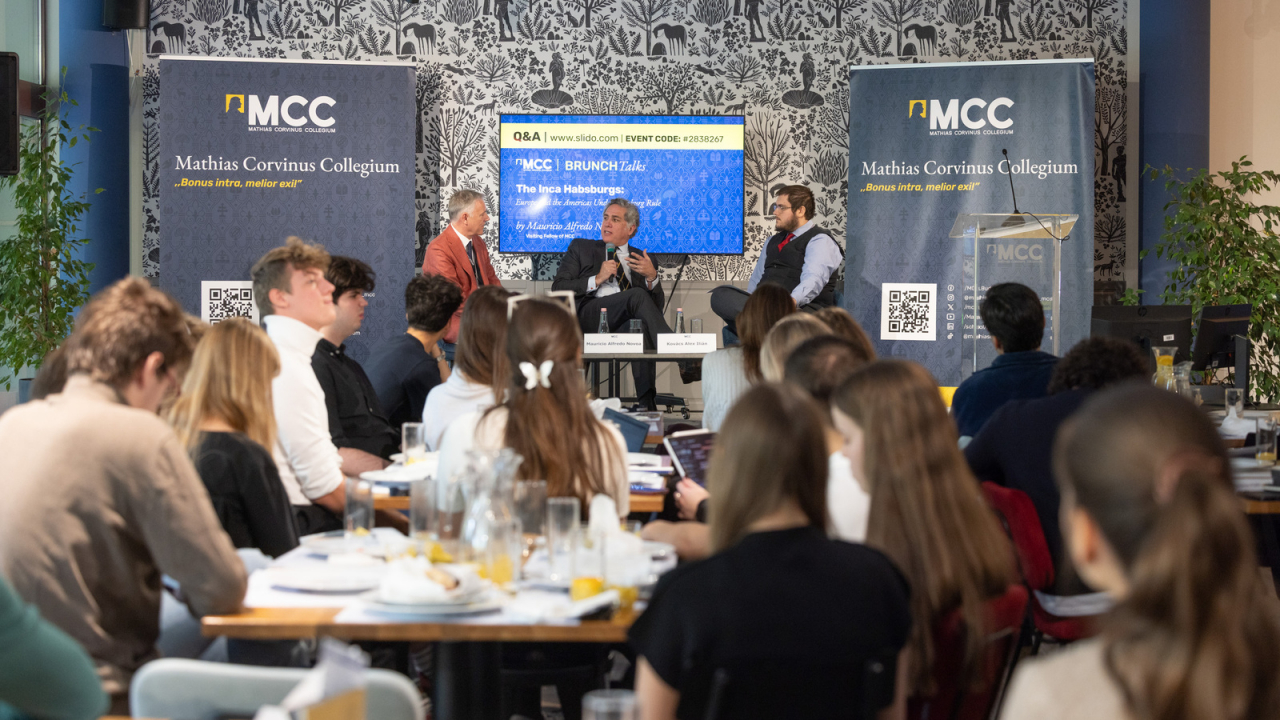
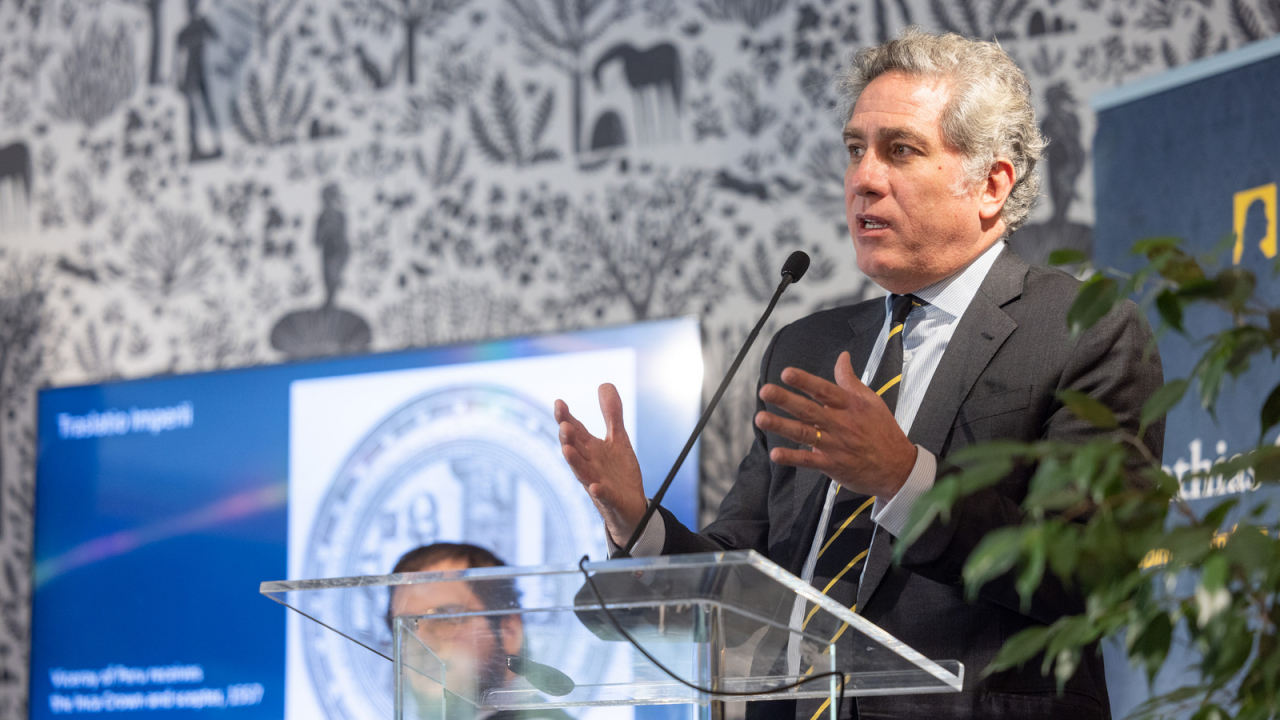
At the latest MCC Brunch Talk, Mauricio Novoa explored how the Habsburg conquest of Peru was not merely a military campaign but also a deeply metaphysical and religious process that reshaped both European and Indigenous worlds.
Novoa explained that when Emperor Charles V became ruler of the newly acquired territories, he was also recognized as the Inca Emperor of Peru—symbolizing the union of imperial authority and missionary purpose. The Americas, he noted, were conceived as a “missional state” charged with the evangelization of their peoples, an idea rooted in early theological debates over whether Indigenous populations had souls, an issue ultimately affirmed by the Church.
He emphasized that Francisco Pizarro’s conquest relied heavily on Indigenous allies who helped defeat the Inca forces. Following the death of the last Inca ruler and a series of rebellions, a Spanish viceroy formalized the transfer of power to the Crown, establishing the Habsburgs as Inca kings of Peru. Over time, local nobility was integrated into the Spanish elite, reflecting the deep fusion of religion and governance. The 1536 Siege of Cuzco, Novoa concluded, marked a defining moment in the consolidation of this new imperial and spiritual order.