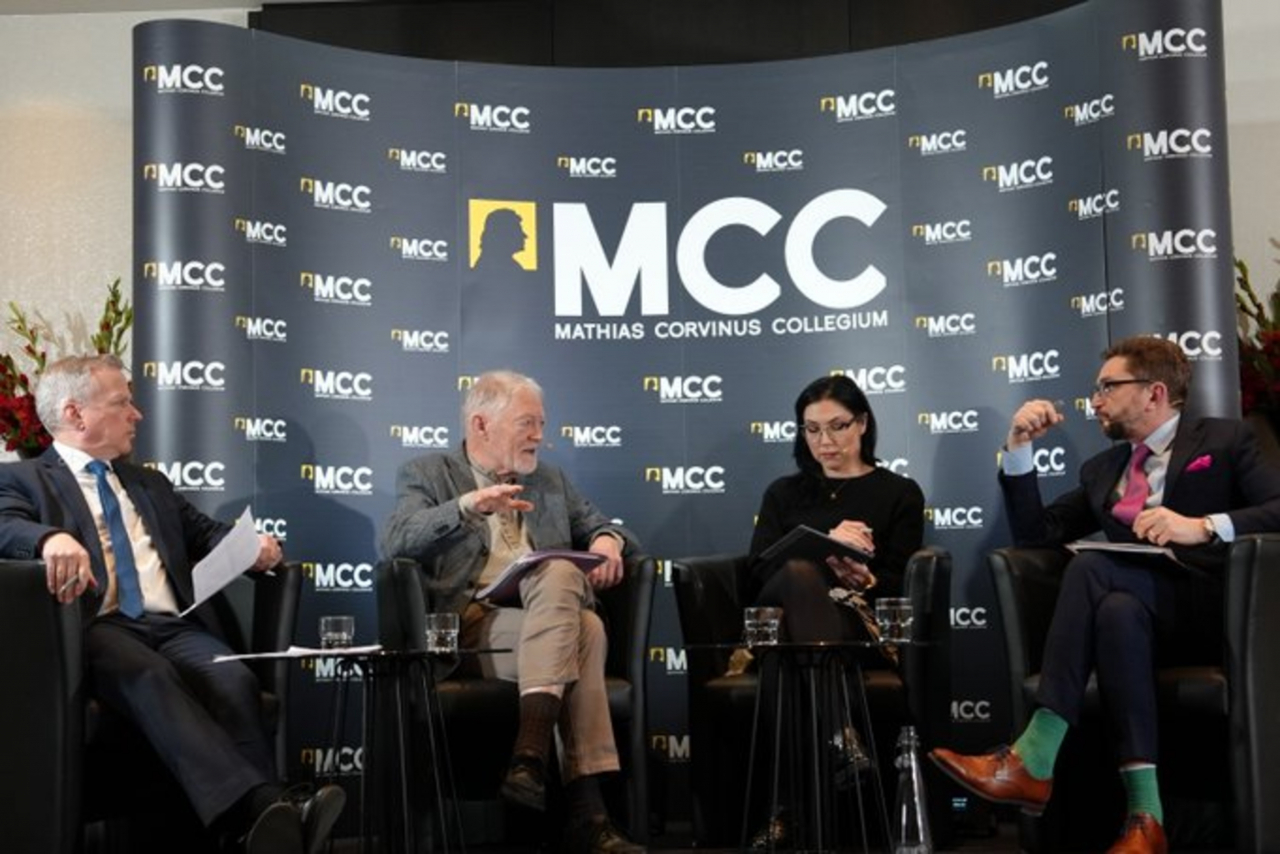
Euthanasia is a divisive issue across Europe, raising questions about whether its legalization enhances personal autonomy or signals a troubling shift toward bureaucratic control over life and death. Countries like Belgium, the Netherlands, Spain, and Portugal have legalized euthanasia, while others, including France and Denmark, continue to debate it. MCC Brussels’ panellists explored the ethical, legal, and cultural dilemmas surrounding euthanasia.
Dr. Ashley Frawley, visiting research fellow at MCC Brussels, introduced us to the major findings of her recent report „The Case Against Euthanasia in Europe: The bureaucratic control of life and death”. The sociologist argued that euthanasia is increasingly framed through euphemistic language like "assisted dying" and "death with dignity." She warned of a domino effect, where legalization spreads across Europe, often targeting politically vulnerable countries.
Within the EU, only 10 member states have taken a firm stand against euthanasia. The phenomenon highlights the issue of national sovereignty in Europe. While policymakers promise euthanasia to play a restrictive role, later the law always become more permissive than they are willing to admit. Frawley compared the movement to the push for transgender rights, asserting that both create expansive, permissive systems with minimal safeguards, giving the state control over life decisions rather than empowering individuals. Finally, she asserted that the claim of autonomy is a lie, because instead of empowering the sick person, we are simply giving the state and bureacracy control over human life.
Ole Hartling, former chairman of the Danish Ethical Council, explored the historical and philosophical aspects, citing the Hippocratic Oath’s prohibition of physician-assisted death. He contended that euthanasia, rather than respecting autonomy, pressures society’s most vulnerable individuals to view themselves as burdens. (While the aim of euthanasia is well-intentioned, its practice quickly expands from the terminally to the chronically ill, from the sick to the disabled, from adults to children, from the mentally competent to the mentally incompetent.) Hartling likened legalization to Caesar crossing the Rubicon—an irreversible step with grave consequences.
Kevin Yuill, emeritus professor of history, emphasized how language shapes public perception, noting that "assisted suicide" is avoided in favor of softer terminology. He cited cases where euthanasia was used for non-terminal conditions, including mental illness and eating disorders, raising concerns about expanding criteria.
Panelists also debated the shifting societal values that make euthanasia more acceptable. Hartling explained that while society used to consider suicide a sin, the idea of complete freedom and autonomy have gradually become more prominent in Europe since the French Declaration of the Rights of Man and the Citizen. Nevertheless, the idea of killing someone as an act of mercy done for the other person’s benefit is a new thing. Professor Frank Füredi argued that without a strong humanistic foundation, society struggles to counter euthanasia’s growing uncritical acceptance.
Bruno Waterfield of The Times warned that deaths by euthanasia often go uninvestigated due to medical confidentiality. In her closing remarks, Frawley expressed her major concern: while people have always argued against death penalty because of the risk of killing an innocent, they do not seem to be bothered enough by the extreme cases of euthanasia that make the news. What does it say about the value of human life in contemporary society?
The discussion underscored the need to keep the debate alive, challenging the gradual normalization of euthanasia and its devaluating implications for human life in modern society.