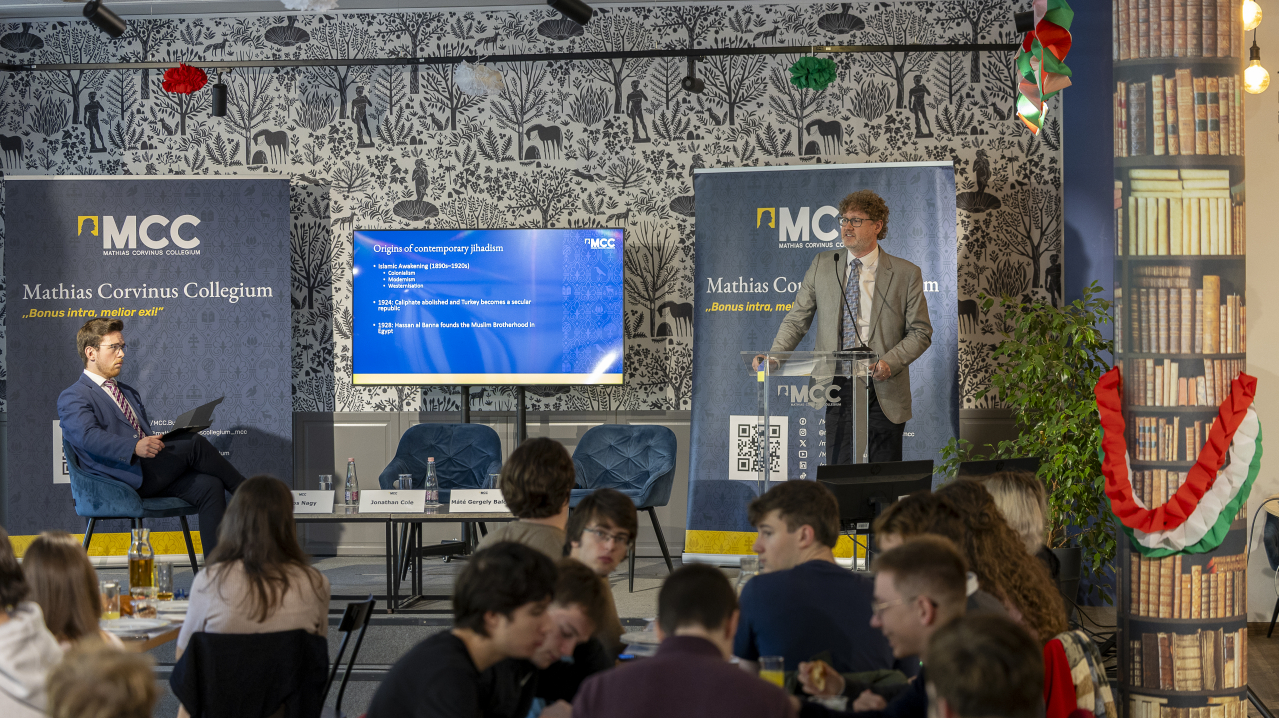
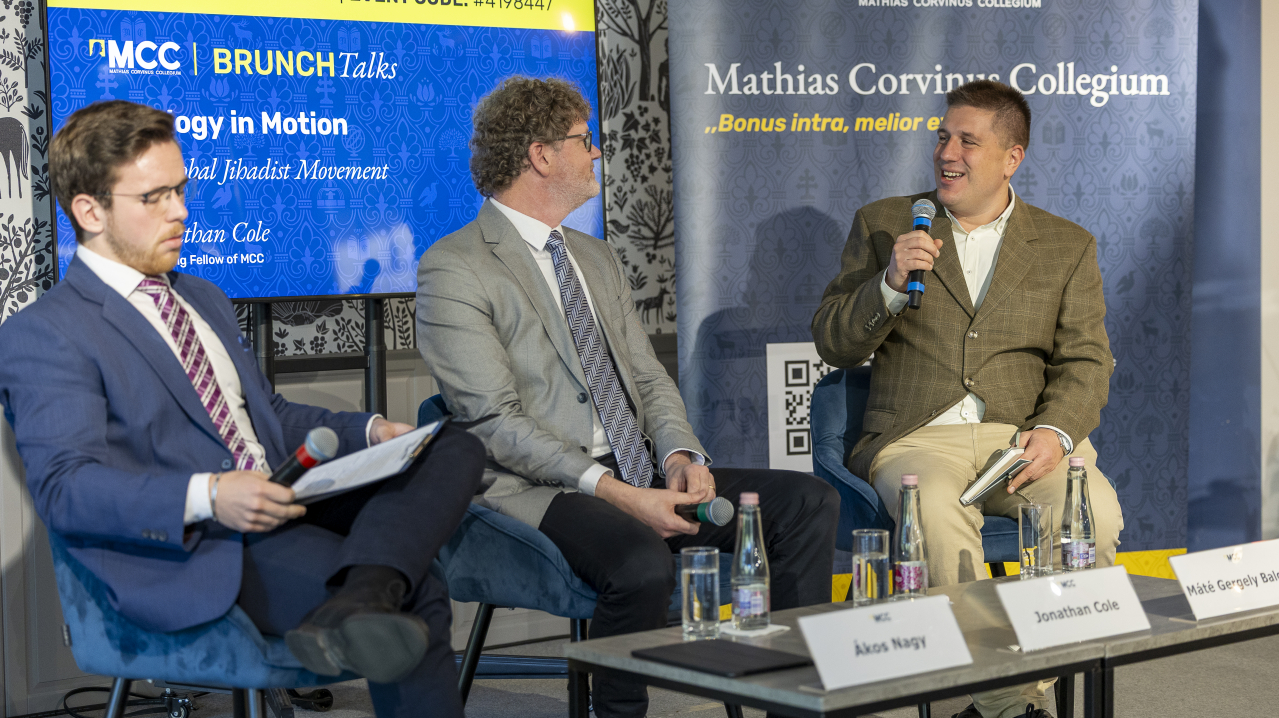
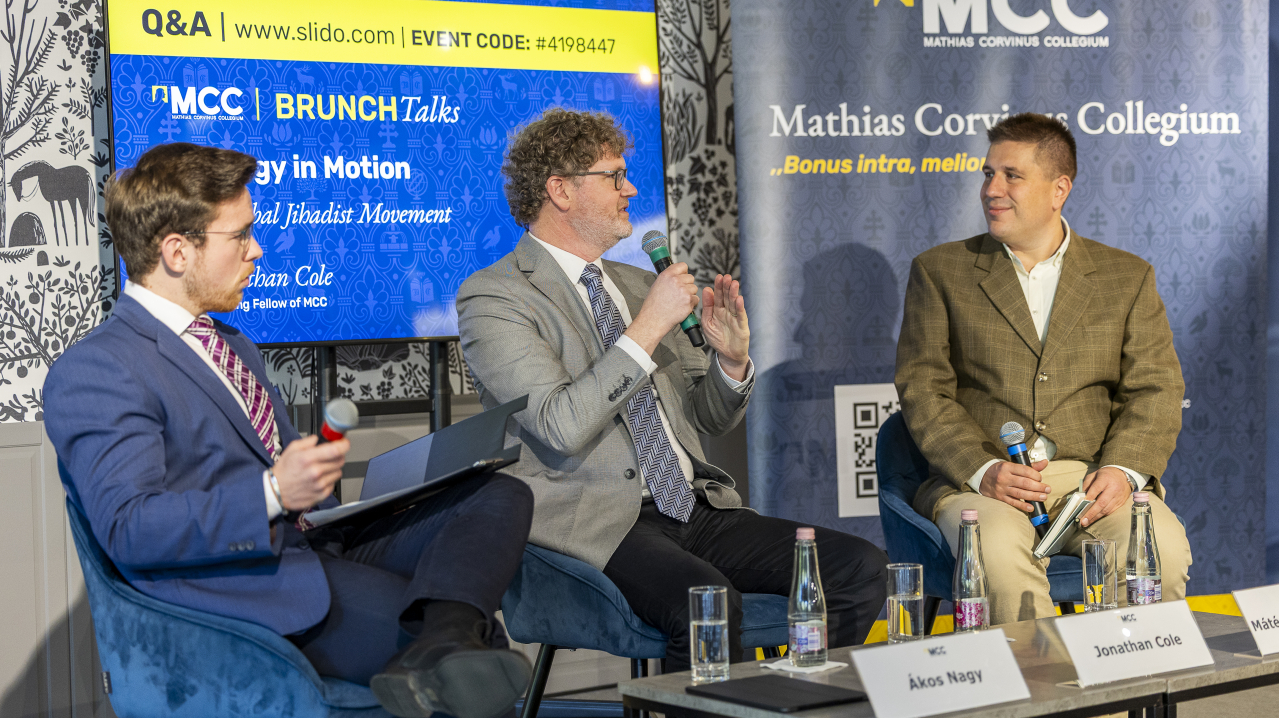
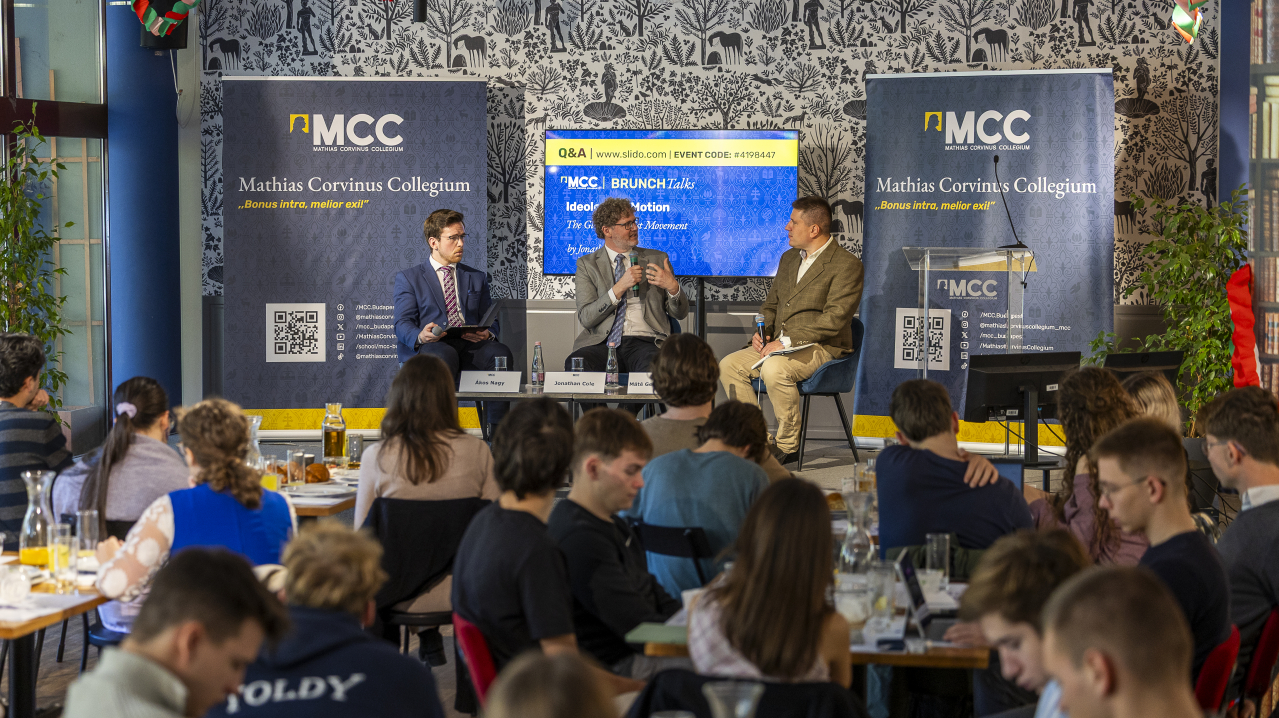
At a recent Brunch Talk, Jonathan Cole delivered a compelling analysis of the ideological and historical development of global jihadism. His talk, titled “Ideology in Motion: The Global Jihadist Movement,” traced the movement’s roots from early 20th-century Islamist revivalism to its modern, transnational manifestations.
Beginning with the Islamic Awakening of the late 19th and early 20th centuries, Cole examined how the forces of colonialism, Westernisation, and the 1924 abolition of the Caliphate profoundly shaped modern Islamist thought. He highlighted the influence of key figures such as Hassan al-Banna and Sayyid Qutb, whose ideas inspired generations determined to re-Islamise society. According to Cole, political repression in countries like Egypt and Syria played a crucial role in the radicalisation of certain Islamist currents, legitimising violence as a tool for achieving ideological goals.
The lecture also shed light on the Afghan jihad (1979–1989) as a decisive moment in the internationalisation of jihadist movements. Cole explained how this conflict gave rise to al-Qaida, which declared war on the United States in the 1990s and orchestrated the 9/11 attacks. He concluded by describing the contemporary landscape as a multi-decadal, global, and irregular conflict driven by a shared jihadist ideology that transcends borders. Most jihadists, he noted, now function as insurgents rather than terrorists — a distinction that underscores the adaptability and resilience of the movement in the modern era.