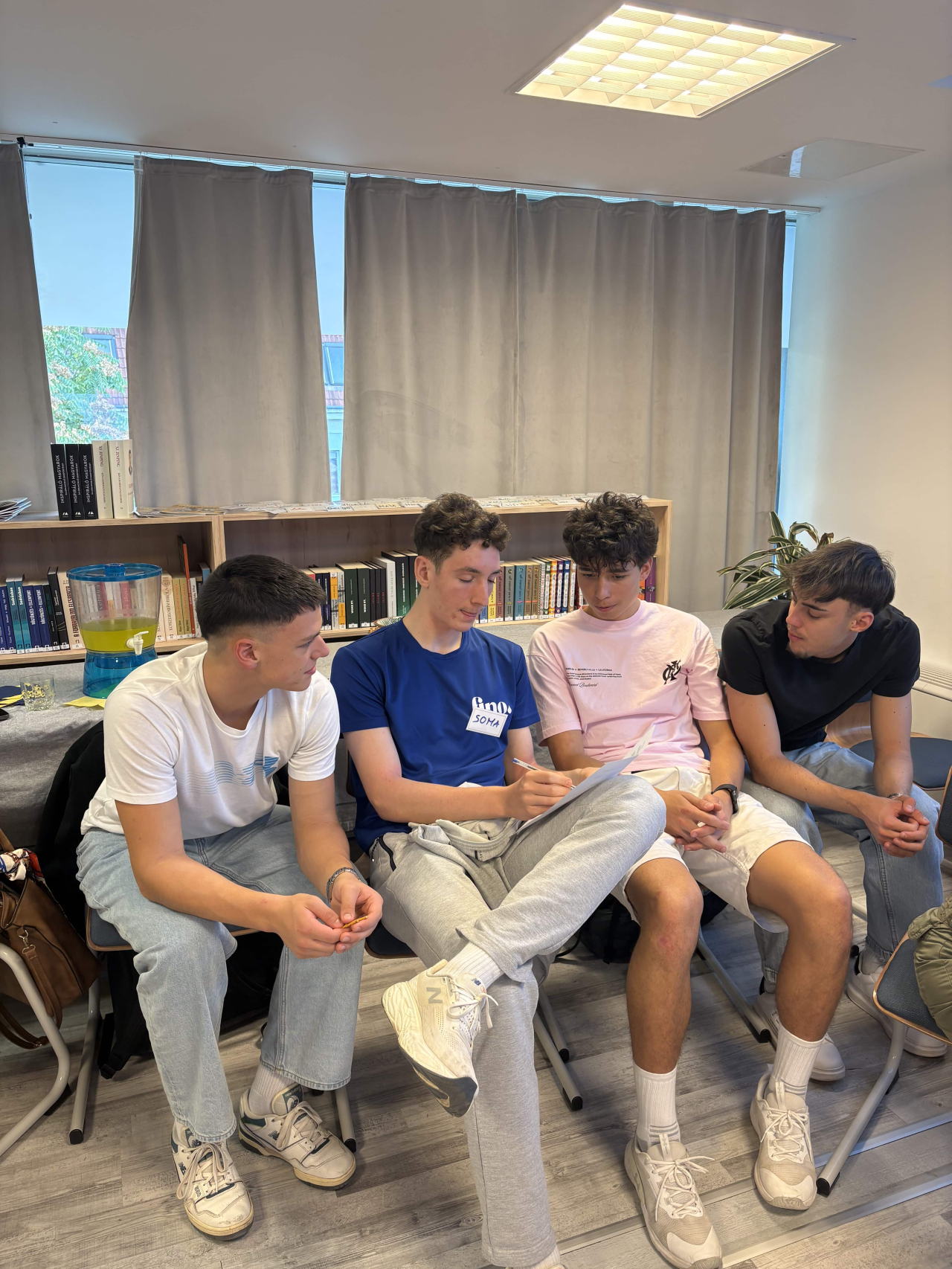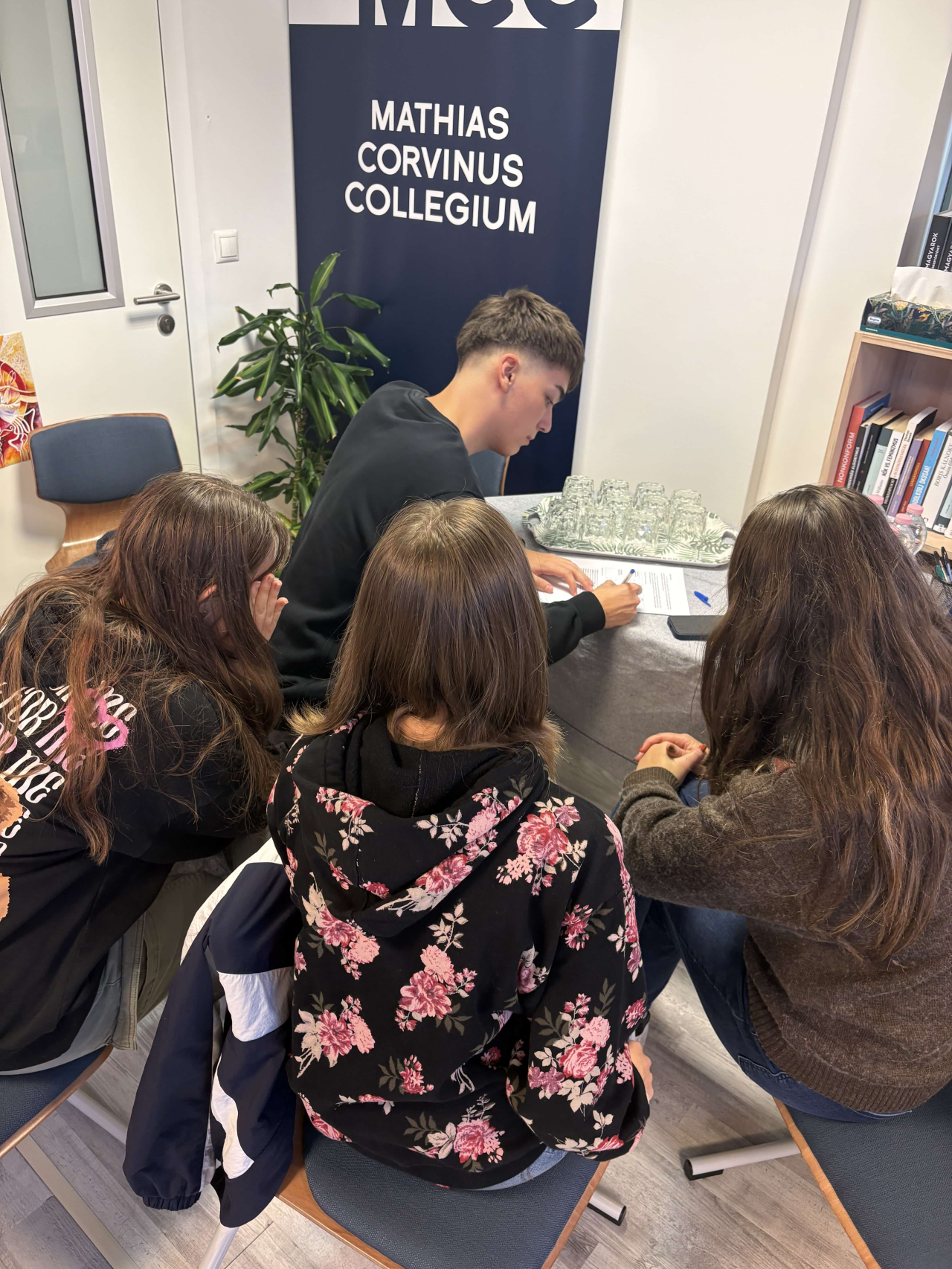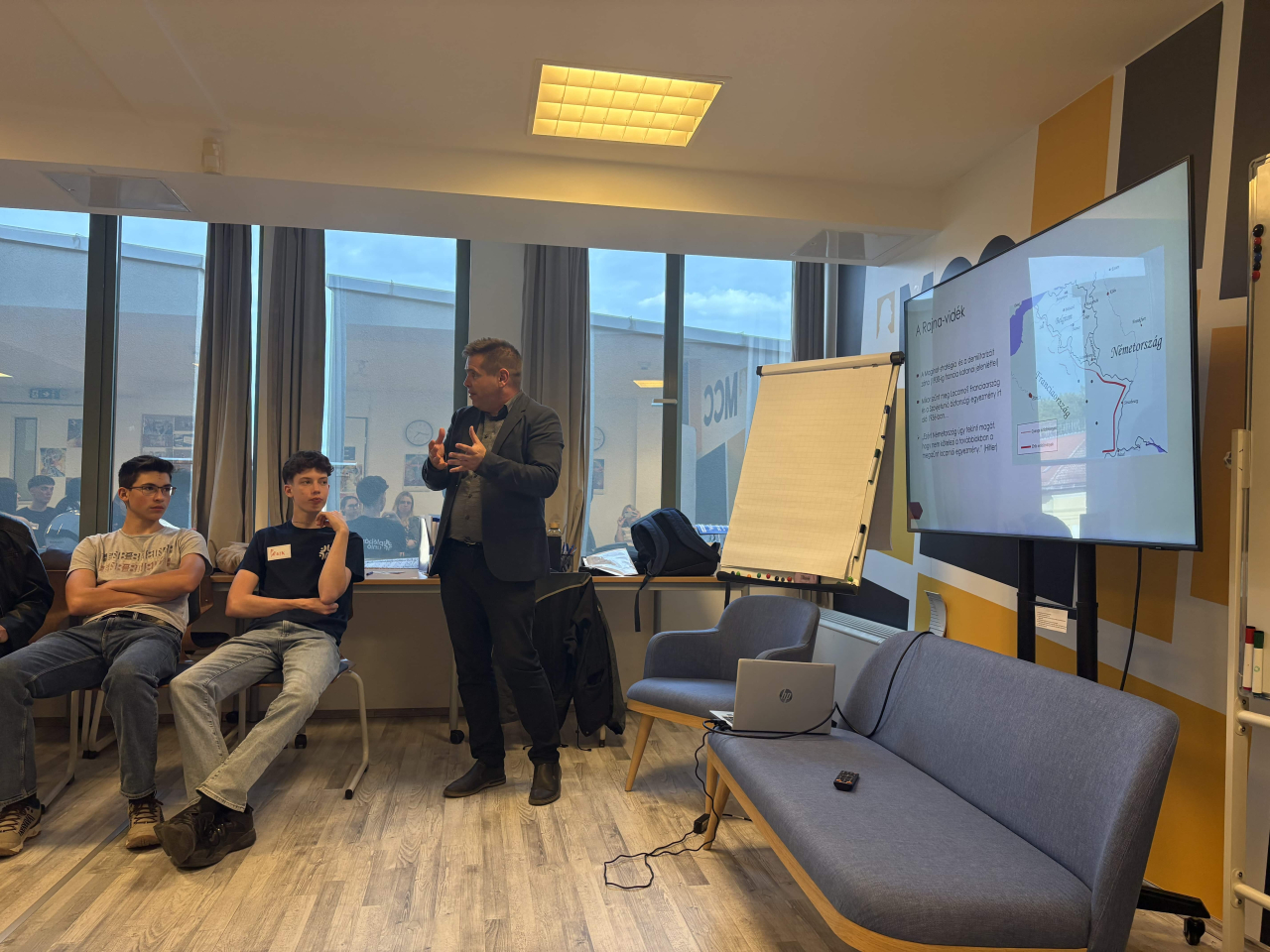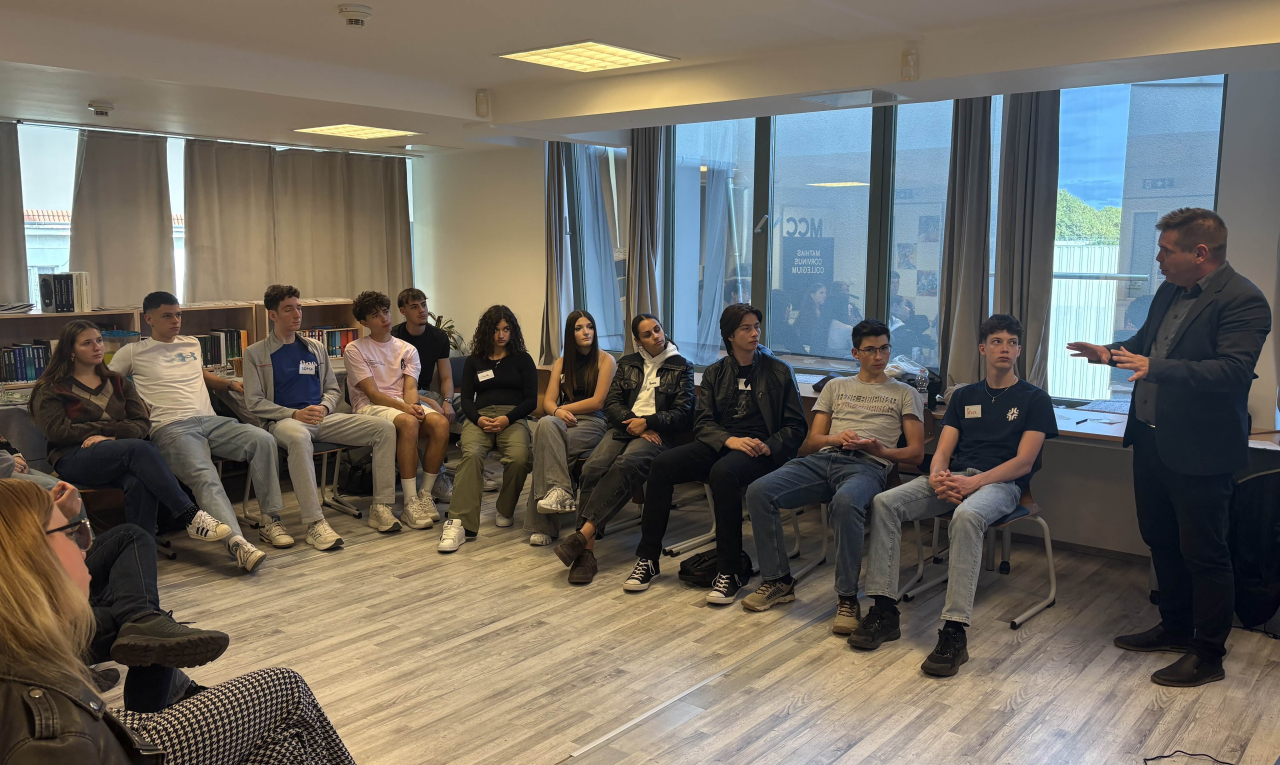
Could World War II have been prevented? Who were its real winners and losers? These were some of the questions explored by students of the High School Program (KP) in Kaposvár during a session led by Senior Instructor Örs Kovács.
The students examined the major events and historical decisions that defined the era of Churchill, Hitler, and Stalin. Rather than simply reviewing the events of the war, they explored the circumstances that led to them, the roles of the major powers, and the consequences of key decisions. They also discussed what victory and defeat meant for different countries and how Europe changed in the aftermath of the war.
Sessions like this give students an opportunity to build on their historical knowledge through independent thinking and group discussions. By examining different perspectives, they learn to look beyond a single interpretation of events, consider the reasoning behind historical decisions, recognize cause-and-effect relationships, and draw their own conclusions.
This approach is an important part of our educational programs. Students not only gain new knowledge but also learn in an environment where they are encouraged to ask questions, debate ideas, present arguments, and think. Working together helps them develop critical thinking and reasoning skills while becoming more open to different opinions. In this way, history becomes more than a series of dates and events to memorize. It helps students better understand the developments shaping the present and form their own informed opinions.